Loading…
ILO · Social Protection Coverage
Social protection coverage by country
What share of people are covered by at least one social protection benefit?
Of the 208 countries compared in the 2025 edition, 19 countries shared the highest reading, 100.0%, and 2 countries shared the lowest reading, 0.0%. In the middle country the figure was 52.1%.
Social protection coverage · the 2025 edition
Context statistic
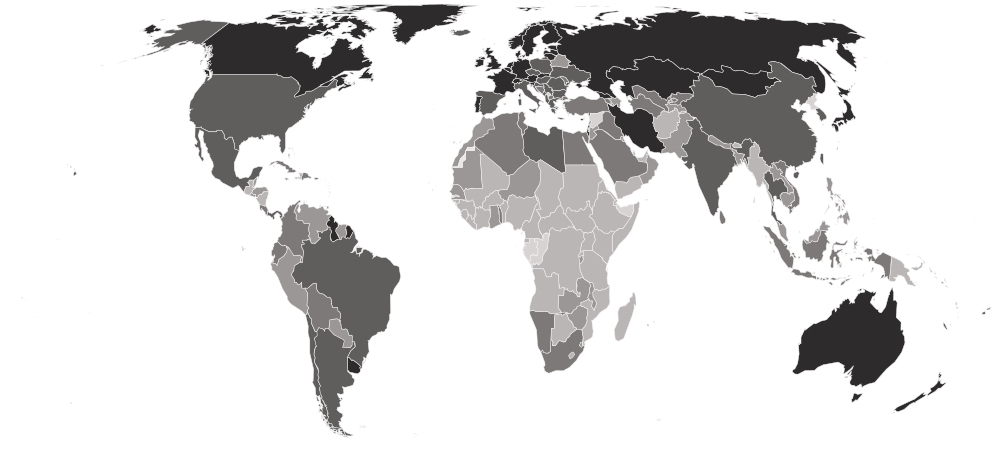
19 countries share the highest value, 100.0% — no single country is named first.
01the 2025 edition · values only
Who leads
The three countries at the highest end of 208 compared, the three at the other end, and the first on each continent.
Highest in the 2025 edition · shared
19 countries share the highest reading, 100.0%
No single country is named first: picking one from a shared value would be a choice the data does not make.
Lowest in the 2025 edition
 South Sudan0.0%
 Somalia0.0%
 Chad2.5%
Where a country sits says how it compares with the others measured, and nothing about why.
02Every measured country
Social protection coverage on a map
Each country is shaded by its value, in five groups holding the same number of countries. Hover a country for its value, or select it to open its profile. Below the map, each continent’s middle country.
Darker is a higher value — the better end.
- 0.0–15.4%
- 15.5–36.1%
- 36.6–64.0%
- 64.3–89.0%
- 90.2–100.0%
- No reading in the 2025 edition
- Europe
90.5%
the middle country, of 44 measured · 49 members
12 share 100.0%
 Belarus36.0%
Highest and lowest reading in Europe.
- Americas
58.6%
the middle country, of 46 measured · 48 members
2 share 100.0%
 Haiti6.6%
Highest and lowest reading in Americas.
- Oceania
48.6%
the middle country, of 17 measured · 21 members
2 share 100.0%
 Tuvalu4.5%
Highest and lowest reading in Oceania.
- Asia
41.3%
the middle country, of 49 measured · 52 members
3 share 100.0%
2 share 4.1%
Highest and lowest reading in Asia.
- Africa
12.2%
the middle country, of 52 measured · 55 members
 Mauritius74.7%
2 share 0.0%
Highest and lowest reading in Africa.
- Every region
22 sub-regions, highest middle country first
- Western Europe
100.0%
the middle country, of 9 measured · 9 members
6 share 100.0%
 Monaco54.6%
Highest and lowest reading in Western Europe.
- Northern Europe
99.9%
the middle country, of 11 measured · 13 members
5 share 100.0%
 Iceland81.9%
Highest and lowest reading in Northern Europe.
- Southern Europe
83.0%
the middle country, of 14 measured · 17 members
 Portugal100.0%
 North Macedonia50.5%
Highest and lowest reading in Southern Europe.
- Eastern Europe
81.3%
the middle country, of 10 measured · 10 members
 Russia95.4%Belarus36.0%
Highest and lowest reading in Eastern Europe.
- Eastern Asia
78.4%
the middle country, of 7 measured · 8 members
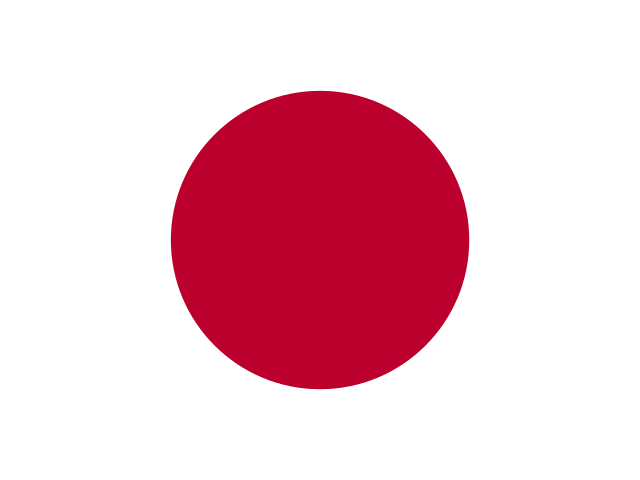 Japan94.6%
 Hong Kong63.3%
Highest and lowest reading in Eastern Asia.
- Caribbean
58.1%
the middle country, of 22 measured · 24 members
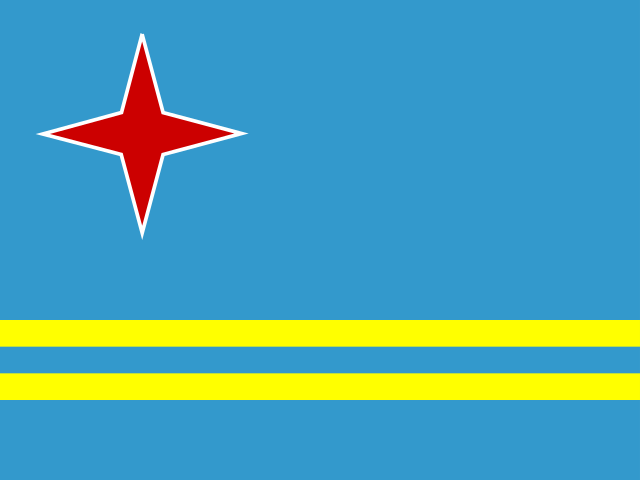 Aruba94.3%Haiti6.6%
Highest and lowest reading in Caribbean.
- Melanesia
57.4%
the middle country, of 5 measured · 5 members
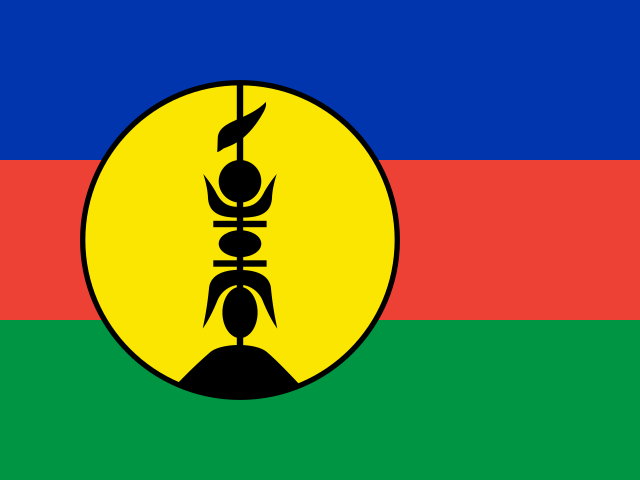 New Caledonia72.6%
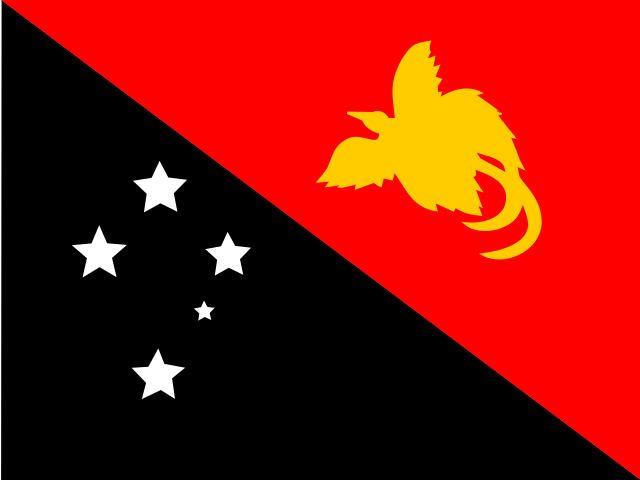 Papua New Guinea9.1%
Highest and lowest reading in Melanesia.
- South America
52.6%
the middle country, of 12 measured · 12 members
 Guyana100.0%
 Peru30.1%
Highest and lowest reading in South America.
- Northern Africa
45.2%
the middle country, of 6 measured · 6 members
 Libya66.1%
 Sudan10.4%
Highest and lowest reading in Northern Africa.
- Central Asia
42.9%
the middle country, of 5 measured · 5 members
 Kazakhstan94.3%
 Tajikistan34.1%
Highest and lowest reading in Central Asia.
- Southern Africa
36.1%
the middle country, of 5 measured · 5 members
 Namibia52.1%
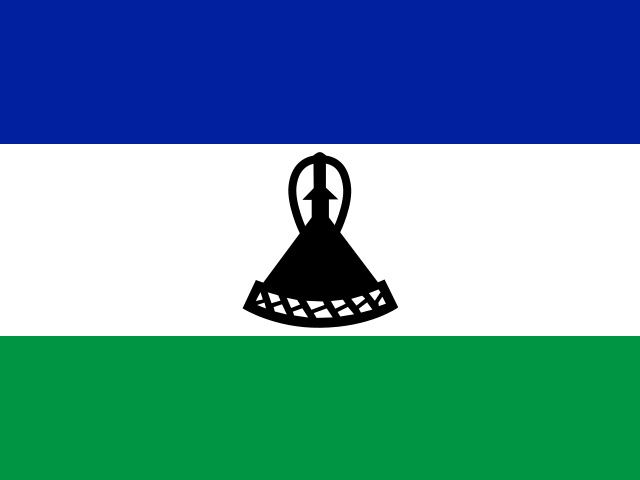 Lesotho11.7%
Highest and lowest reading in Southern Africa.
- Western Asia
35.2%
the middle country, of 17 measured · 19 members
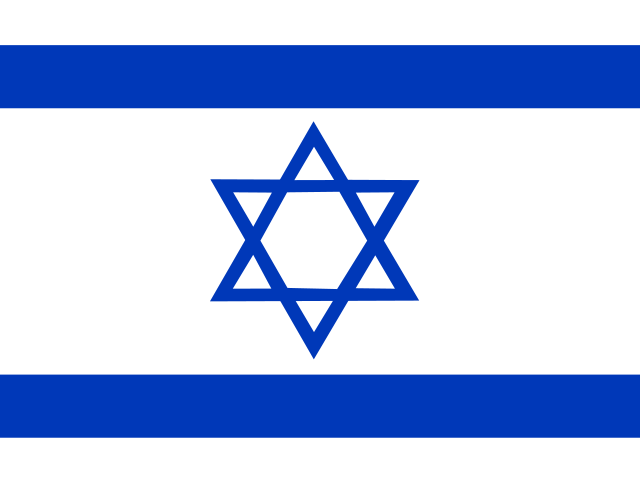 Israel100.0%
2 share 4.1%
Highest and lowest reading in Western Asia.
- South-eastern Asia
34.9%
the middle country, of 11 measured · 11 members
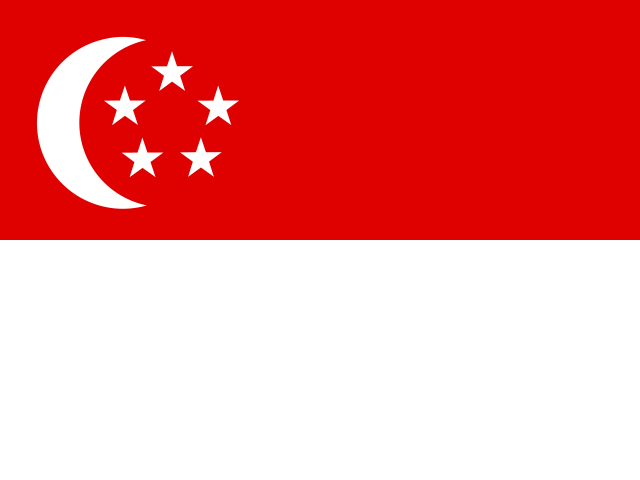 Singapore100.0%
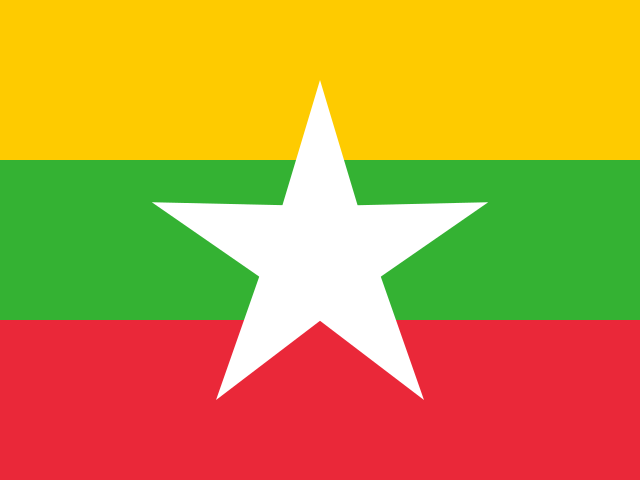 Myanmar6.3%
Highest and lowest reading in South-eastern Asia.
- Central America
31.1%
the middle country, of 8 measured · 8 members
 Mexico80.8%
 Guatemala12.1%
Highest and lowest reading in Central America.
- Polynesia
28.2%
the middle country, of 5 measured · 7 members
 Cook Islands100.0%Tuvalu4.5%
Highest and lowest reading in Polynesia.
- Micronesia
25.2%
the middle country, of 5 measured · 7 members
 Palau93.2%
 Micronesia20.0%
Highest and lowest reading in Micronesia.
- Southern Asia
22.0%
the middle country, of 9 measured · 9 members
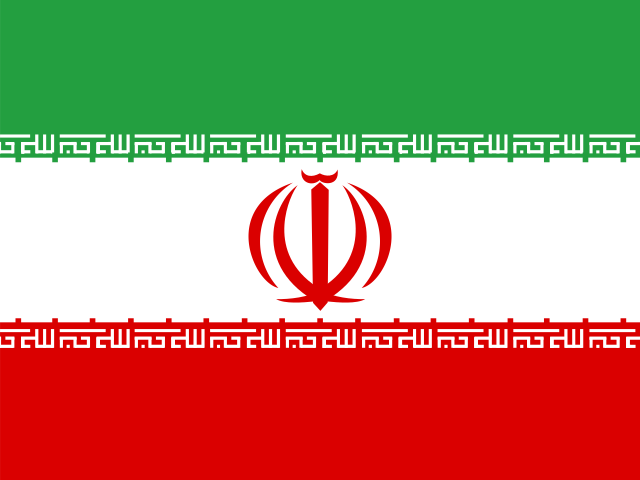 Iran100.0%
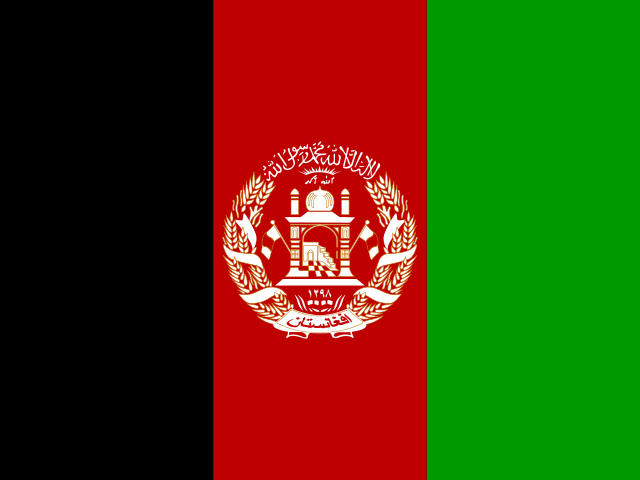 Afghanistan7.5%
Highest and lowest reading in Southern Asia.
- Western Africa
12.4%
the middle country, of 16 measured · 16 members
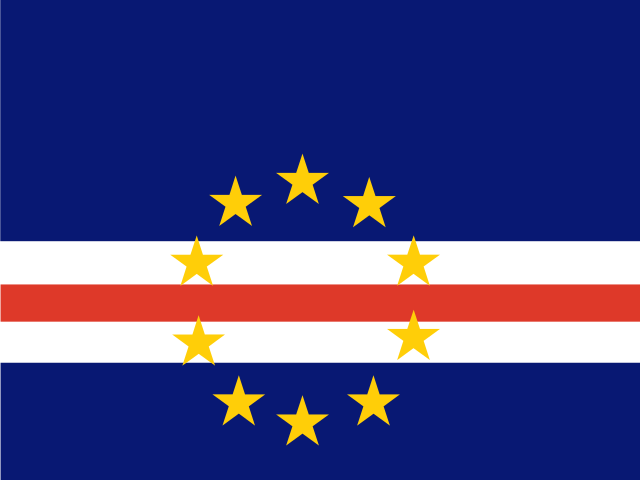 Cabo Verde60.3%
 Guinea-Bissau2.5%
Highest and lowest reading in Western Africa.
- Eastern Africa
11.5%
the middle country, of 18 measured · 19 members
Mauritius74.7%2 share 0.0%
Highest and lowest reading in Eastern Africa.
- Middle Africa
5.2%
the middle country, of 7 measured · 9 members
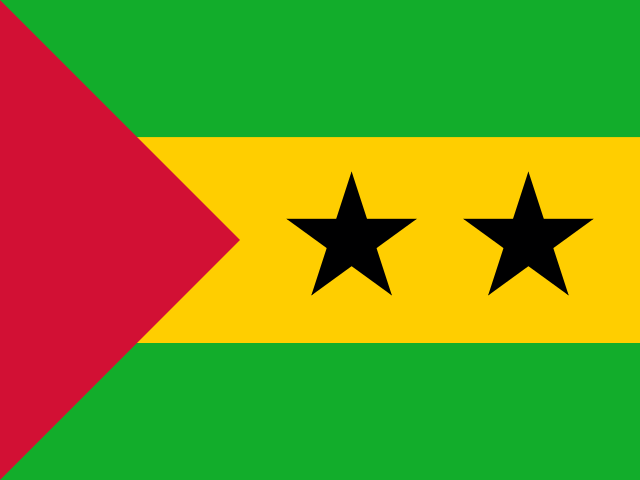 São Tomé and Príncipe22.1%Chad2.5%
Highest and lowest reading in Middle Africa.
- Australia and New Zealand
2 of 2 measured — too few for a middle: Australia, New Zealand.
 New Zealand100.0%
 Australia94.0%
Highest and lowest reading in Australia and New Zealand.
- Northern America
4 of 4 measured — too few for a middle: Bermuda, Canada, Greenland, United States.
 Greenland100.0%
 United States78.8%
Highest and lowest reading in Northern America.
03The whole field at once
The spread
208 countries, one dot each, on one scale — further right is a higher value. Half the countries are above 52.1%; a quarter are above 81.3%, and a quarter below 20.0%. The bar in each row marks that continent’s middle country.
04All 208 ever measured
Every country
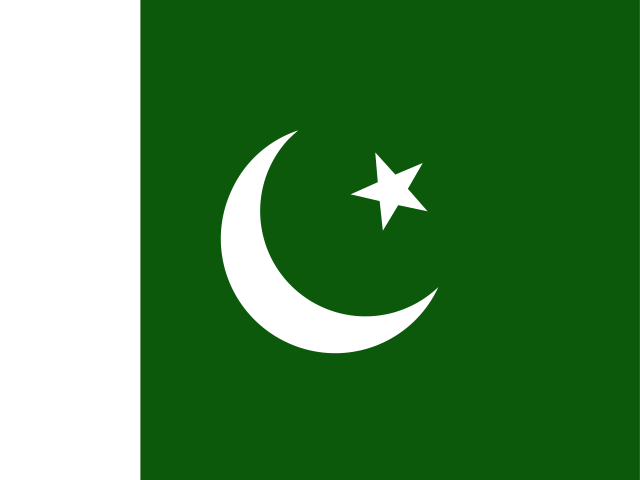
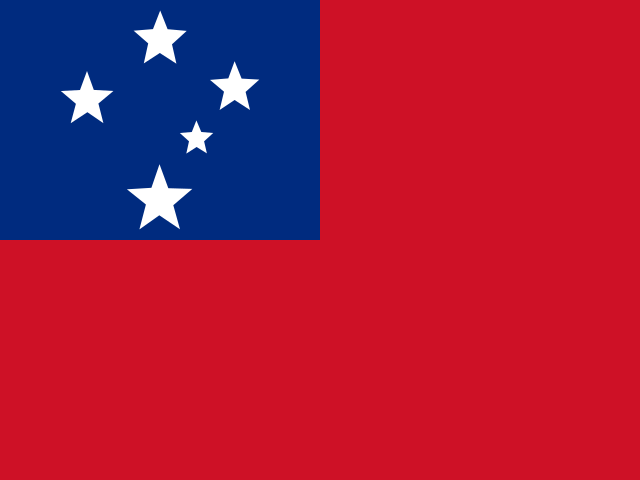
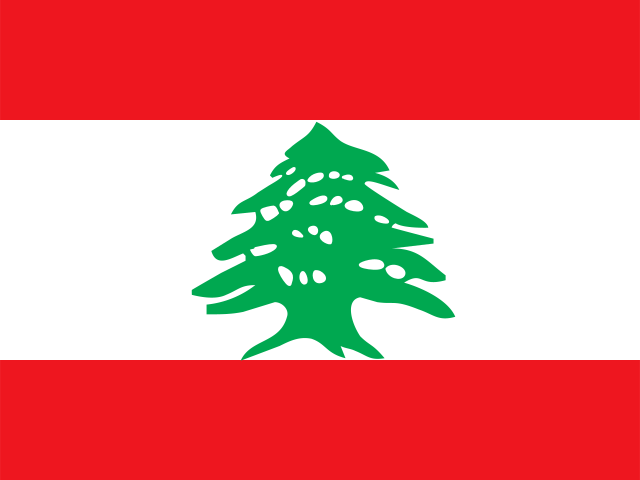
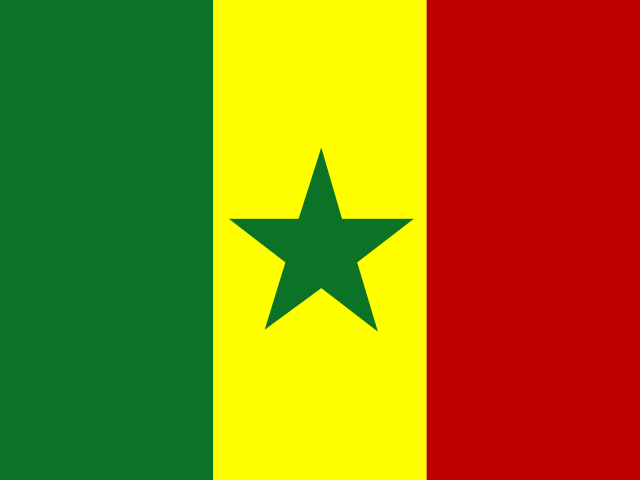
In order, highest value first. No rank or position is shown: too many countries share the same value for an order to mean anything. Effective coverage is usually well below legal coverage, and the distance between them is the substance of the measure. Nineteen countries reach 100%, so no position is shown — ordering a ceiling would invent differences that are not there.
Showing 25 of 208 countries


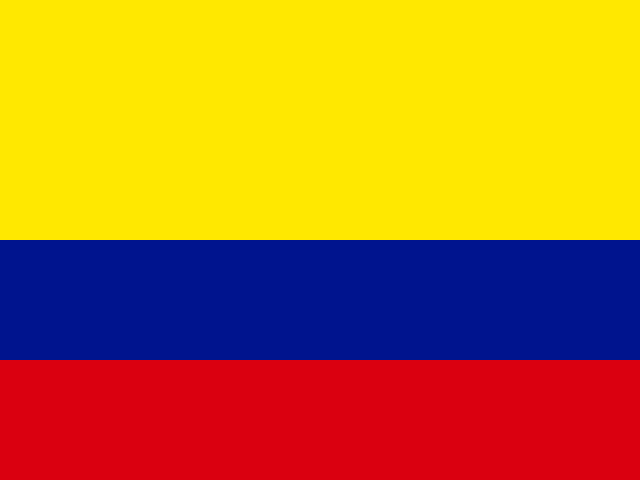
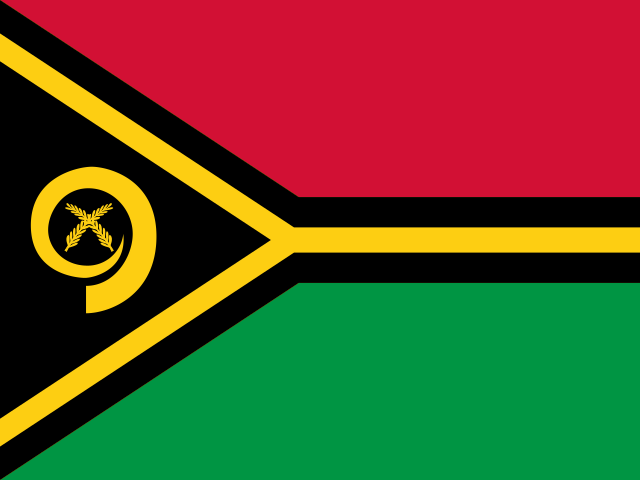
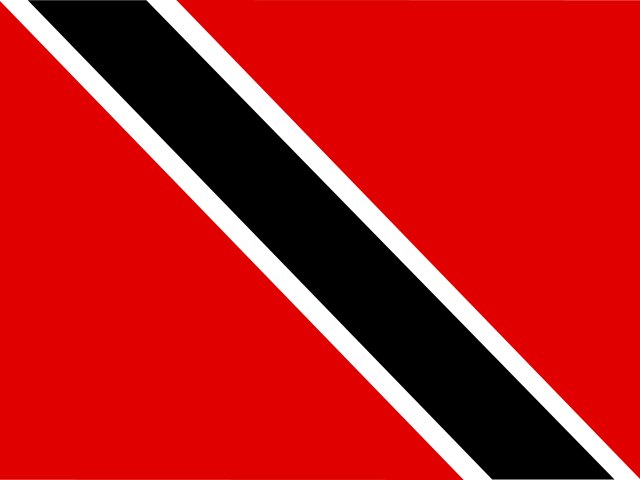
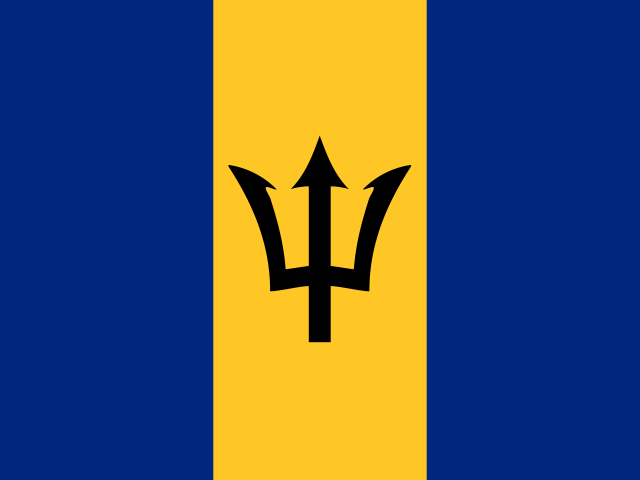











Values for the 2025 edition.
05In this edition
Social protection coverage in records
The extremes of the statistic. A record reached by more than one country names none of them.
Highest reading
Reached 19 times by 19 countries — shared, so no holder is named
100.0%
Population covered by at least one social protection benefit (%)
Lowest reading
Reached 2 times by 2 countries — shared, so no holder is named
0.0%
Population covered by at least one social protection benefit (%)
06The measure
About social protection coverage
This is the share of a country's people effectively covered by at least one social protection benefit — a pension, child benefit, unemployment payment or disability support. It measures what people actually receive, not what the statute book promises.
What the number is: Population covered by at least one social protection benefit (%).
07Where it fits
Connections
Its part in the Country Index, the statistics whose values line up most closely with it across countries, and others on the same subject.
In the Country Index
Context, with no vote
This statistic is published in full under Governance & Institutions and Development & Human Capital, but does not help decide any Country Index standing.
Governance & InstitutionsDevelopment & Human CapitalWhich statistics vote, and why
Moves with
Where social protection coverage is higher, these tend to be higher too.
- GNI per Capita (PPP)World Bank Group · 99 countries in commonρ 0.88
- Inequality-adjusted Human Development IndexUNDP Human Development Report Office · 167 countries in commonρ 0.86
- Human Development IndexKeyUNDP Human Development Report Office · 190 countries in commonρ 0.84
Moves against
Where social protection coverage is higher, these tend to be lower.
- Coefficient of Human InequalityUNDP Human Development Report Office · 167 countries in commonρ −0.80
- Gender Inequality IndexKeyUNDP Human Development Report Office · 169 countries in commonρ −0.80
- Informal Employment RateILO · 97 countries in commonρ −0.79
Rank correlation (ρ, from −1 to 1) across countries, on each statistic’s newest edition, out of 126 statistics sharing at least 80 countries with this one. Two statistics that move together do not cause each other.
08Analysis
Charts and analysis on social protection coverage

09Keep reading
Explore further
The data, edition by edition
The countries at either end
10Questions
Social protection coverage: questions and answers
Which country has the highest social protection coverage?
19 countries share the highest reading, 100.0%, among the 208 compared in the 2025 edition, so no single country is named.
Which country has the lowest social protection coverage?
2 countries share the lowest reading, 0.0%, among the 208 compared in the 2025 edition, so no single country is named.
How many countries does the Social Protection Coverage cover?
208 in the 2025 edition.
What is the world average social protection coverage?
This site does not calculate a world average, which would depend on how countries are weighted. In the middle country of the 208 compared in the 2025 edition, the figure was 52.1%.
Is this International Labour Organization (ILO)’s own ranking?
No ranking is shown. International Labour Organization (ILO) publishes values only, and too many countries share the same value for an ordering to mean anything, so none is derived.
How often is the Social Protection Coverage published?
This site holds one edition, describing 2025.
Where does the data come from, and can I download it?
From International Labour Organization (ILO), under CC BY 4.0. SDG indicator 1.3.1 from the ILO's World Social Protection Report, read from ILOSTAT directly. Every edition is available on this site’s Datasets pages as a full table, unrounded.
11Method
Sources, method and citation
Source
Social Protection Coverage — International Labour Organization (ILO)
SDG indicator 1.3.1 from the ILO's World Social Protection Report, read from ILOSTAT directly.
Newest edition
Report year 2025Data year not recorded
Cite the source as: International Labour Organization. World Social Protection Report. Geneva: ILO.
Licence: CC BY 4.0, checked 2026-09-10.
How this page reads the numbers
- No rank or position is shown: International Labour Organization (ILO) publishes values only, and too many countries share the same value for an ordering to mean anything.
- Which end is better follows the publisher’s own reading of the measure.
- A country is named at an end only when it holds that value alone. Where several share it, the page says how many and names none first.
- The file gives each country’s most recent reading, so the rows are from different years. Readings from before 2015 are listed but left out of every comparison on this page.
- Values are stored exactly as published and trimmed only for display. “The middle country” is the median of the countries measured, not a world average.
The full note on this data
208 countries, each from its own most recent reading (2015–2025), SDG indicator 1.3.1 from the ILO's World Social Protection Report, read from ILOSTAT directly (SDG_0131_SEX_SOC_RT). The share of people covered by at least one social protection benefit — a pension, child benefit, unemployment or disability support. ⚠ EFFECTIVE coverage, meaning people actually receiving or contributing, NOT people entitled on paper: it can sit far below what a country's law promises, and that gap is the point of the measure. ⚠ ONE READING PER COUNTRY rather than annual editions: 208 countries have reported at some point and only two single years reach 80, so each row carries its own year. ⚠ NO POSITION IS DERIVED: nineteen countries sit at exactly 100%, which is 9.1% of the field — a ceiling pile-up, and ordering it would be noise.
Cite this page
Nations Inquiry (2026). Social protection coverage by country: Social Protection Coverage, data from International Labour Organization (ILO). https://nationsinquiry.com/statistics/social-protection