
Photo: Panoramio user onj · CC BY 3.0 · via Wikimedia Commons, shown in greyscale
Anguilla places highest on Political Stability and Absence of Violence (top 4% worldwide) and lowest on Digitally-Deliverable Services Exports (bottom 7%).
Share
Anguilla in the Nations Inquiry Country Index
Anguilla appears in 70 of the statistics tracked here, but is not placed in the Country Index: the index needs a standing on three quarters of its topics, and Anguilla is measured on too few of them. Every published reading below is unaffected.
At a glance
Population
14,410
people
since 1950
Land area
90.65
km²
since 1980
Life expectancy
79.31
years at birth
since 1950
The newest published figure for each, the year it describes and who published it, with a line showing how it has moved.
01The country
About Anguilla
Anguilla, a long, low sliver of coral limestone in the northern Leeward Islands, owes its name to an old word for eel. One of Britain’s Overseas Territories, it makes its own laws through an elected assembly, with a governor representing the Crown. There are no rivers and barely a hill, but fine white sand rims the shore from Shoal Bay to Rendezvous Bay, with salt ponds behind. Offshore lie uninhabited cays and far-off Sombrero, a bare rock with a lighthouse.
Amerindian people carved faces into the rock of Fountain Cavern long before English settlers came over from St Kitts in 1650. Too dry for sugar estates, Anguilla lived by small farms, fishing, salt and boatbuilding, and many islanders sailed away to work. From the nineteenth century Britain ran it with St Kitts and Nevis, an arrangement Anguillians resented. In 1967 they expelled the police sent from St Kitts; British police and troops landed in 1969, and in 1980 Anguilla formally became a separate dependency.
Boat racing is the national sport: island-built wooden sloops, crewed by villages such as Island Harbour and Sandy Ground, race round the bays on public holidays and above all at the Summer Festival in early August. Crayfish, as Anguillians call spiny lobster, is grilled on the beach. Luxury resorts, opened along the west-end beaches from the 1980s, earn most of the island’s income, and offshore companies, fishing and money from Anguillians abroad supply the rest.
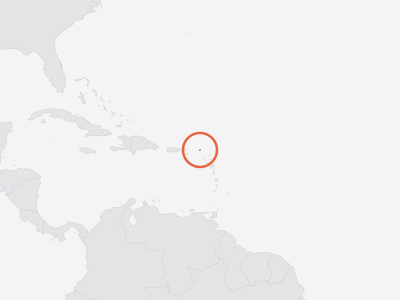
Key facts about Anguilla
- Capital
- The Valley
- Official language
- English
- Currency
- Eastern Caribbean dollar (XCD)
- ISO code
- AIA · AI
- Domain · dialling
- .ai · +1264
As Wikidata records them. Official languages are the least consistent — some countries list only a national language, others every regional one. Sources and licences.
02Country Index 2026
Where it stands, topic by topic
Strongest first. Each position is Anguilla’s place among the countries with a standing on that topic, built from a few key statistics chosen to measure different things.
48thof 200
From 2 of 4 key statistics
No standing — Anguilla holds too few of this subject’s key statistics to be placed on it.
No standing — Anguilla holds too few of this subject’s key statistics to be placed on it.
No standing — Anguilla holds too few of this subject’s key statistics to be placed on it.
No standing — Anguilla holds too few of this subject’s key statistics to be placed on it.
No standing — Anguilla holds too few of this subject’s key statistics to be placed on it.
No standing — Anguilla holds too few of this subject’s key statistics to be placed on it.
No standing — Anguilla holds too few of this subject’s key statistics to be placed on it.
No standing — Anguilla holds too few of this subject’s key statistics to be placed on it.
No standing — Anguilla holds too few of this subject’s key statistics to be placed on it.
No standing — Anguilla holds too few of this subject’s key statistics to be placed on it.
No standing — Anguilla holds too few of this subject’s key statistics to be placed on it.
No standing — Anguilla holds too few of this subject’s key statistics to be placed on it.
No standing — Anguilla holds too few of this subject’s key statistics to be placed on it.
No standing — Anguilla holds too few of this subject’s key statistics to be placed on it.
No standing — Anguilla holds too few of this subject’s key statistics to be placed on it.
Each standing is built from a few key statistics chosen to measure different things. Select a subject for Anguilla’s readings on it, or see every statistic held for Anguilla in the table further down this page.
03Highs and lows
Where Anguilla stands out
The two ends of its own record: every statistic on which Anguilla sits within ten places of the best or worst in the world, plus its strongest and weakest readings overall. Each is turned into a percentile — its place among every country measured — which is what lets a hunger score and a press-freedom rank be compared at all.
Where Anguilla does best5
In the top third of all countries measured. 2 are within ten places of the best in the world, in a field of at least 50 countries — marked with that place.
- 1st
Position · derived 1st of 84 · 100 · 2023
world median 99.3 (better) · ▼ 4 pts since 2013
- 10th
Position · derived 10th of 211 · 1.413 · 2025
world median 0.171 (better)
Position · derived 143rd of 156 · 1 = worst · 1.9 · 2024
world median 4.4 (better) · ▼ 5 pts since 2023
Not ranked by the publisher · 95.7 · 2024
world median 45.9 (better)
- PM2.5 Air Pollution Exposuretop 13%
Position · derived 190th of 220 · 1 = worst · 6.5 · 2023
world median 14.45 (better)
Where Anguilla struggles most3
In the bottom third of all countries measured.
Position · derived 159th of 170 · 3.882 · 2024
world median 25.42 (worse) · ▼ 3 pts since 2014
- CO₂ Emissions per Capitabottom 11%
Position · derived 25th of 210 · 1 = worst · 10.14 · 2024
world median 3.21 (worse) · ▼ 4 pts since 2014
- Child and Family Benefit Coveragebottom 17%
Not ranked by the publisher · 2.8 · 2024
world median 23.75 (worse)
A band is a place among the countries each publisher scores, so Anguilla can move because other countries moved. See the Country Index for the full method.
04In context
Anguilla and its neighbours
A position reads best beside the countries around it. Every position below is a place in the world ranking, not within the region.
Shares a land border with
Anguilla has no land border with another country.
Across Caribbean
Every country in the sub-region, by its position in the world.
- 67
 Barbados
- 68
 Saint Lucia
- =71
 Dominican Republic
- =71
 Saint Vincent and the Grenadines
- =76
 Jamaica
- 81
 Antigua and Barbuda
- 85
 Grenada
- 90
 Trinidad and Tobago
- =104
 Bahamas
- 119
 Cuba
- 173
 Haiti
- —
 Anguillanot placed
- —
 Arubanot placed
- —
 British Virgin Islandsnot placed
- —
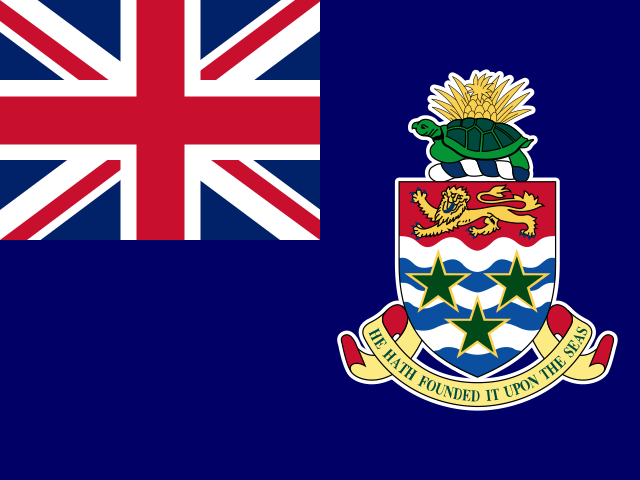 Cayman Islandsnot placed
- —
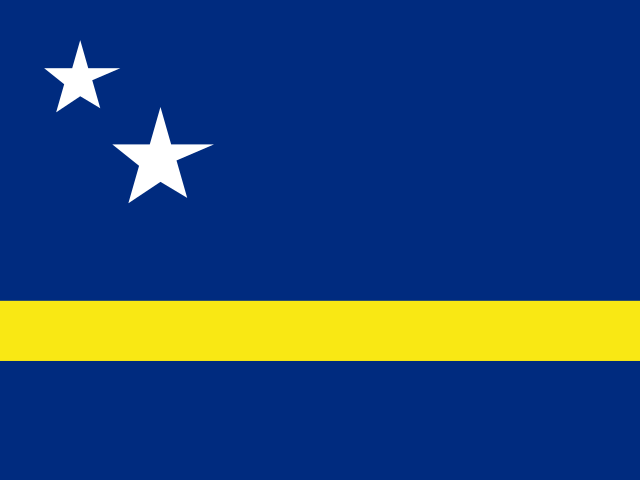 Curaçaonot placed
- —
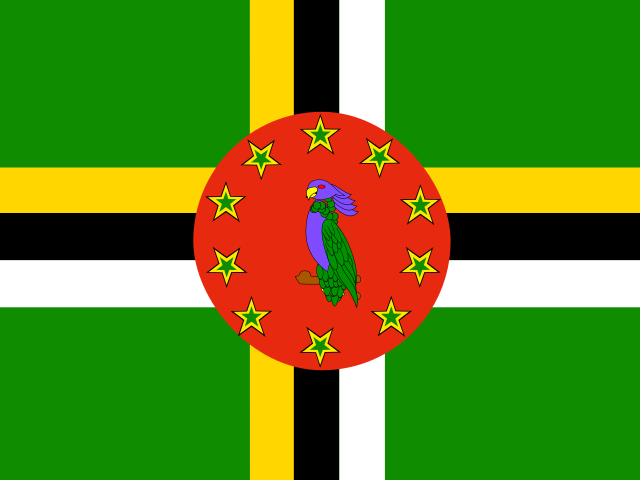 Dominicanot placed
- —
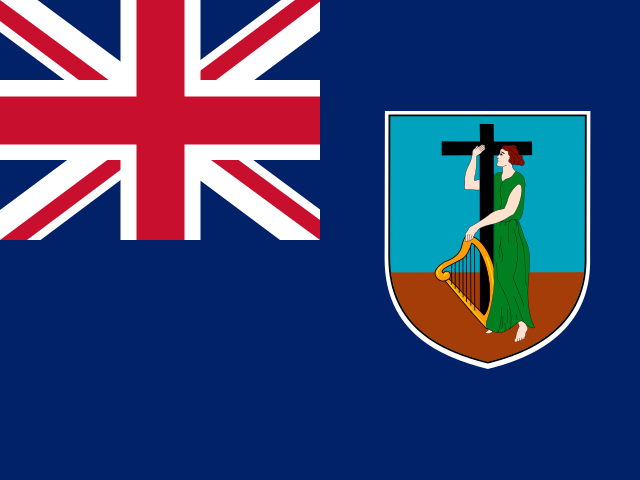 Montserratnot placed
- —
 Puerto Riconot placed
- —
 Saint Kitts and Nevisnot placed
- —
 Saint Martinnot placed
- —
 Sint Maartennot placed
- —
 Turks and Caicos Islandsnot placed
- —
 United States Virgin Islandsnot placed
05The evidence
Every statistic we hold for Anguilla
Grouped by topic. Each row gives the newest edition’s rank or position, the published value and the year the numbers describe. Select a statistic for this country’s row beside every other country, the world median and every edition.
Governance & Institutions9
- Central Bank Independence IndexAna Carolina Garriga, University of Essex · CBI index (0–1, where 1 is the most statutory independence)top 42%0.6332023
- Child and Family Benefit CoverageILO · Children or households with children receiving child or family cash benefits (%)bottom 17%2.82024
- Control of CorruptionWorld Bank Group · Control of Corruption (−2.5 to 2.5)29th of 211position · derived1.182025
- Disability Benefit CoverageILO · People with severe disabilities receiving disability benefits (%)bottom 46%34.12025
- Government EffectivenessWorld Bank Group · Governance estimate (−2.5 weak to 2.5 strong)38th of 209position · derived1.1032025
- Old-Age Pension CoverageILO · People above statutory pensionable age receiving an old-age pension (%)bottom 45%66.12025
- Regulatory QualityWorld Bank Group · Regulatory Quality (−2.5 to 2.5)41st of 209position · derived0.852025
- Rule of LawWorld Bank Group · Rule of Law estimate (−2.5 to 2.5)60th of 211position · derived0.6412025
Economy & Innovation11
- Actual Individual Consumption per Capita (PPP)World Bank Group · Actual individual consumption per capita (PPP, current international $)50th of 173position · derived23,2222021
- Creative Services ExportsUNCTAD · Creative services exports (% of services exports)bottom 5%0.0512024
- Digitally-Deliverable Services ExportsUNCTAD · Digitally-deliverable services exports (% of services exports)159th of 170position · derived3.8822024
- Export Concentration IndexUNCTAD · Export concentration index (0–1, normalised Herfindahl–Hirschman)top 36%0.3852025
- Foreign Direct Investment InflowsUNCTAD · FDI inflows (% of GDP)top 21%4.6352025
- Merchant Fleet by Country of OwnershipUNCTAD · Merchant fleet owned (thousand dead-weight tons)bottom 19%10.442026
- Price Level of Household ConsumptionGGDC · Price level of household consumption (US output price level in 2021 = 1)top 13%0.9362023
- Scholarly ArticlesOurResearch · Articles with at least one author at an institution in the country (full counting)bottom 1%32025
- Services ExportsUNCTAD · Services exports (% of GDP)top 1%101.182025
- Statutory Corporate Income Tax RateOECD · Combined statutory corporate income tax rate, central and sub-central government (%)bottom 3%02026
- Terms of Trade IndexUNCTAD · Terms of trade index (2015 = 100)bottom 1%65.92025
Work & Labour1
- Employment Injury Protection CoverageILO · Labour force covered in the event of a work injury (%)top 10%95.72024
Education & Knowledge4
- Adult Literacy RateUIS · Adults 15+ who can read and write (%)78th of 172position · derived95.412024
- Primary Schools with ElectricityUIS · Primary schools with access to electricity (%)top 30%1002024
- Primary Schools with Internet for TeachingUIS · Primary schools with internet access for teaching (%)top 22%1002024
- Youth Literacy RateUIS · 15–24 year-olds who can read and write (%)top 35%99.112024
Health & Wellbeing15
- Adolescent Birth Rate (Ages 15–19)UN DESA Population Division · Live births per 1,000 women aged 15–19109th of 222position · derived · 1 = worst28.282023
- Adult Mortality (Probability of Dying Between 15 and 60)UN DESA Population Division · Deaths before age 60 per 1,000 people alive at 15, at that year's death rates167th of 222position · derived · 1 = worst75.332023
- Births Attended by Skilled Health StaffUNICEF and WHO (Joint Database on Skilled Birth Attendance) · Births attended by skilled health staff (%)1st of 84position · derived1002023
- Contraceptive Prevalence (Any Method)UN DESA Population Division · Share of all women aged 15–49 using any contraceptive method (%)bottom 48%40.32023
- Days Above 35°CECMWF · Days a year with a maximum temperature above 35°C, averaged over the country’s landtop 16%02025
- Demand for Family Planning Satisfied by Modern MethodsUN DESA Population Division · Share of women aged 15–49 wanting to avoid pregnancy who use a modern method (%)95th of 196position · derived71.82023
- Infant Mortality RateUN IGME · Deaths before age one (per 1,000 live births)149th of 200position · derived · 1 = worst5.1972024
- Life Expectancy at Age 65UN DESA Population Division · Further years a 65-year-old would live at current death rates66th of 222position · derived18.332023
- Life Expectancy at BirthUN DESA Population Division · Years a newborn would live at current death rates56th of 222position · derived79.312023
- Modern Contraceptive PrevalenceUN DESA Population Division · Share of all women aged 15–49 using a modern contraceptive method (%)top 46%37.52023
- Mortality Rate, Ages 5–14UN IGME · Deaths between ages 5 and 14 (per 1,000 children aged 5)152nd of 200position · derived · 1 = worst1.4512024
- Neonatal Mortality RateUN IGME · Deaths in the first 28 days (per 1,000 live births)156th of 200position · derived · 1 = worst2.9492024
- PM2.5 Air Pollution ExposureAtmospheric Composition Analysis Group, Washington University in St. Louis · Population-weighted PM2.5 concentration (µg/m³)190th of 220position · derived · 1 = worst6.52023
- Stillbirth RateUN IGME · Stillbirths (per 1,000 total births)140th of 200position · derived · 1 = worst4.5812023
- Under-Five Mortality RateUN IGME · Deaths before age five (per 1,000 live births)155th of 200position · derived · 1 = worst5.6082024
Environment & Sustainability6
- CO₂ Emissions per CapitaGlobal Carbon Project · Fossil CO₂ (tonnes per person)25th of 210position · derived · 1 = worst10.142024
- Fisheries and Aquaculture ProductionFAO · Fish, crustaceans, molluscs and other aquatic animals caught or farmed, tonnes (live weight)bottom 11%8852024
- Mangrove AreaGlobal Mangrove Watch (Aberystwyth University, JAXA, soloEO, Wetlands International, The Nature Conservancy) · Mangrove forest area (hectares)bottom 3%8.0612025
- Methane EmissionsEDGAR · Methane emissions (gigagrams of CH₄)bottom 1%0.142025
- Tree Cover LossWorld Resources Institute — Global Forest Watch (data: University of Maryland) · Tree cover loss (hectares, where canopy cover exceeded 30% in 2000)bottom 6%02025
- Tropical Moist Forest DeforestationJRC · Tropical moist forest deforested in the year (million hectares)bottom 5%02025
Gender & Equality2
- Mean Age at First Marriage, WomenUN DESA Population Division · Singulate mean age at marriage, women (years)top 24%28.62019
- Sex Ratio at BirthUN DESA Population Division · Male births per 100 female birthsbottom 19%103.62023
Peace & Security2
- Political Stability and Absence of ViolenceWorld Bank Group · Political Stability estimate (−2.5 to 2.5)10th of 211position · derived1.4132025
- Refugees by Country of OriginUNHCR, the UN Refugee Agency · Refugees under UNHCR's mandate from this country, end of year (people)bottom 2%02025
Mobility & Trade5
- Container Import Dwell TimeWorld Bank Group · Median days a full import container waits in port143rd of 156position · derived · 1 = worst1.92024
- EmigrantsUN DESA Population Division · Migrants from the country living abroad, mid-year (people)bottom 5%1,6142024
- International MigrantsUN DESA Population Division · International migrants living in the country, mid-year (people)bottom 9%5,9182024
- Net Migration RateUN DESA Population Division · Net migrants per 1,000 populationtop 5%13.882023
Digital & Technology2
- GitHub DevelopersGitHub · Developer accounts located in the economy (as of quarter end)bottom 4%6342026
- GitHub RepositoriesGitHub · Public repositories located in the economy (as of quarter end)bottom 5%8082026
People & Population13
- Crude Birth RateUN DESA Population Division · Births per 1,000 populationbottom 19%9.0282023
- Crude Death RateUN DESA Population Division · Deaths per 1,000 populationbottom 38%6.6852023
- Mean Age at ChildbearingUN DESA Population Division · Mean age of mothers at the birth of their children (years)bottom 24%28.252023
- Median Age of the PopulationUN DESA Population Division · Median age (years)top 29%38.012023
- Population Aged 65 and OverUN DESA Population Division · Share of the total population aged 65 and over (%)top 36%12.182023
- Population DensityUN DESA Population Division · People per square kilometre of landtop 33%163.752023
- Population Growth RateUN DESA Population Division · Population growth (% per year)top 31%1.5682023
- Population Living in Cities (Degree of Urbanisation)UN DESA Population Division · Share of the population living in cities as the Degree of Urbanisation defines them (%)bottom 8%02025
- Population Under Age 15UN DESA Population Division · Share of the total population aged 0–14 (%)bottom 28%17.122023
- Sex Ratio of the Total PopulationUN DESA Population Division · Males per 100 femalesbottom 20%94.552023
- Total Dependency RatioUN DESA Population Division · People aged 0–14 and 65+ per 100 people aged 15–64bottom 10%41.442023
- Total Fertility RateUN DESA Population Division · Live births per womanbottom 15%1.3642023
06Method
Sources and how to read them
How to read this page
- The scores and ranks belong to their publishers. Nothing is adjusted, rescaled or re-ranked; each is reproduced from the edition named beside it. Where a row says position · derived, the publisher ranks nobody on that measure and the position is ours, made by ordering the published score.
- Each statistic shows its newest edition, which is not always the edition the Country Index uses: the index pins every source to one data year so its average compares like with like.
How a standing is built from percentiles, why Anguilla can move because other countries moved, and why publishers measure between 120 and 215 countries each are set out in full in how a standing is made and what a standing cannot tell you.
Sources
- Statistics: 21 publishers, each named beside its numbers, with every edition and licence on the datasets pages.
- Capital, languages, currency, codes: Wikidata, public domain (CC0).
- Map and land borders: Natural Earth, public domain. Borders are de facto — where administration actually changes — not claimed.
Photographs
The photograph of Anguilla on this page comes from Wikimedia Commons and is shown in greyscale. The photographer and the licence are named beside each one.
Cite this page
Nations Inquiry (2026). Anguilla: country statistics, rankings and trends. https://nationsinquiry.com/countries/anguilla