Loading…
ILO · Informal Employment Rate
Informal employment by country
What share of work happens outside formal contracts and protection?
Of the 97 countries compared in the 2025 edition, Hungary had the lowest reading, 0.86%, and Madagascar had the highest reading, 94.44%. In the middle country the figure was 36.83%.
Part ofWork & Labour
Informal employment · the 2025 edition
Context statistic
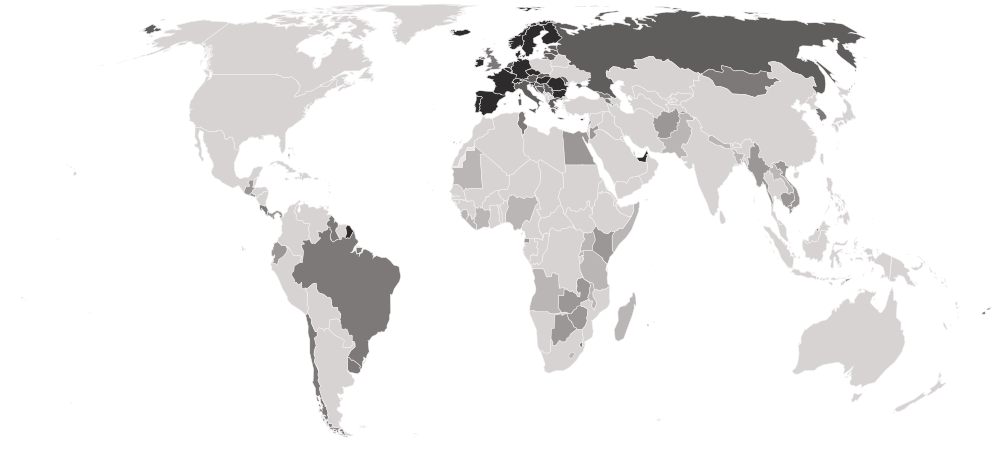
Lowest of 97Hungary
0.86%01the 2025 edition · position · derived
Who leads
The three countries at the lowest end of 97 compared, the three at the other end, and the first on each continent.
 1
1Photo: grin derivative work: Jjtkk · CC BY-SA 3.0, greyscale
 2
2Photo: Simon Koopmann derivative work: Jjtkk · CC BY-SA 2.0 de, greyscale
 3
3Photo: Joonas Lyytinen · CC BY-SA 2.5, greyscale
Highest in the 2025 edition
 Madagascar94.44%
 Angola94.09%
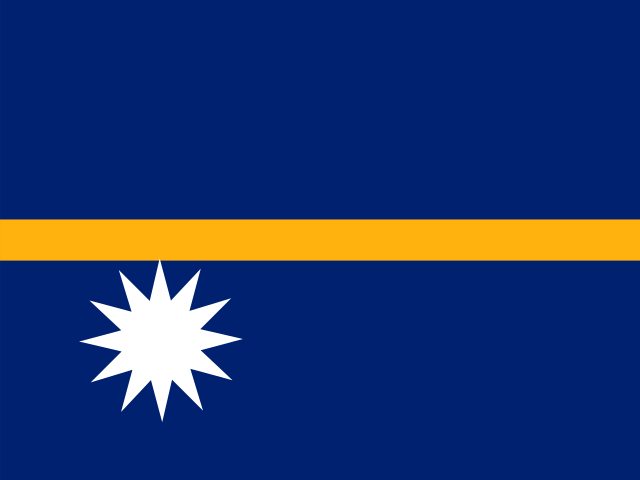 Nauru93.92%
Where a country sits says how it compares with the others measured, and nothing about why.
02Every measured country
Informal employment on a map
Each country is shaded by its value, in five groups holding the same number of countries. Hover a country for its value, or select it to open its profile. Below the map, each continent’s middle country.
Darker is a lower value — the better end.
- 80.73–94.44%
- 54.21–80.36%
- 19.81–52.86%
- 4.20–19.23%
- 0.86–3.98%
- No reading in the 2025 edition
- Europe
3.87%
the middle country, of 32 measured · 49 members
Hungary0.86%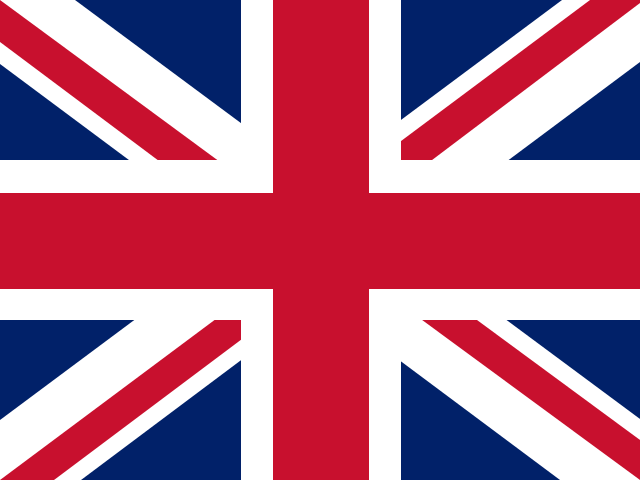 United Kingdom19.81%
Lowest and highest reading in Europe.
- Americas
42.47%
the middle country, of 12 measured · 48 members
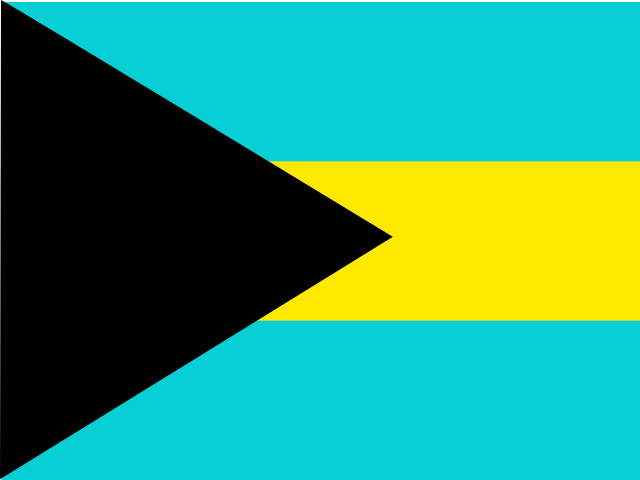 Bahamas15.28%
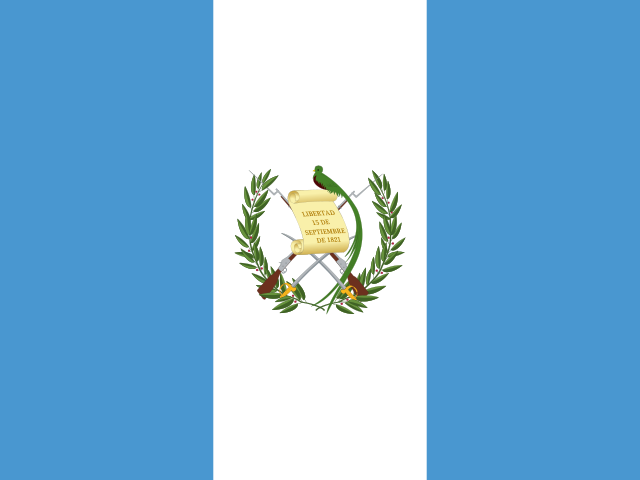 Guatemala72.30%
Lowest and highest reading in Americas.
- Oceania
44.06%
the middle country, of 10 measured · 21 members
 Palau7.17%Nauru93.92%
Lowest and highest reading in Oceania.
- Asia
55.33%
the middle country, of 19 measured · 52 members
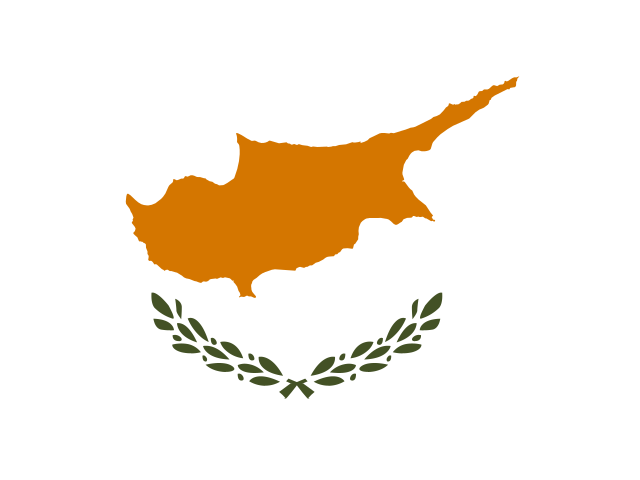 Cyprus2.91%
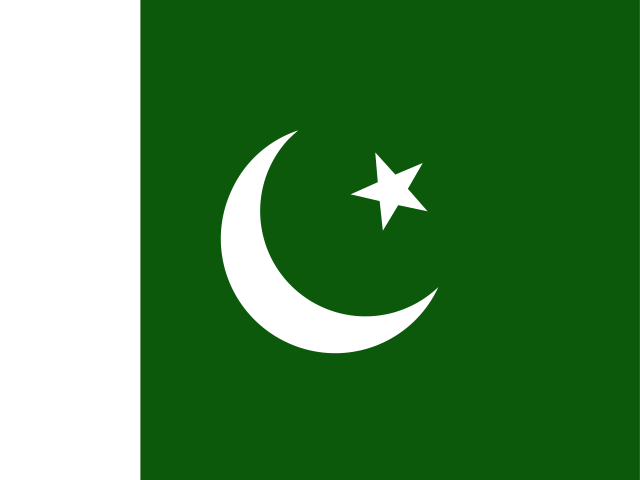 Pakistan88.35%
Lowest and highest reading in Asia.
- Africa
83.27%
the middle country, of 24 measured · 55 members
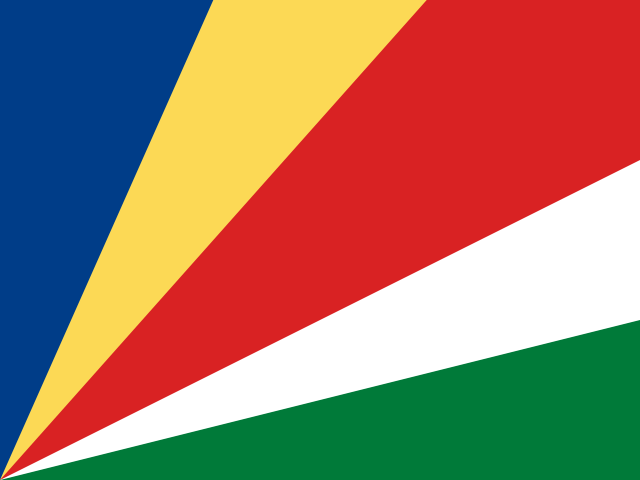 Seychelles8.87%Madagascar94.44%
Lowest and highest reading in Africa.
- Every region
19 sub-regions, lowest middle country first
- Northern Europe
3.32%
the middle country, of 10 measured · 13 members
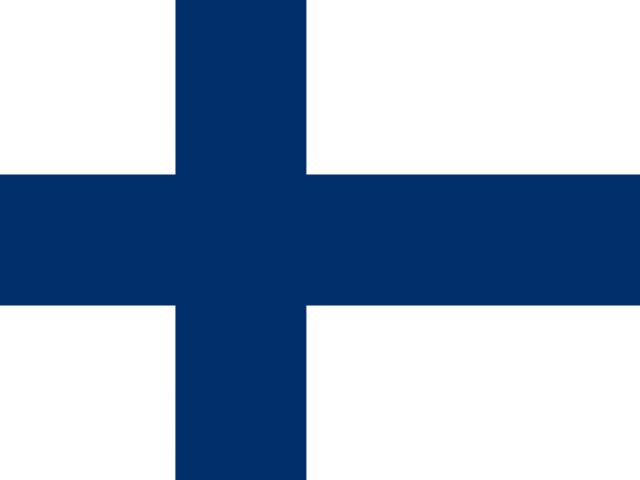 Finland1.54%United Kingdom19.81%
Lowest and highest reading in Northern Europe.
- Eastern Europe
3.58%
the middle country, of 7 measured · 10 members
Hungary0.86%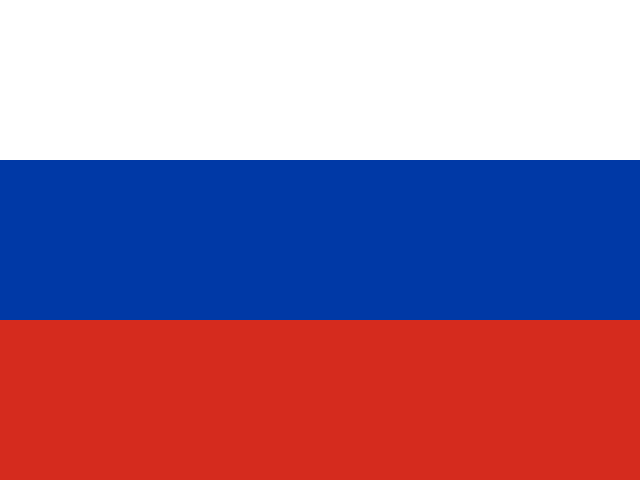 Russia19.23%
Lowest and highest reading in Eastern Europe.
- Western Europe
3.95%
the middle country, of 7 measured · 9 members
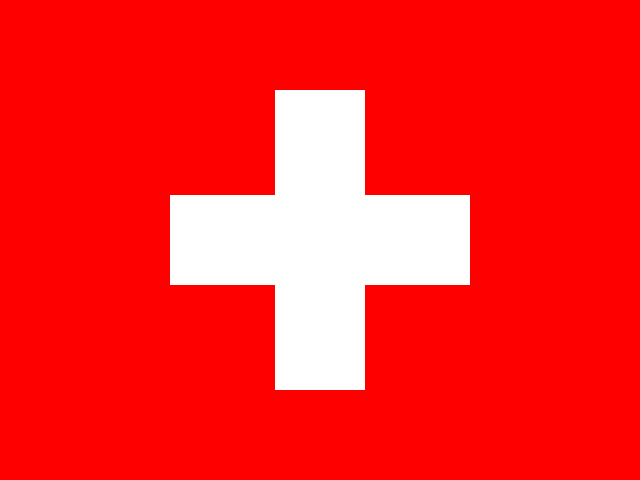 Switzerland1.09%
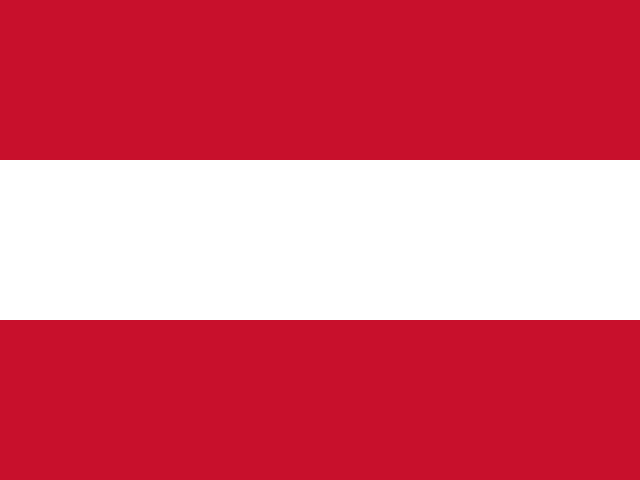 Austria5.50%
Lowest and highest reading in Western Europe.
- Southern Europe
6.01%
the middle country, of 8 measured · 17 members
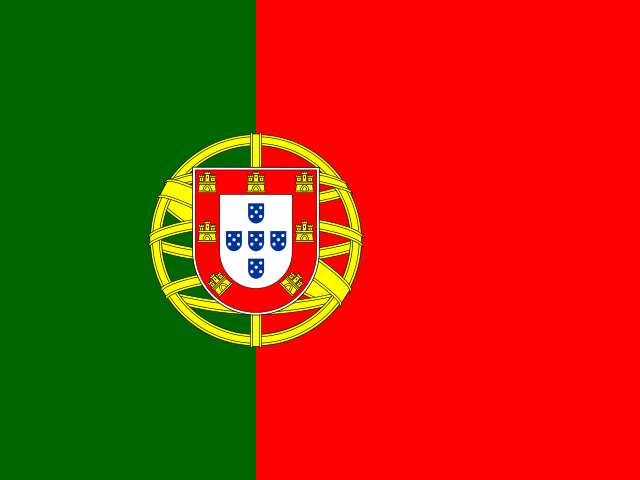 Portugal2.33%
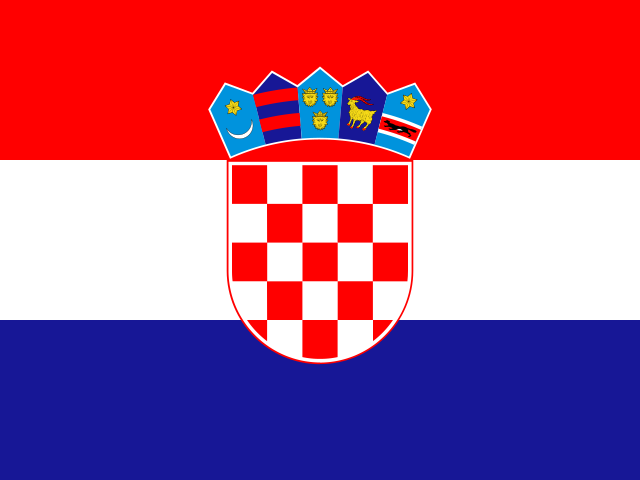 Croatia14.82%
Lowest and highest reading in Southern Europe.
- South America
35.62%
the middle country, of 5 measured · 12 members
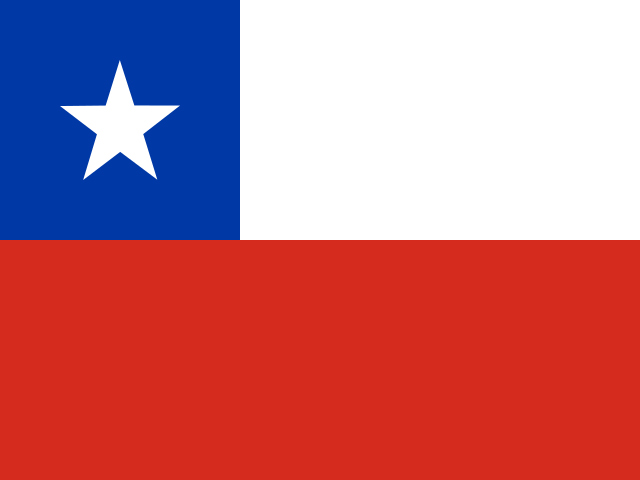 Chile26.18%
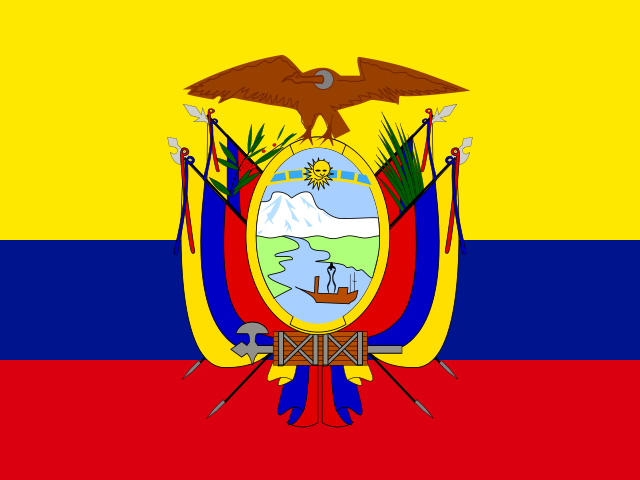 Ecuador67.31%
Lowest and highest reading in South America.
- Western Asia
41.82%
the middle country, of 6 measured · 19 members
Cyprus2.91%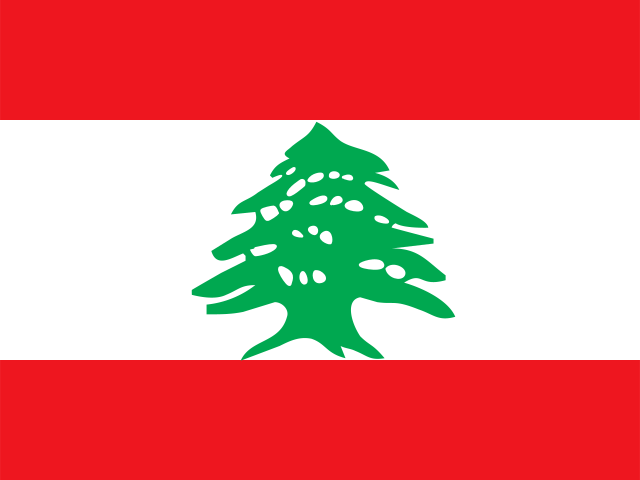 Lebanon55.33%
Lowest and highest reading in Western Asia.
- South-eastern Asia
76.67%
the middle country, of 6 measured · 11 members
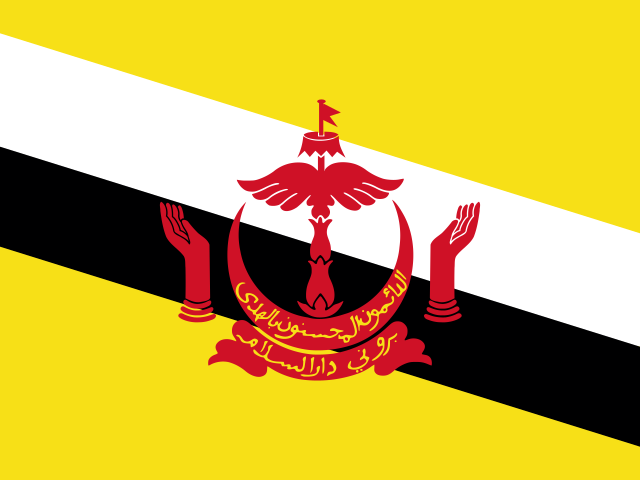 Brunei33.19%
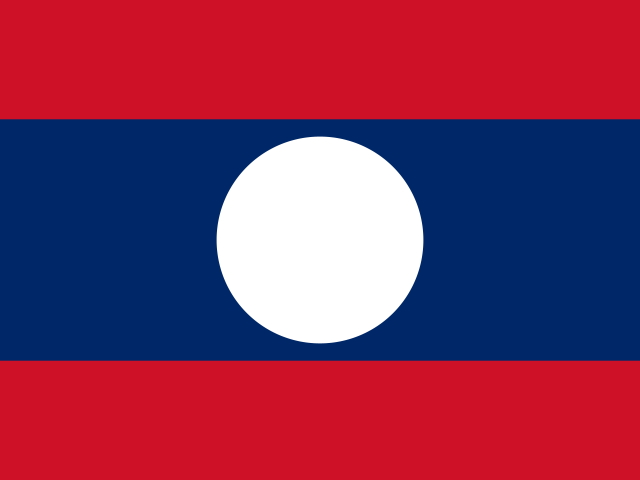 Laos86.52%
Lowest and highest reading in South-eastern Asia.
- Southern Asia
80.77%
the middle country, of 5 measured · 9 members
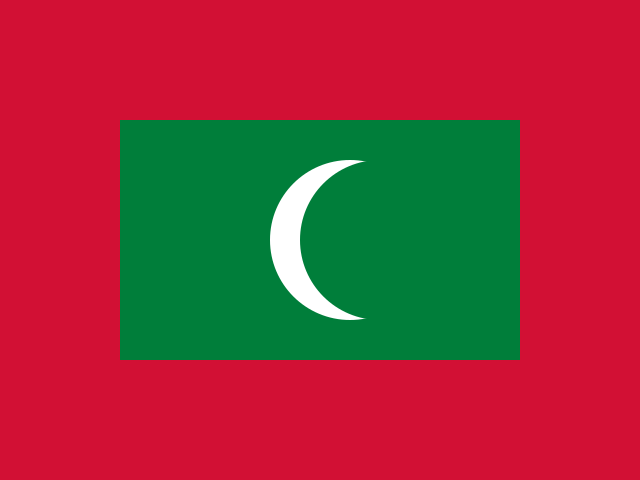 Maldives43.94%Pakistan88.35%
Lowest and highest reading in Southern Asia.
- Eastern Africa
86.75%
the middle country, of 11 measured · 19 members
Seychelles8.87%Madagascar94.44%Lowest and highest reading in Eastern Africa.
- Western Africa
88.85%
the middle country, of 6 measured · 16 members
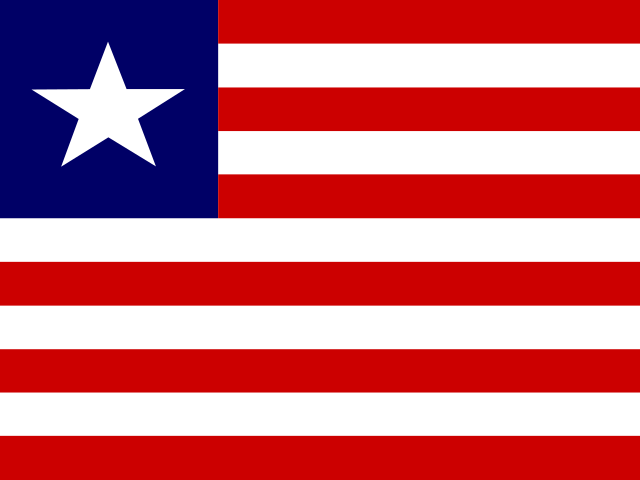 Liberia81.69%
 Sierra Leone93.20%
Lowest and highest reading in Western Africa.
- Caribbean
3 of 24 measured — too few for a middle: Antigua and Barbuda, Bahamas, Barbados.
Bahamas15.28% Barbados61.78%
Lowest and highest reading in Caribbean.
- Central America
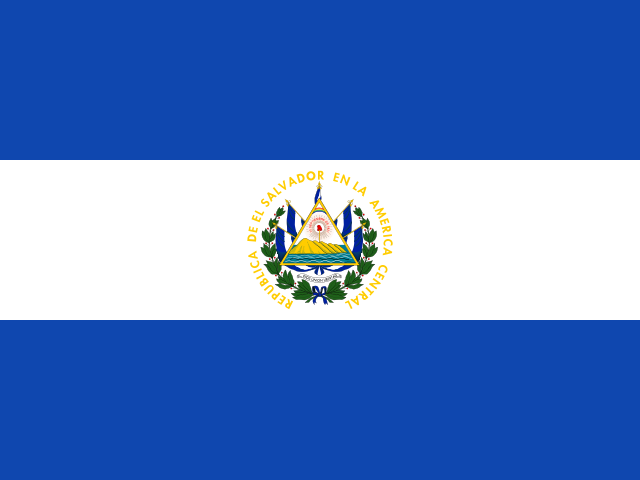
4 of 8 measured — too few for a middle: Costa Rica, El Salvador, Guatemala, Panama.
 Costa Rica36.11%Guatemala72.30%
Lowest and highest reading in Central America.
- Eastern Asia
2 of 8 measured — too few for a middle: Mongolia, South Korea.
 South Korea29.12%
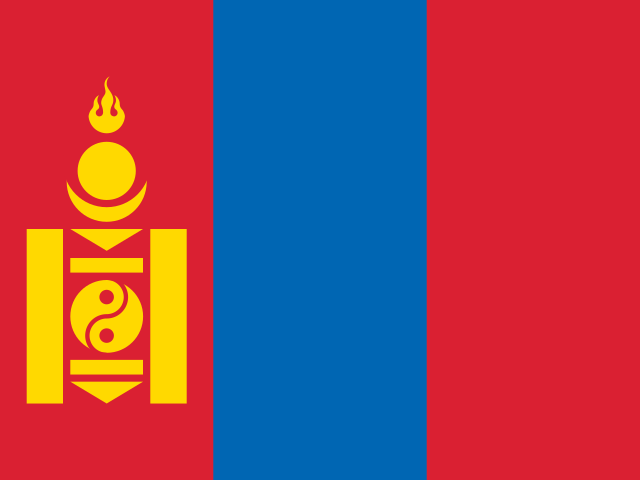 Mongolia36.83%
Lowest and highest reading in Eastern Asia.
- Melanesia
2 of 5 measured — too few for a middle: Fiji, Vanuatu.
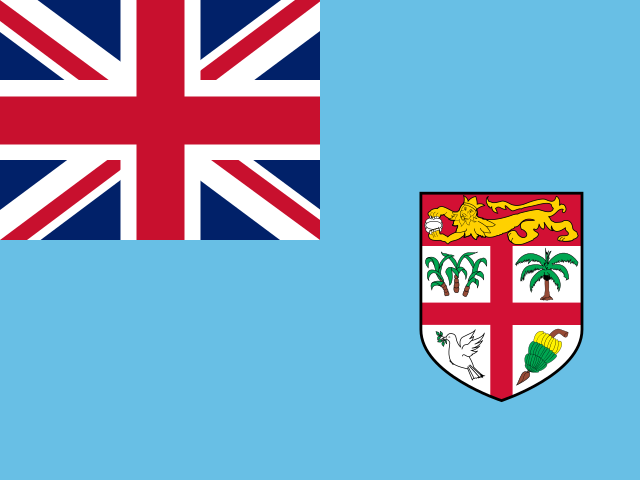 Fiji41.64%
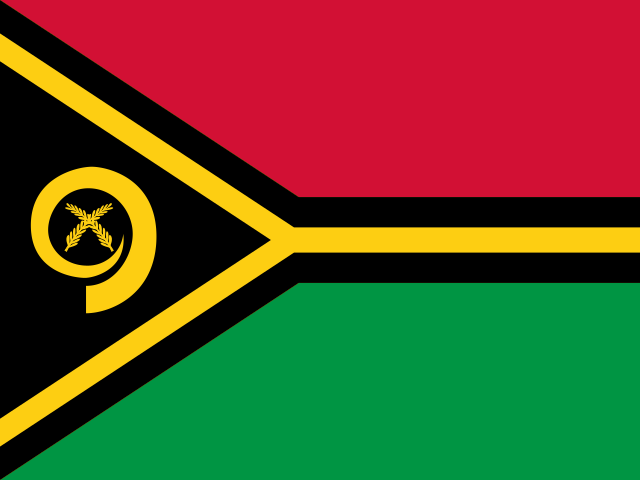 Vanuatu57.74%
Lowest and highest reading in Melanesia.
- Micronesia
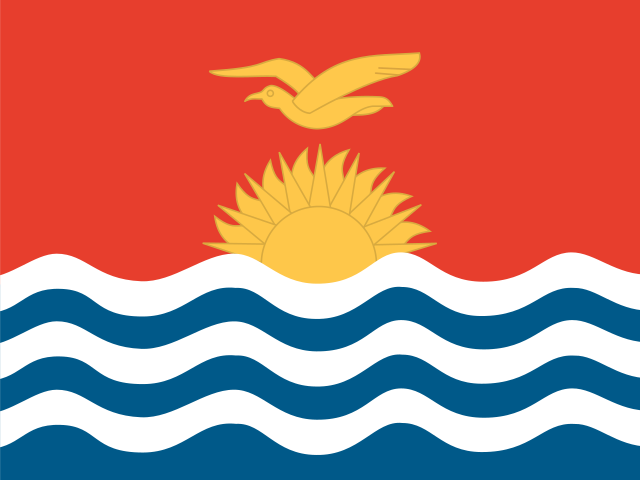
4 of 7 measured — too few for a middle: Kiribati, Marshall Islands, Nauru, Palau.
Palau7.17%Nauru93.92%Lowest and highest reading in Micronesia.
- Middle Africa
2 of 9 measured — too few for a middle: Angola, Equatorial Guinea.
 Equatorial Guinea79.98%Angola94.09%
Lowest and highest reading in Middle Africa.
- Northern Africa
2 of 6 measured — too few for a middle: Egypt, Tunisia.
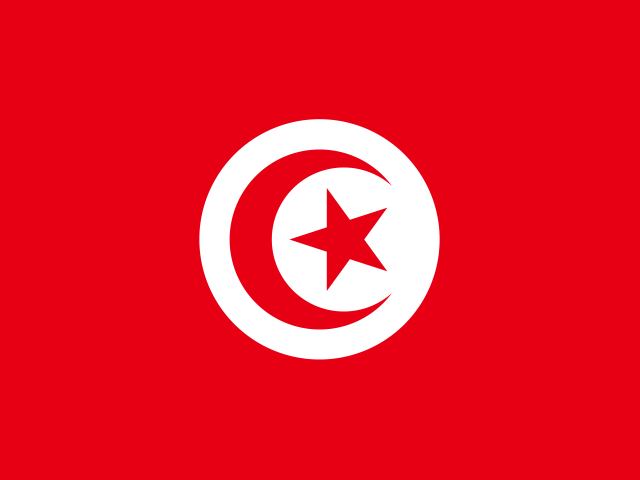 Tunisia36.76%
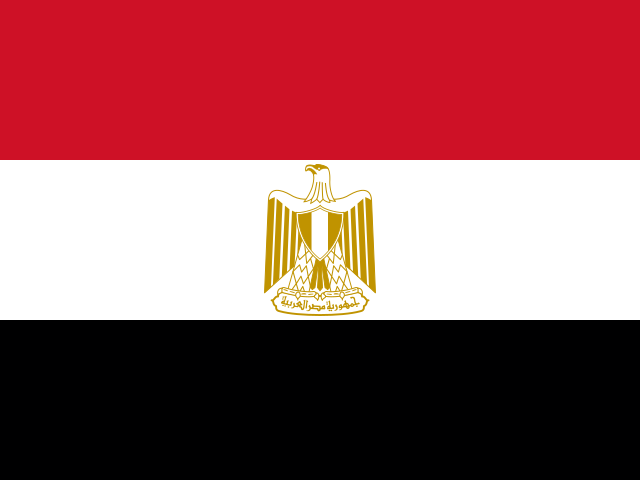 Egypt66.97%
Lowest and highest reading in Northern Africa.
- Polynesia
4 of 7 measured — too few for a middle: Cook Islands, Samoa, Tonga, Tuvalu.
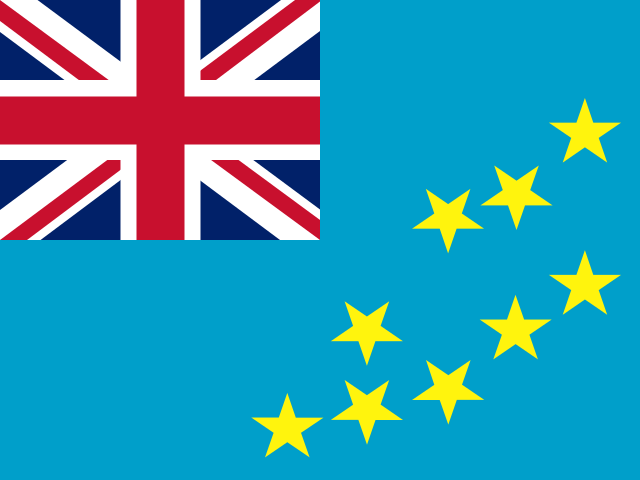 Tuvalu18.75%
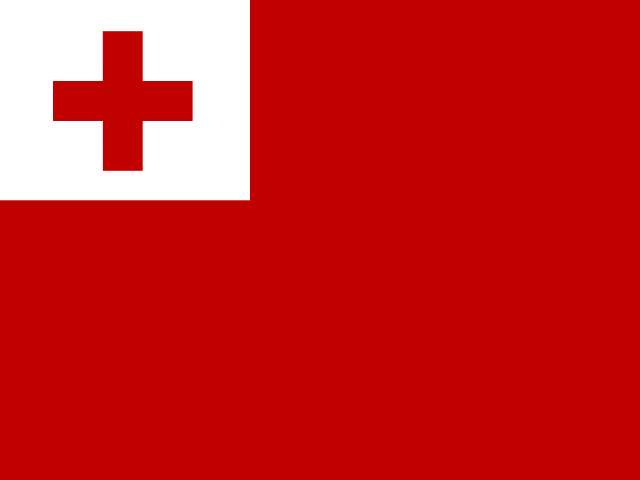 Tonga52.86%
Lowest and highest reading in Polynesia.
- Southern Africa
3 of 5 measured — too few for a middle: Botswana, Eswatini, Lesotho.
 Eswatini52.37%
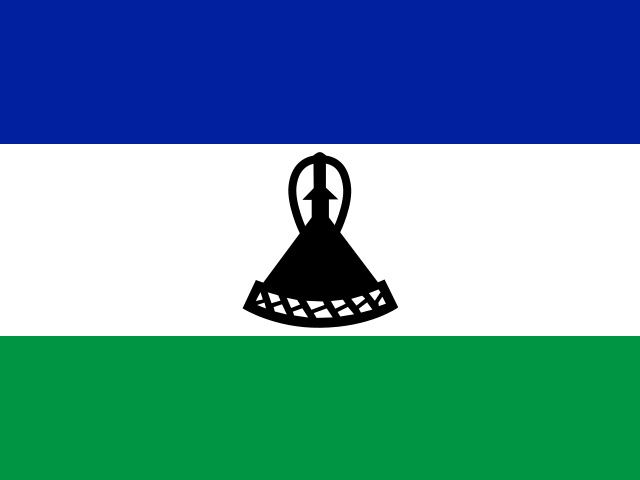 Lesotho84.12%
Lowest and highest reading in Southern Africa.
03The whole field at once
The spread
97 countries, one dot each, on one scale — further right is a higher value. Half the countries are above 36.83%; a quarter are above 77.19%, and a quarter below 6.10%. The bar in each row marks that continent’s middle country.
04All 97 ever measured
Every country
In order, highest value first — position 1 is the highest value, the way ILO’s own tables read. “=” marks a position shared with another country. International Labour Organization (ILO) ranks nobody on this measure; the position is derived here by ordering the published values. The country set is not the world. Informality is measured where surveys ask about it, which is concentrated in countries running MICS and labour force survey programmes — so a country absent from this table has not necessarily little informal work, it may simply not have counted.
Showing 25 of 97 countries


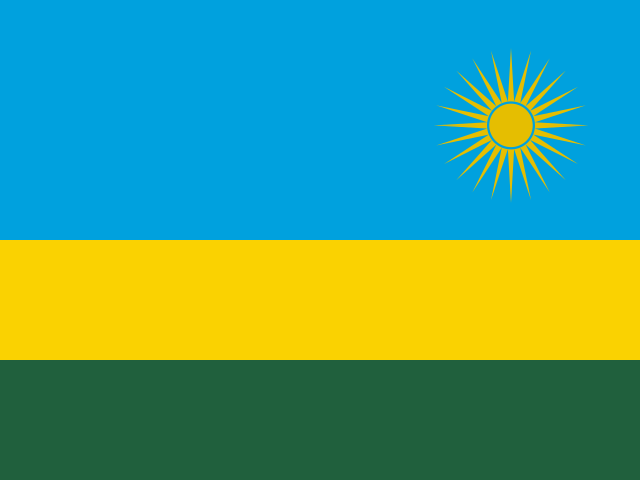
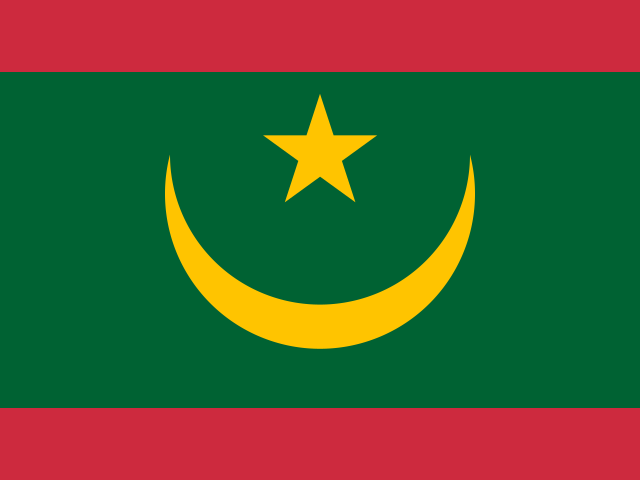
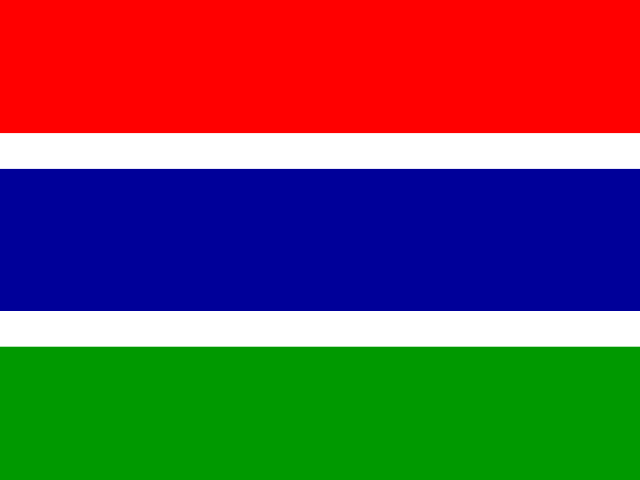
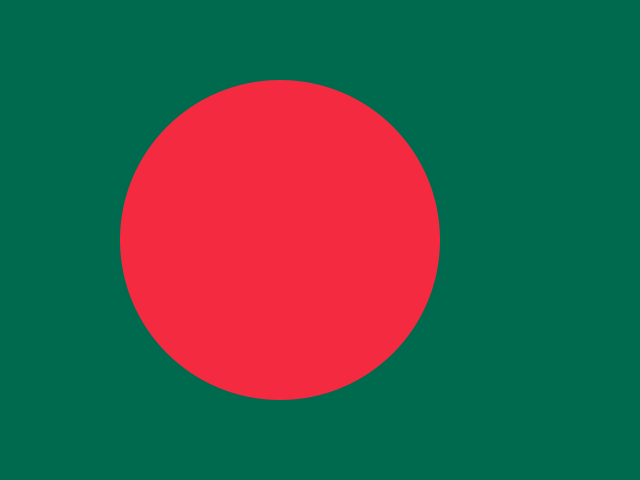




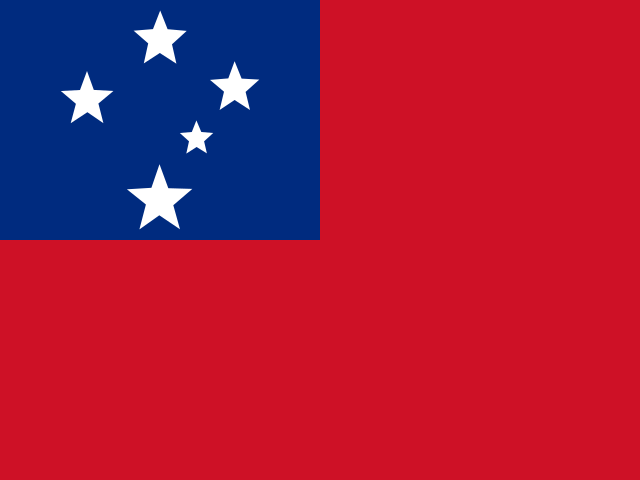
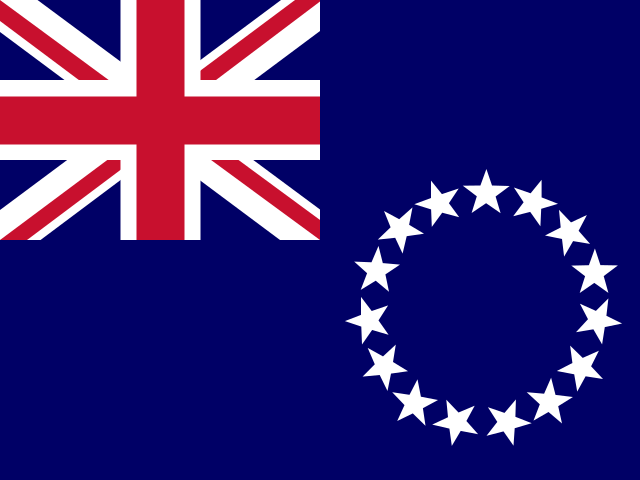
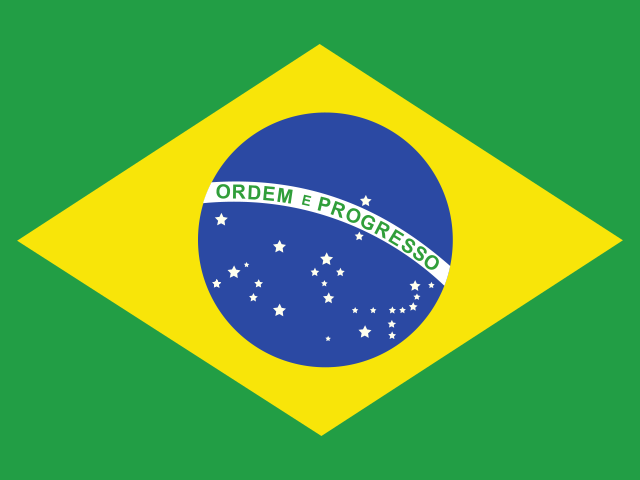
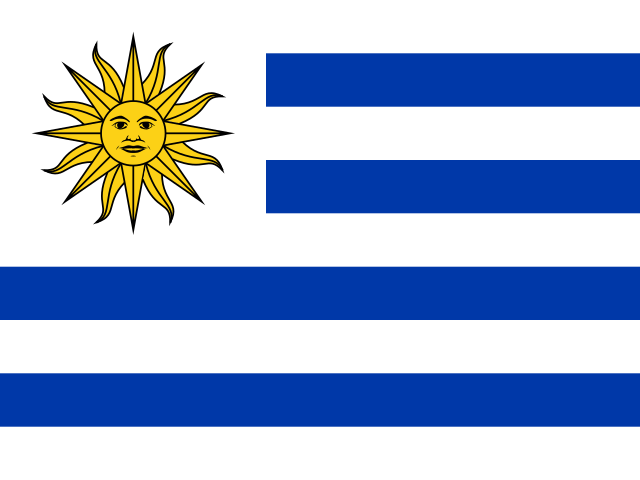


Values for the 2025 edition.
05In this edition
Informal employment in records
The extremes of the statistic. A record reached by more than one country names none of them.
Highest reading
94.44%
Informal employment (% of total employment)
Lowest reading
0.86%
Informal employment (% of total employment)
06By sex
Inside the number
International Labour Organization (ILO) also publishes separate female and male readings. The gap between them, where both exist.
Of the 97 countries with both readings, the women reading is higher in 50, the men reading in 47. The widest gaps each way:
07The measure
About informal employment
Informal employment is work that sits outside any formal arrangement — without a contract, social protection or legal recourse if it goes wrong. In much of the world it is not a fringe: it is how most people earn a living.
What the number is: Informal employment (% of total employment).
08Where it fits
Connections
Its part in the Country Index, the statistics whose values line up most closely with it across countries, and others on the same subject.
In the Country Index
Context, with no vote
This statistic is published in full under Work & Labour, but does not help decide any Country Index standing.
Moves with
Where informal employment is higher, these tend to be higher too.
- Gender Inequality IndexKeyUNDP Human Development Report Office · 89 countries in commonρ 0.90
- Coefficient of Human InequalityUNDP Human Development Report Office · 92 countries in commonρ 0.88
- Prevalence of UndernourishmentFAO · 84 countries in commonρ 0.87
Moves against
Where informal employment is higher, these tend to be lower.
- Inequality-adjusted Human Development IndexUNDP Human Development Report Office · 92 countries in commonρ −0.91
- Human Development IndexKeyUNDP Human Development Report Office · 96 countries in commonρ −0.91
- Human Capital IndexWorld Bank Group · 90 countries in commonρ −0.88
Rank correlation (ρ, from −1 to 1) across countries, on each statistic’s newest edition, out of 75 statistics sharing at least 80 countries with this one. Two statistics that move together do not cause each other.
09Keep reading
Explore further
The subject
The data, edition by edition
The countries at either end
10Questions
Informal employment: questions and answers
Which country has the lowest informal employment?
Hungary, at 0.86%, among the 97 countries compared in the 2025 edition.
Which country has the highest informal employment?
Madagascar, at 94.44%, among the 97 countries compared in the 2025 edition.
How many countries does the Informal Employment Rate cover?
97 in the 2025 edition.
What is the world average informal employment?
This site does not calculate a world average, which would depend on how countries are weighted. In the middle country of the 97 compared in the 2025 edition, the figure was 36.83%.
Is this International Labour Organization (ILO)’s own ranking?
No. International Labour Organization (ILO) publishes the values but ranks nobody; the position on this page is derived by Nations Inquiry by ordering the published values, and equal values share a position.
How often is the Informal Employment Rate published?
This site holds one edition, describing 2025.
Where does the data come from, and can I download it?
From International Labour Organization (ILO), under CC BY 4.0. Read from ILOSTAT directly on the 19th ICLS standard (EMP_5NIF_SEX_AGE_RT). The ILO's modelled informality series was rejected: it contains only aggregates and no country at all. Every edition is available on this site’s Datasets pages as a full table, unrounded.
11Method
Sources, method and citation
Source
Informal Employment Rate — International Labour Organization (ILO)
Read from ILOSTAT directly on the 19th ICLS standard (EMP_5NIF_SEX_AGE_RT). The ILO's modelled informality series was rejected: it contains only aggregates and no country at all.
Newest edition
Report year 2025Data year not recorded
Cite the source as: International Labour Organization. ILOSTAT. Geneva: ILO.
Licence: CC BY 4.0, checked 2026-09-10.
How this page reads the numbers
- International Labour Organization (ILO) ranks nobody on this measure. The position is derived by Nations Inquiry by ordering the published values; equal values share a position.
- Which end is better follows the publisher’s own reading of the measure.
- A country is named at an end only when it holds that value alone. Where several share it, the page says how many and names none first.
- The file gives each country’s most recent reading, so the rows are from different years. Readings from before 2015 are listed but left out of every comparison on this page.
- Values are stored exactly as published and trimmed only for display. “The middle country” is the median of the countries measured, not a world average.
The full note on this data
97 countries, each from its own most recent reading (2016–2025), measured on the 19th ICLS standard and read from ILOSTAT directly (EMP_5NIF_SEX_AGE_RT). Informal employment is work outside any formal arrangement — no contract, no social protection, no legal recourse. ⚠ ONE READING PER COUNTRY rather than annual editions: no single year reaches 80 countries, while 97 have reported at some point, so the per-year view would publish a handful of ragged editions of a series that is actually broad. Each row carries its own year. ⚠ NOT the ILO's modelled informality series (EMP_2IFL_SEX_RT), which was checked on 2026-09-10 and contains ONLY regional and income-group aggregates — not one country. ⚠ COVERAGE IS SKEWED: informality is measured where a survey asks about it, so a country missing here has not necessarily little of it. The ILO ranks nobody, so no rank is stored; the POSITION on the statistics page is derived here by ordering the score and labelled as ours.
Photographs
The countries at the top of this statistic, from their profiles: Wikimedia Commons, shown in greyscale, each used under the licence named.
- Hungary — grin derivative work: Jjtkk, CC BY-SA 3.0
- Switzerland — Simon Koopmann derivative work: Jjtkk, CC BY-SA 2.0 de
- Finland — Joonas Lyytinen, CC BY-SA 2.5
Cite this page
Nations Inquiry (2026). Informal employment by country: Informal Employment Rate, data from International Labour Organization (ILO). https://nationsinquiry.com/statistics/informal-employment