Loading…
World Bank Group · Women, Business and the Law
Women, Business and the Law by country
How equal are women and men in the law on work and money?
14 countries shared first place of the 190 countries compared in 2024, all at 100.0, and Palestine last, at 26.3. In the middle country the figure was 81.3. Among the 190 countries measured in every edition since 1971, the middle one moved from 46.3 to 81.3.
Women, Business and the Law · 2024
Key statistic · Gender & Equality
14 countries share the highest value, 100.0 — no single country is named first.
012024 · position · derived
Who leads
The three countries at the highest end of 190 compared, the three at the other end, and the first on each continent.
Highest in 2024 · shared
14 countries share the highest reading, 100.0
No single country is named first: picking one from a shared value would be a choice the data does not make.


Highest on each continent
- Africa
 Togo97.5
 - Americas
 Canada100.0
 - Asia
 Cyprus96.9
 - Europe
13 countries share 100.0
- Oceania
 New Zealand97.5
 - Every region
02Every measured country
Women, Business and the Law on a map
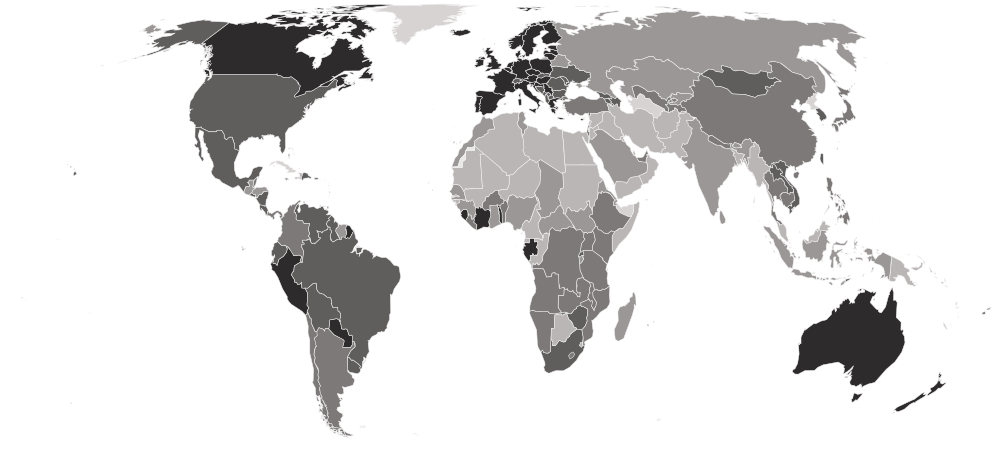
Each country is shaded by its value, in five groups holding the same number of countries. Hover a country for its value, or select it to open its profile. Below the map, each continent’s middle country.
Darker is a higher value — the better end.
- 26.3–63.8
- 64.4–77.5
- 78.1–84.4
- 85.0–91.9
- 92.5–100.0
- No reading in 2024
- Europe
93.8
the middle country, of 41 measured · 49 members
13 share 100.0
 Russia73.1
Highest and lowest reading in Europe.
- Americas
83.8
the middle country, of 35 measured · 48 members
Canada100.0 Haiti61.3
Highest and lowest reading in Americas.
- Asia
76.3
the middle country, of 48 measured · 52 members
Cyprus96.9 Palestine26.3
Highest and lowest reading in Asia.
- Africa
75.9
the middle country, of 54 measured · 55 members
Togo97.5 Sudan32.5
Highest and lowest reading in Africa.
- Oceania
63.4
the middle country, of 12 measured · 21 members
New Zealand97.5 Vanuatu55.6
Highest and lowest reading in Oceania.
- Every region
22 sub-regions, highest middle country first
- Western Europe
100.0
the middle country, of 7 measured · 9 members
5 share 100.0
 Switzerland88.1
Highest and lowest reading in Western Europe.
- Northern Europe
98.8
the middle country, of 10 measured · 13 members
5 share 100.0
 Lithuania93.8
Highest and lowest reading in Northern Europe.
- Southern Europe
92.8
the middle country, of 14 measured · 17 members
3 share 100.0
4 share 85.0
Highest and lowest reading in Southern Europe.
- Eastern Europe
90.6
the middle country, of 10 measured · 10 members
3 share 93.8
Russia73.1Highest and lowest reading in Eastern Europe.
- Eastern Asia
89.4
the middle country, of 6 measured · 8 members
 Hong Kong91.9
 China78.1
Highest and lowest reading in Eastern Asia.
- South America
85.9
the middle country, of 12 measured · 12 members
 Peru95.0
 Suriname76.9
Highest and lowest reading in South America.
- Central America
84.4
the middle country, of 8 measured · 8 members
 Costa Rica91.9
 Guatemala73.8
Highest and lowest reading in Central America.
- Eastern Africa
80.0
the middle country, of 18 measured · 19 members
 Rwanda91.9
 Somalia46.9
Highest and lowest reading in Eastern Africa.
- Southern Africa
80.0
the middle country, of 5 measured · 5 members
 South Africa88.1
 Eswatini46.3
Highest and lowest reading in Southern Africa.
- South-eastern Asia
78.8
the middle country, of 11 measured · 11 members
 Vietnam88.1
 Brunei53.1
Highest and lowest reading in South-eastern Asia.
- Middle Africa
77.5
the middle country, of 9 measured · 9 members
 Gabon95.0
2 share 58.1
Highest and lowest reading in Middle Africa.
- Caribbean
75.0
the middle country, of 13 measured · 24 members
 Dominican Republic86.3Haiti61.3
Highest and lowest reading in Caribbean.
- Western Africa
74.4
the middle country, of 16 measured · 16 members
Togo97.5 Mauritania48.1
Highest and lowest reading in Western Africa.
- Southern Asia
65.6
the middle country, of 9 measured · 9 members
 Nepal80.6
 Iran31.3
Highest and lowest reading in Southern Asia.
- Western Asia
63.8
the middle country, of 18 measured · 19 members
Cyprus96.9Palestine26.3Highest and lowest reading in Western Asia.
- Northern Africa
54.1
the middle country, of 6 measured · 6 members
 Morocco75.6Sudan32.5
Highest and lowest reading in Northern Africa.
- Australia and New Zealand
2 of 2 measured — too few for a middle: Australia, New Zealand.
New Zealand97.5 Australia96.9
Highest and lowest reading in Australia and New Zealand.
- Central Asia
4 of 5 measured — too few for a middle: Kazakhstan, Kyrgyzstan, Tajikistan, Uzbekistan.
 Uzbekistan82.5
 Kazakhstan75.6
Highest and lowest reading in Central Asia.
- Melanesia
4 of 5 measured — too few for a middle: Fiji, Papua New Guinea, Solomon Islands, Vanuatu.
 Fiji82.5Vanuatu55.6
Highest and lowest reading in Melanesia.
- Micronesia
4 of 7 measured — too few for a middle: Kiribati, Marshall Islands, Micronesia, Palau.
 Kiribati76.3
 Palau56.3
Highest and lowest reading in Micronesia.
- Northern America
2 of 4 measured — too few for a middle: Canada, United States.
Canada100.0 United States91.3
Highest and lowest reading in Northern America.
- Polynesia
2 of 7 measured — too few for a middle: Samoa, Tonga.
 Samoa75.0
 Tonga58.8
Highest and lowest reading in Polynesia.
03The whole field at once
The spread
190 countries, one dot each, on one scale — further right is a higher value. Half the countries are above 81.3; a quarter are above 90.6, and a quarter below 68.9. The bar in each row marks that continent’s middle country.
04All 190 ever measured
Every country
In order, highest value first. “=” marks a position shared with another country. World Bank Group ranks nobody on this measure; the position is derived here by ordering the published values. It measures the law, not life: a country can grant full legal parity and still have few women in work or in parliament. Read the ties as real — 14 economies score a flat 100 in 2024, and 190 economies hold only 76 distinct scores between them, because a law is either on the books or it is not.
Showing 25 of 190 countries










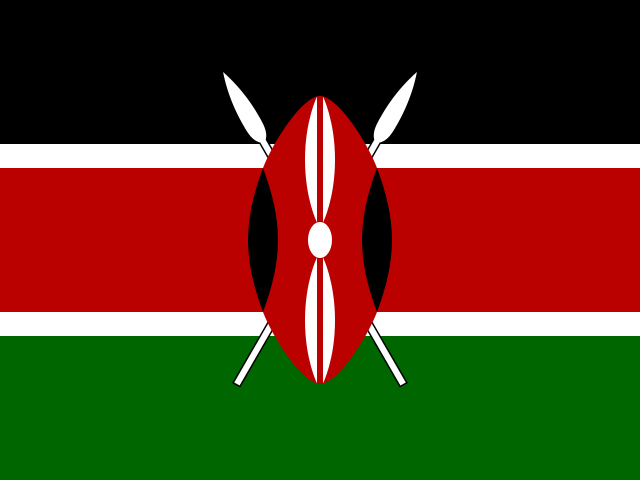
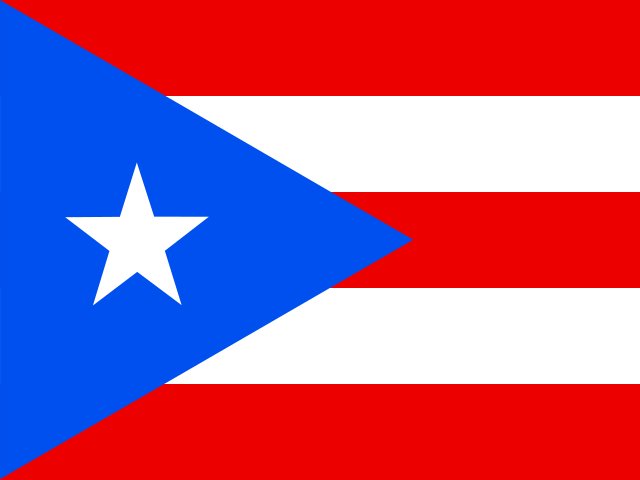
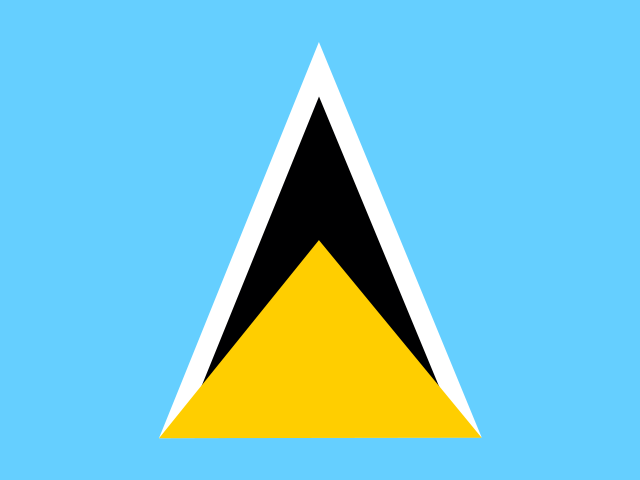

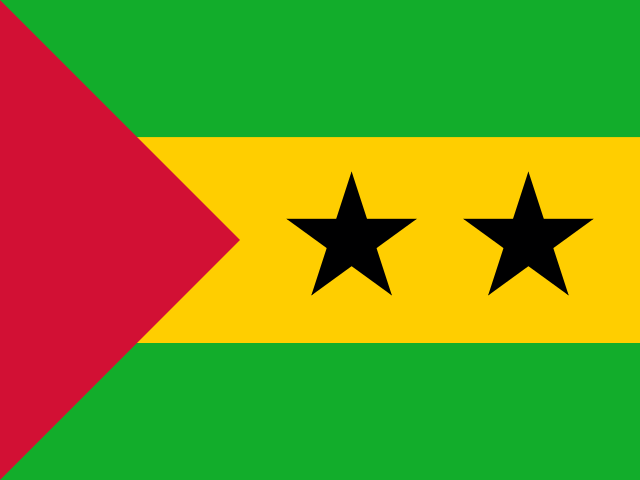


















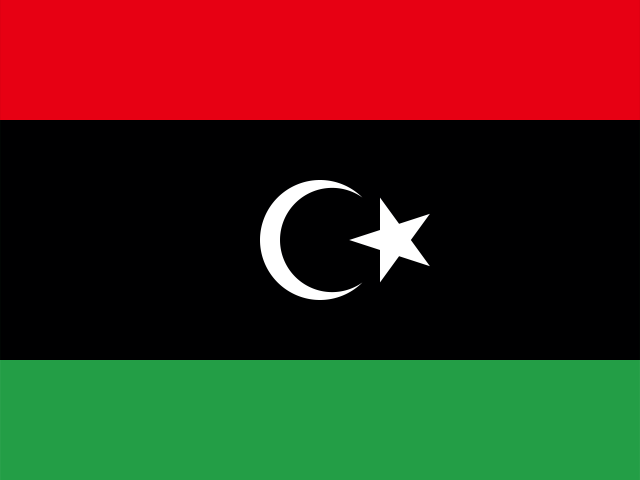
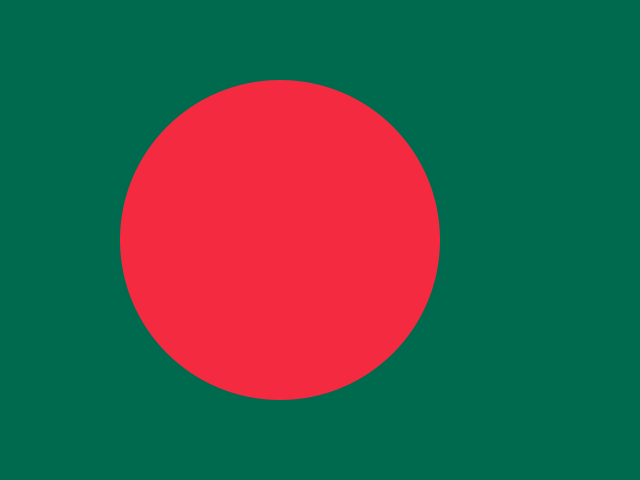
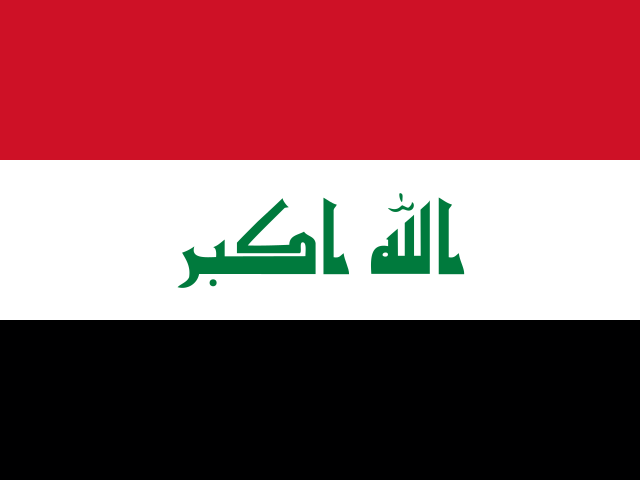
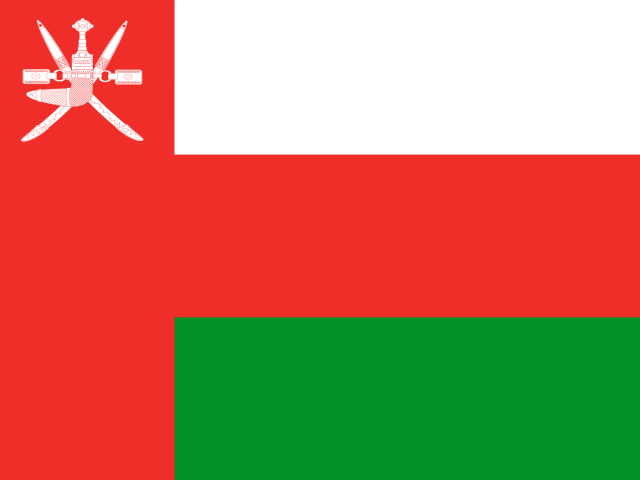
Values for 2024. The change column compares 2024 with 2023 only; the sparkline covers the recent editions.
051971–2024 · 54 editions
Over time
Each point is one year of the statute book. The series can reach back to 1971 precisely because the Bank read the historical law rather than waiting for a survey.
- the middle country
- the middle half of countries
- the middle of the 190 countries measured every time
- each continent’s middle country
The same, year by year
| Year | Countries | Middle country | Middle half | Measured every time |
|---|---|---|---|---|
| 2024 | 190 | 81.3 | 68.9 – 90.6 | 81.3 |
| 2023 | 190 | 80.3 | 68.3 – 88.8 | 80.3 |
| 2022 | 190 | 80.0 | 67.0 – 88.1 | 80.0 |
| 2021 | 190 | 79.7 | 66.4 – 87.3 | 79.7 |
| 2020 | 190 | 78.8 | 64.4 – 88.0 | 78.8 |
| 2019 | 190 | 77.5 | 63.8 – 88.0 | 77.5 |
| 2018 | 190 | 77.5 | 62.7 – 86.9 | 77.5 |
| 2017 | 190 | 76.9 | 60.6 – 86.7 | 76.9 |
| 2016 | 190 | 75.9 | 60.3 – 85.6 | 75.9 |
| 2015 | 190 | 75.6 | 59.5 – 85.0 | 75.6 |
| 2014 | 190 | 75.0 | 58.8 – 83.8 | 75.0 |
| 2013 | 190 | 73.8 | 57.8 – 83.8 | 73.8 |
| 2012 | 190 | 73.1 | 57.0 – 83.8 | 73.1 |
| 2011 | 190 | 73.1 | 56.4 – 83.1 | 73.1 |
| 2010 | 190 | 72.5 | 56.4 – 81.9 | 72.5 |
| 2009 | 190 | 71.3 | 55.2 – 81.3 | 71.3 |
| 2008 | 190 | 69.7 | 53.9 – 80.0 | 69.7 |
| 2007 | 190 | 68.8 | 53.8 – 78.8 | 68.8 |
| 2006 | 190 | 67.2 | 53.8 – 78.0 | 67.2 |
| 2005 | 190 | 66.9 | 52.0 – 77.3 | 66.9 |
| 2004 | 190 | 64.7 | 50.8 – 76.3 | 64.7 |
| 2003 | 190 | 63.8 | 50.2 – 73.8 | 63.8 |
| 2002 | 190 | 63.8 | 50.0 – 71.3 | 63.8 |
| 2001 | 190 | 63.1 | 50.0 – 71.1 | 63.1 |
| 2000 | 190 | 62.2 | 49.4 – 70.5 | 62.2 |
| 1999 | 190 | 61.3 | 49.4 – 69.8 | 61.3 |
| 1998 | 190 | 60.6 | 47.8 – 68.8 | 60.6 |
| 1997 | 190 | 60.3 | 47.8 – 67.5 | 60.3 |
| 1996 | 190 | 58.8 | 47.7 – 66.9 | 58.8 |
| 1995 | 190 | 57.8 | 46.9 – 65.6 | 57.8 |
| 1994 | 190 | 57.5 | 46.9 – 64.4 | 57.5 |
| 1993 | 190 | 56.3 | 46.4 – 63.8 | 56.3 |
| 1992 | 190 | 55.0 | 46.4 – 63.1 | 55.0 |
| 1991 | 190 | 55.0 | 45.6 – 62.8 | 55.0 |
| 1990 | 190 | 54.4 | 44.4 – 61.3 | 54.4 |
| 1989 | 190 | 54.1 | 44.4 – 61.3 | 54.1 |
| 1988 | 190 | 53.8 | 43.8 – 61.3 | 53.8 |
| 1987 | 190 | 53.8 | 43.8 – 61.3 | 53.8 |
| 1986 | 190 | 53.4 | 43.8 – 61.3 | 53.4 |
| 1985 | 190 | 52.5 | 42.8 – 61.3 | 52.5 |
| 1984 | 190 | 52.5 | 42.0 – 60.6 | 52.5 |
| 1983 | 190 | 51.9 | 41.4 – 60.6 | 51.9 |
| 1982 | 190 | 51.9 | 41.3 – 60.0 | 51.9 |
| 1981 | 190 | 51.9 | 40.3 – 59.4 | 51.9 |
| 1980 | 190 | 51.3 | 40.0 – 59.2 | 51.3 |
| 1979 | 190 | 50.6 | 40.0 – 58.8 | 50.6 |
| 1978 | 190 | 50.0 | 39.4 – 58.8 | 50.0 |
| 1977 | 190 | 50.0 | 39.4 – 58.1 | 50.0 |
| 1976 | 190 | 49.7 | 38.9 – 58.1 | 49.7 |
| 1975 | 190 | 49.4 | 38.3 – 58.1 | 49.4 |
| 1974 | 190 | 49.4 | 37.7 – 58.1 | 49.4 |
| 1973 | 190 | 48.1 | 36.9 – 55.5 | 48.1 |
| 1972 | 190 | 46.6 | 36.9 – 55.0 | 46.6 |
| 1971 | 190 | 46.3 | 36.4 – 55.6 | 46.3 |
062023 → 2024
Who rose and fell
The biggest changes in value between the two newest editions. Places are shown second, because they also move when other countries do.
Improved most
before → after Sierra Leone72.5 → 92.5 · 131st → 36th+20.0
- Togo81.9 → 97.5 · 86th → 15th+15.6
 Jordan46.9 → 59.4 · 179th → 161st+12.5
- Uzbekistan70.6 → 82.5 · 136th → 84th+11.9
 Malaysia50.0 → 60.6 · 174th → 158th+10.6
Declined most
before → afterNo country moved this way.
190 countries were measured in both 2023 and 2024.
07Across every edition
Women, Business and the Law in records
The extremes of the statistic. A record reached by more than one country names none of them.
Highest reading on record
Reached 99 times by 14 countries — shared, so no holder is named
100.0
WBL Index (0–100, where 100 is full legal parity)
Lowest reading on record
Reached 50 times by 2 countries — shared, so no holder is named
17.5
WBL Index (0–100, where 100 is full legal parity)
Biggest improvement between editions
+32.5
38.1 → 70.6
Biggest decline between editions
−11.9
38.1 → 26.3
Most improved since first measured
+71.9
25.6 → 97.5
At the top most often
23 of 54
editions, alone at the first-listed end
08The parts of the index
Inside the number
World Bank Group publishes the parts the headline is built from. Each part’s highest and lowest country, and its middle value.
| Part | Highest | Lowest | Middle country |
|---|---|---|---|
| Mobility190 countries | 135 countries share 100 | Iran0 | 100 |
| Workplace190 countries | 121 countries share 100 | 3 countries share 0 | 100 |
| Pay190 countries | 73 countries share 100 | 7 countries share 0 | 75 |
| Marriage190 countries | 105 countries share 100 | 5 countries share 0 | 100 |
| Parenthood190 countries | 38 countries share 100 | 15 countries share 0 | 60 |
| Entrepreneurship190 countries | 93 countries share 100 | 2 countries share 0 | 75 |
| Assets190 countries | 115 countries share 100 | 4 countries share 0 | 100 |
| Pension190 countries | 73 countries share 100 | 24 countries share 25 | 75 |
09The measure
About Women, Business and the Law
Women, Business and the Law measures what a country’s laws actually give women relative to men, across mobility, the workplace, pay, marriage, parenthood, entrepreneurship, assets and pensions. The World Bank scores the same 190 economies out of 100 every year since 1971 — the longest complete panel on this site.
What the number is: WBL Index (0–100, where 100 is full legal parity).
What it does not measure
It scores laws as written, not whether they are enforced or followed, and it assumes a woman living in the country's main business city.
10Where it fits
Connections
Its part in the Country Index, the statistics whose values line up most closely with it across countries, and others on the same subject.
In the Country Index
A key statistic for Gender & Equality
“The gap written into the statute book, which a country can close while outcomes lag for a generation.”
- Edition used
- 2024 (data 2024)
- Countries
- 190
- Licence
- CC BY 4.0
Moves with
Where Women, Business and the Law is higher, these tend to be higher too.
- Statistical Performance IndicatorsKeyWorld Bank Group · 184 countries in commonρ 0.66
- World Energy Trilemma IndexWorld Energy Council · 126 countries in commonρ 0.65
- V-Dem Electoral Democracy IndexKeyV-Dem Institute, University of Gothenburg · 172 countries in commonρ 0.62
Moves against
Where Women, Business and the Law is higher, these tend to be lower.
- Social Institutions and Gender IndexKeyOECD · 140 countries in commonρ −0.85
- Youth Not in Education, Employment or TrainingILO · 96 countries in commonρ −0.66
- Informal Employment RateILO · 94 countries in commonρ −0.63
Rank correlation (ρ, from −1 to 1) across countries, on each statistic’s newest edition, out of 125 statistics sharing at least 80 countries with this one. Two statistics that move together do not cause each other.
11Keep reading
Explore further
The subject
More from World Bank Group
12Questions
Women, Business and the Law: questions and answers
Which country has the highest Women, Business and the Law?
14 countries share the highest reading, 100.0, among the 190 compared in 2024, so no single country is named.
Which country has the lowest Women, Business and the Law?
Palestine, at 26.3, among the 190 countries compared in 2024.
How many countries does the Women, Business and the Law cover?
190 in 2024.
What is the world average Women, Business and the Law?
This site does not calculate a world average, which would depend on how countries are weighted. In the middle country of the 190 compared in 2024, the figure was 81.3.
Is this World Bank Group’s own ranking?
No. World Bank Group publishes the values but ranks nobody; the position on this page is derived by Nations Inquiry by ordering the published values, and equal values share a position.
How often is the Women, Business and the Law published?
This site holds 54 editions, describing 1971 to 2024.
Where does the data come from, and can I download it?
From World Bank Group, under CC BY 4.0. From the World Bank’s Women, Business and the Law dataset. All eight legal areas are stored alongside the headline index, which is simply their mean. Every edition is available on this site’s Datasets pages as a full table, unrounded.
13Method
Sources, method and citation
Source
Women, Business and the Law — World Bank Group
From the World Bank’s Women, Business and the Law dataset. All eight legal areas are stored alongside the headline index, which is simply their mean.
Newest edition
Report year 2024Data year 2024
Cite the source as: World Bank. Women, Business and the Law. Washington, DC: World Bank Group.
Licence: CC BY 4.0, checked 2026-08-29.
How this page reads the numbers
- World Bank Group ranks nobody on this measure. The position is derived by Nations Inquiry by ordering the published values; equal values share a position.
- Which end is better follows the publisher’s own reading of the measure.
- A country is named at an end only when it holds that value alone. Where several share it, the page says how many and names none first.
- Values are stored exactly as published and trimmed only for display. “The middle country” is the median of the countries measured, not a world average.
The full note on this data
54 data years (1971–2024) for the same 190 economies every year, with no gaps anywhere — the longest complete panel on the site. It measures the share of legal rights a country's LAWS give women relative to men, across eight areas: mobility, workplace, pay, marriage, parenthood, entrepreneurship, assets and pension. All eight are stored alongside the headline index, which is their mean. ⚠ It measures the statute book, not outcomes, which is what makes it different from the Global Gender Gap Index rather than a second version of it — a country can grant full legal parity and still have few women in work or parliament. It is also why the series can reach back to 1971: the Bank read the historical law. ⚠ ⚠ The Bank does not rank economies. A POSITION is derived here (2026-09-10) by ordering the score, and IT MUST BE READ WITH THE TIES IN VIEW: 14 economies score a full 100 in the 2024 edition and all 14 share position 1, and 190 economies hold only 76 distinct scores between them, so long runs of the table sit on a single position. The order is real; the resolution is coarse, because a law is either on the books or it is not.
Cite this page
Nations Inquiry (2026). Women, Business and the Law by country: Women, Business and the Law, data from World Bank Group. https://nationsinquiry.com/statistics/women-business-law