Loading…
OECD · Social Institutions and Gender Index
Social Institutions and Gender Index by country
How much do laws, customs and attitudes discriminate against women?
Of the 140 countries compared in 2023, Norway had the lowest reading, 6.7, and Mauritania had the highest reading, 67.4. In the middle country the figure was 25.2.
Social Institutions and Gender Index · 2023
Key statistic · Gender & Equality
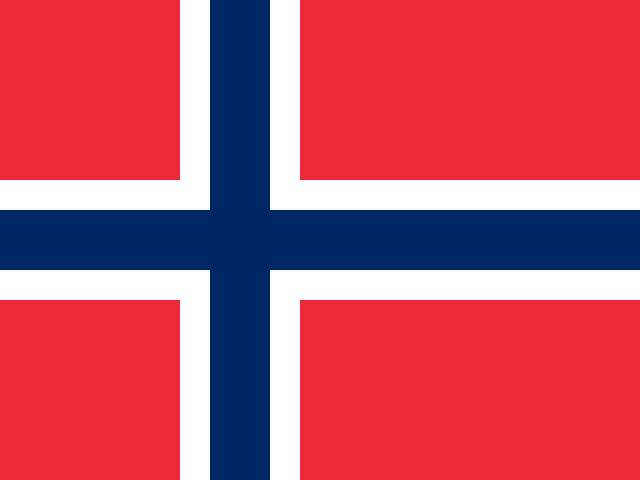
Lowest of 140Norway
6.7012023 · position · derived
Who leads
The three countries at the lowest end of 140 compared, the three at the other end, and the first on each continent.
 1
1Photo: Ximonic , Simo Räsänen · CC BY-SA 3.0, greyscale
 2
2Photo: Gf uip · CC BY-SA 3.0, greyscale
 3
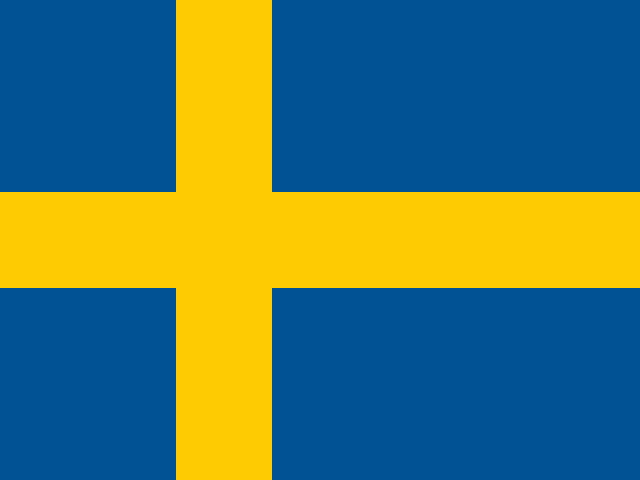
3Photo: User:Pieter Kuiper · Public domain, greyscale
Highest in 2023
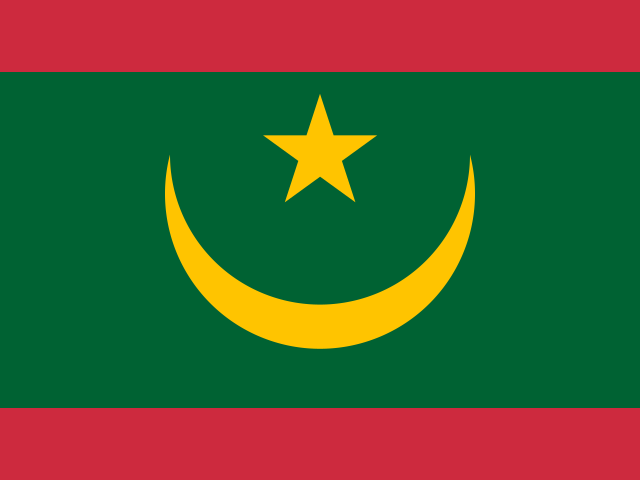 Mauritania67.4
 Cameroon66.9
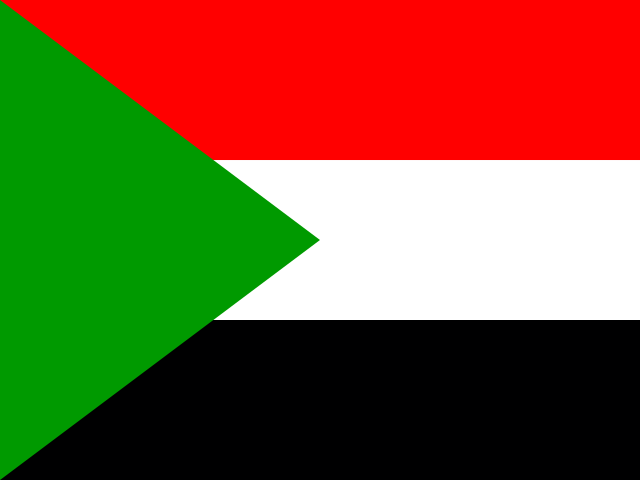 Sudan64.6
Where a country sits says how it compares with the others measured, and nothing about why.
Lowest on each continent
- Africa
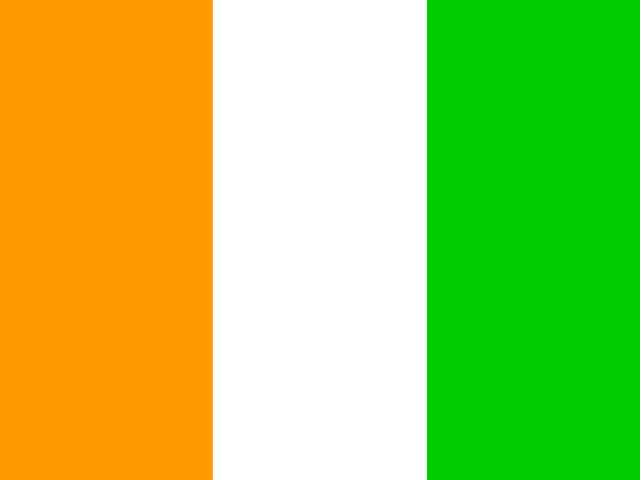 Côte d’Ivoire17.3
 - Americas
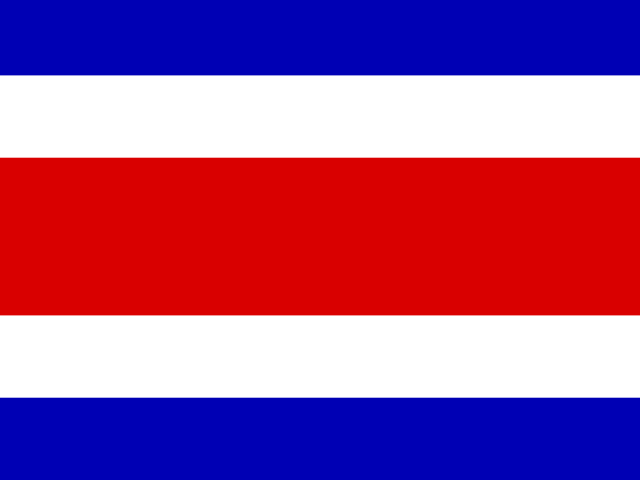 Costa Rica10.9
 - Asia
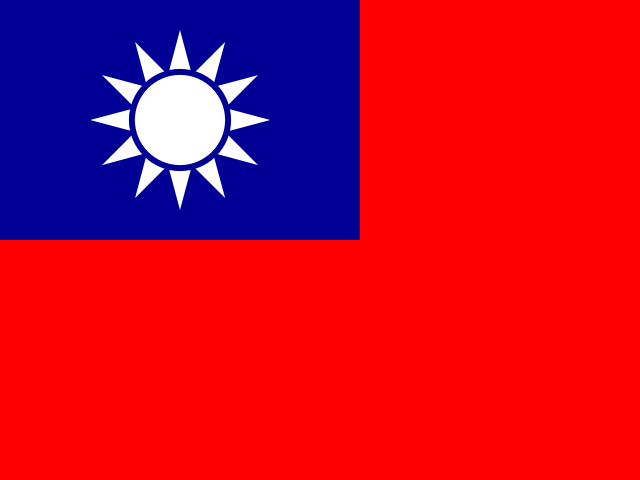 Taiwan9.2
 - EuropeNorway6.7
- Oceania
 New Zealand14.0
2 of 21 measured
- Every region
02Every measured country
Social Institutions and Gender Index on a map
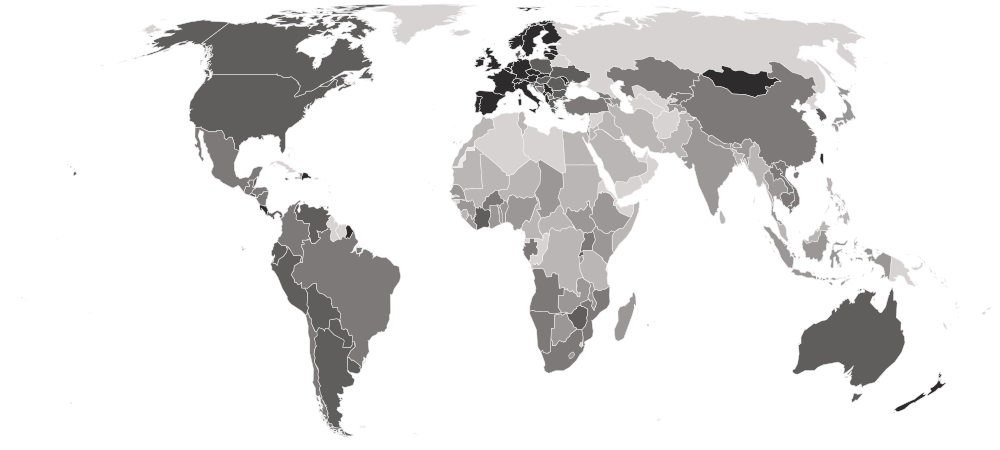
Each country is shaded by its value, in five groups holding the same number of countries. Hover a country for its value, or select it to open its profile. Below the map, each continent’s middle country.
Darker is a lower value — the better end.
- 46.5–67.4
- 29.5–46.4
- 20.7–29.4
- 15.2–20.6
- 6.7–15.0
- No reading in 2023
- Europe
13.1
the middle country, of 36 measured · 49 members
Norway6.7 Bosnia and Herzegovina27.1
Lowest and highest reading in Europe.
- Americas
19.5
the middle country, of 24 measured · 48 members
Costa Rica10.9 Haiti46.4
Lowest and highest reading in Americas.
- Asia
33.4
the middle country, of 36 measured · 52 members
Taiwan9.2 Iran62.9
Lowest and highest reading in Asia.
- Africa
38.9
the middle country, of 42 measured · 55 members
Côte d’Ivoire17.3Mauritania67.4Lowest and highest reading in Africa.
- Oceania
2 of 21 measured — too few for a middle: Australia, New Zealand.
New Zealand14.0 Australia15.4
Lowest and highest reading in Oceania.
- Every region
19 sub-regions, lowest middle country first
- Western Europe
9.9
the middle country, of 6 measured · 9 members
 Belgium7.4
 Germany12.4
Lowest and highest reading in Western Europe.
- Northern Europe
12.3
the middle country, of 9 measured · 13 members
Norway6.7 Denmark15.2
Lowest and highest reading in Northern Europe.
- Eastern Europe
15.5
the middle country, of 8 measured · 10 members
 Moldova11.0
 Bulgaria18.9
Lowest and highest reading in Eastern Europe.
- Southern Europe
16.9
the middle country, of 13 measured · 17 members
 Albania8.9Bosnia and Herzegovina27.1
Lowest and highest reading in Southern Europe.
- South America
20.0
the middle country, of 10 measured · 12 members
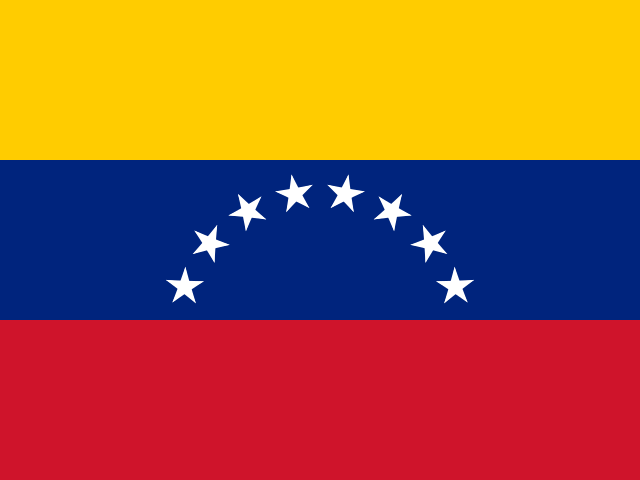 Venezuela16.5
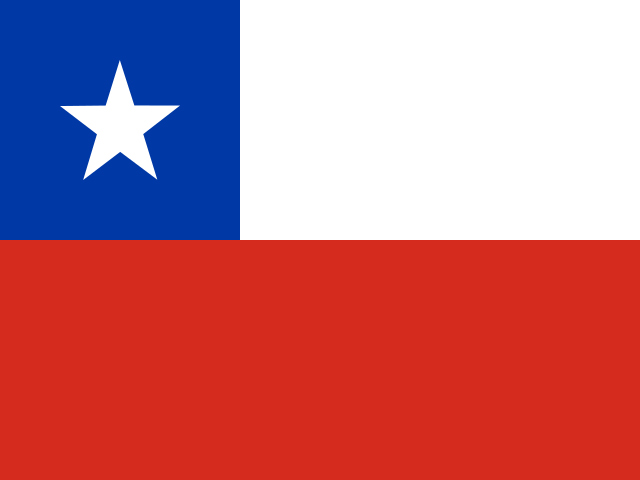 Chile27.2
Lowest and highest reading in South America.
- Central America
20.4
the middle country, of 8 measured · 8 members
Costa Rica10.9 Honduras26.0
Lowest and highest reading in Central America.
- Eastern Asia
22.9
the middle country, of 6 measured · 8 members
Taiwan9.2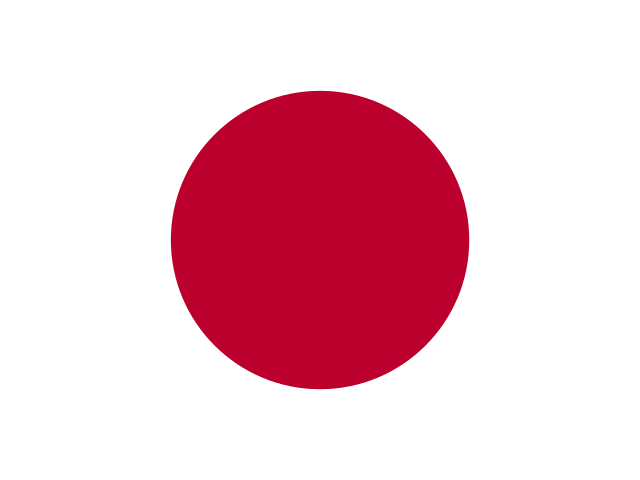 Japan32.9
Lowest and highest reading in Eastern Asia.
- Eastern Africa
32.2
the middle country, of 14 measured · 19 members
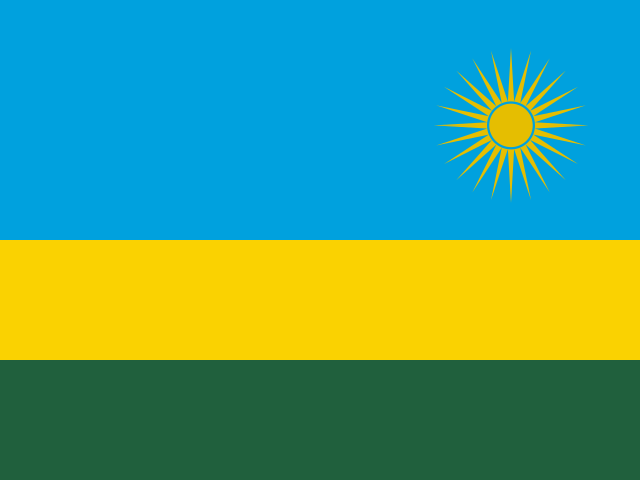 Rwanda19.0
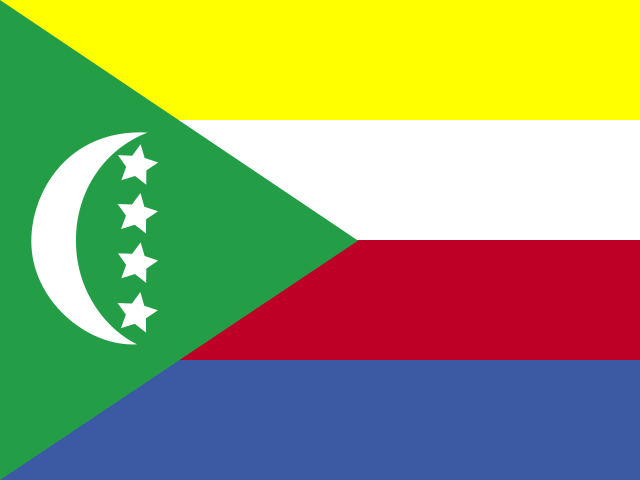 Comoros54.7
Lowest and highest reading in Eastern Africa.
- Western Africa
38.9
the middle country, of 14 measured · 16 members
Côte d’Ivoire17.3Mauritania67.4Lowest and highest reading in Western Africa.
- South-eastern Asia
44.6
the middle country, of 9 measured · 11 members
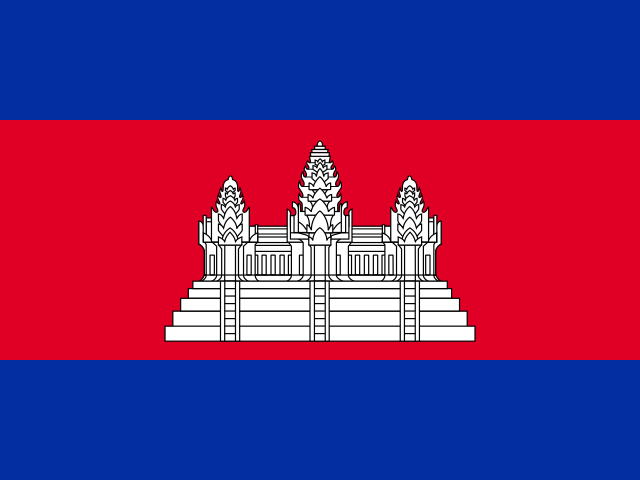 Cambodia21.7
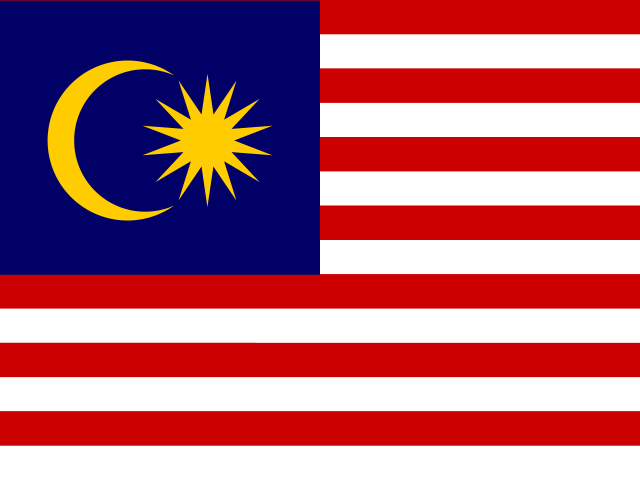 Malaysia60.7
Lowest and highest reading in South-eastern Asia.
- Middle Africa
46.0
the middle country, of 6 measured · 9 members
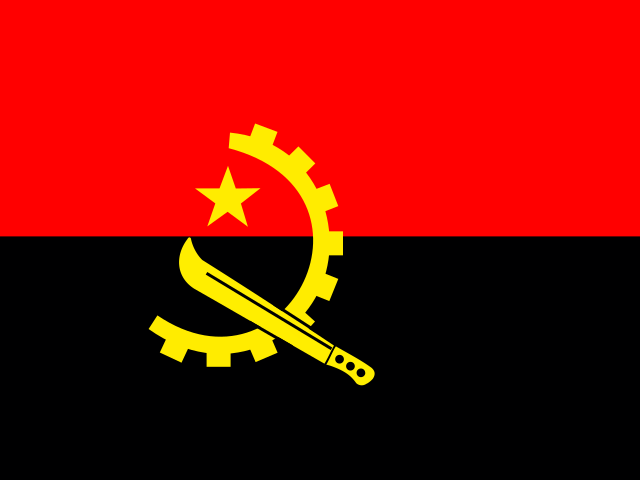 Angola25.9Cameroon66.9
Lowest and highest reading in Middle Africa.
- Southern Asia
49.3
the middle country, of 7 measured · 9 members
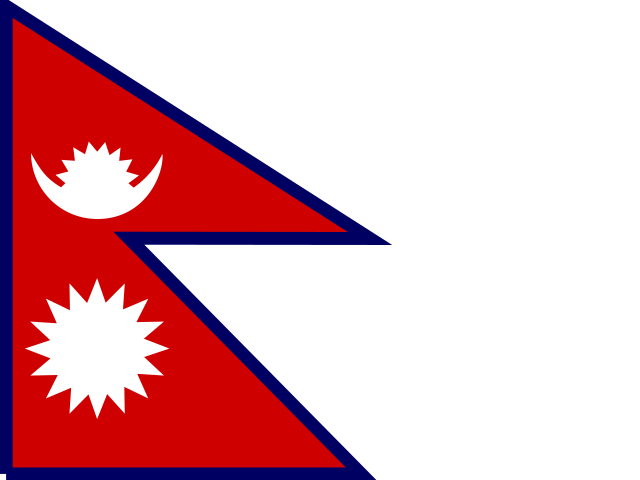 Nepal30.6Iran62.9
Lowest and highest reading in Southern Asia.
- Western Asia
51.0
the middle country, of 11 measured · 19 members
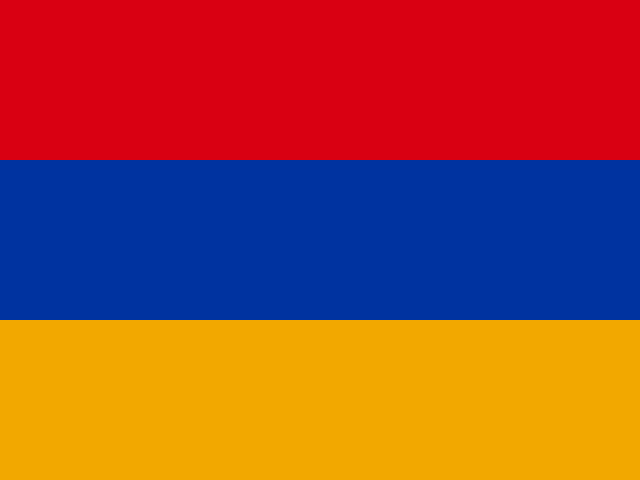 Armenia23.7
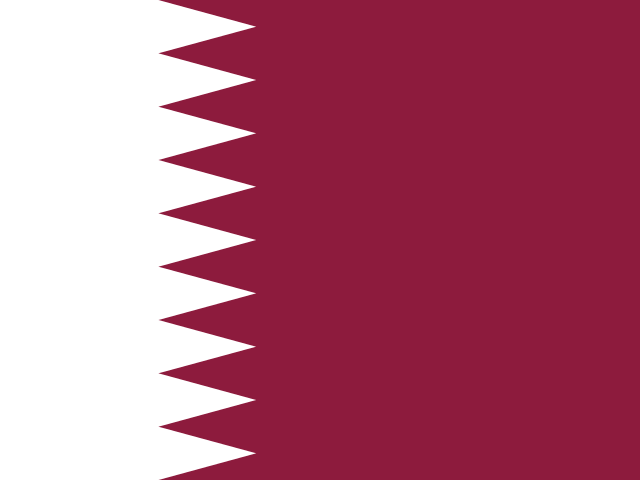 Qatar60.1
Lowest and highest reading in Western Asia.
- Australia and New Zealand
2 of 2 measured — too few for a middle: Australia, New Zealand.
New Zealand14.0Australia15.4Lowest and highest reading in Australia and New Zealand.
- Caribbean
4 of 24 measured — too few for a middle: Dominican Republic, Haiti, Jamaica, Trinidad and Tobago.
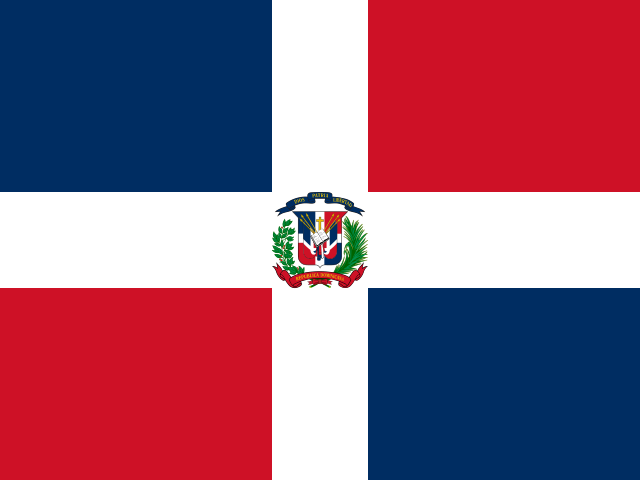 Dominican Republic14.8Haiti46.4
Lowest and highest reading in Caribbean.
- Central Asia
3 of 5 measured — too few for a middle: Kazakhstan, Kyrgyzstan, Tajikistan.
 Kazakhstan20.9
 Tajikistan40.0
Lowest and highest reading in Central Asia.
- Northern Africa
4 of 6 measured — too few for a middle: Egypt, Morocco, Sudan, Tunisia.
 Tunisia46.5Sudan64.6
Lowest and highest reading in Northern Africa.
- Northern America
2 of 4 measured — too few for a middle: Canada, United States.
 Canada17.5
 United States19.1
Lowest and highest reading in Northern America.
- Southern Africa
4 of 5 measured — too few for a middle: Botswana, Lesotho, Namibia, South Africa.
 South Africa23.0
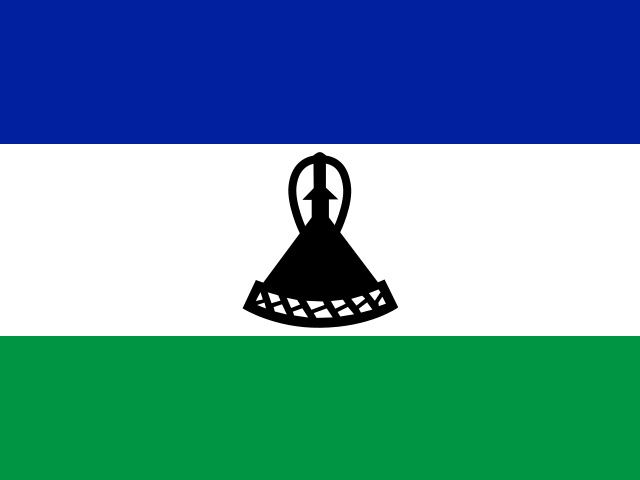 Lesotho32.8
Lowest and highest reading in Southern Africa.
03The whole field at once
The spread
140 countries, one dot each, on one scale — further right is a higher value. Half the countries are above 25.2; a quarter are above 40.6, and a quarter below 16.8. The bar in each row marks that continent’s middle country.
04All 140 ever measured
Every country
In order, highest value first — position 1 is the highest value, the way OECD’s own tables read. “=” marks a position shared with another country. OECD ranks nobody on this measure; the position is derived here by ordering the published values. A higher score is worse, so position 1 is the MOST discriminatory country, not the least: the table opens on Mauritania at 67.4 and closes on Norway at 6.7. Its four dimensions are stored beside the headline.
Showing 25 of 140 countries
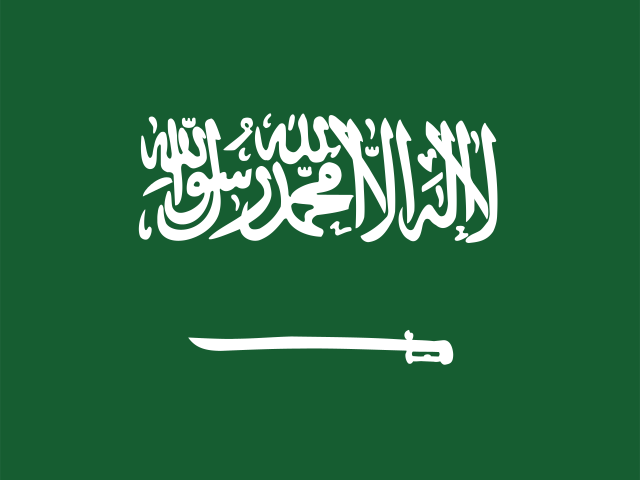
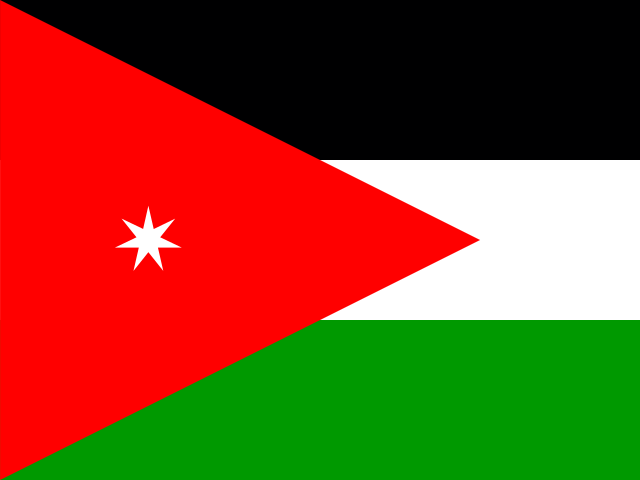
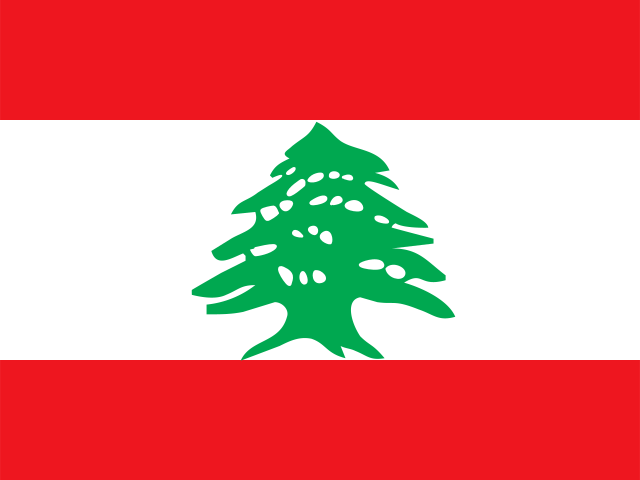
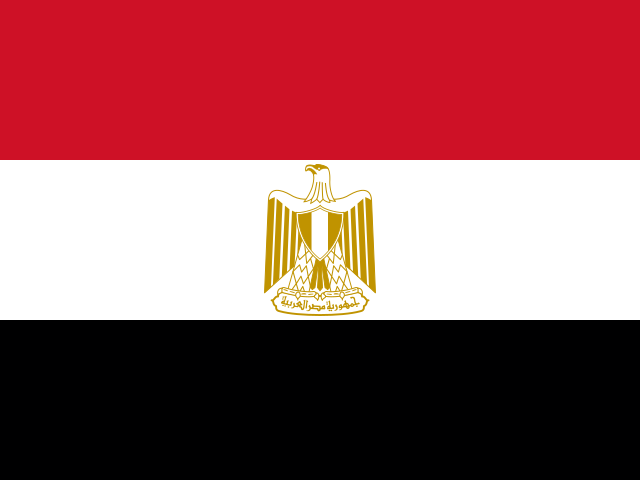



















_banner_Panorama.jpg)


Values for 2023.
05In this edition
Social Institutions and Gender Index in records
The extremes of the statistic. A record reached by more than one country names none of them.
Highest reading
67.4
SIGI score (0 = no discrimination, 100 = absolute)
Lowest reading
6.7
SIGI score (0 = no discrimination, 100 = absolute)
06The parts of the index
Inside the number
OECD publishes the parts the headline is built from. Each part’s highest and lowest country, and its middle value.
| Part | Highest | Lowest | Middle country |
|---|---|---|---|
| Discrimination in the family (0–100)140 countries | 2 countries share 89.9 | 5 countries share 0.0 | 28.0 |
| Restricted physical integrity (0–100)140 countries |  Mali55.6 Mali55.6 |  Mozambique7.8 Mozambique7.8 | 26.0 |
| Restricted access to productive and financial resources (0–100)140 countries | Sudan85.5 |  Latvia0.8 Latvia0.8 | 24.0 |
| Restricted civil liberties (0–100)140 countries | Qatar70.8 | South Africa2.1 | 19.2 |
07The measure
About Social Institutions and Gender Index
The OECD’s Social Institutions and Gender Index scores discrimination against women in law and custom, from 0 (none) to 100 (absolute). Its inputs are legal codes, inheritance rules, attitudes to violence and restrictions on movement — the causes, where the other gender measures here count the results.
What the number is: SIGI score (0 = no discrimination, 100 = absolute).
What it does not measure
It measures discrimination built into social institutions, not women's outcomes in health, schooling or income, which other statistics on this site cover.
08Where it fits
Connections
Its part in the Country Index, the statistics whose values line up most closely with it across countries, and others on the same subject.
In the Country Index
A key statistic for Gender & Equality
“Discrimination in social institutions and norms. Correlates 0.850 with Women, Business and the Law, inside the 0.92 bar, and kept because law and custom diverge widely.”
- Edition used
- 2023 (data 2023)
- Countries
- 140
- Licence
- OECD Terms and Conditions — data clause
Moves with
Where Social Institutions and Gender Index is higher, these tend to be higher too.
- Coefficient of Human InequalityUNDP Human Development Report Office · 133 countries in commonρ 0.68
- Gender Inequality IndexKeyUNDP Human Development Report Office · 133 countries in commonρ 0.67
- Under-Five Mortality RateKeyUN IGME · 138 countries in commonρ 0.63
Moves against
Where Social Institutions and Gender Index is higher, these tend to be lower.
- Women, Business and the LawKeyWorld Bank Group · 140 countries in commonρ −0.85
- Voice and AccountabilityWorld Bank Group · 140 countries in commonρ −0.71
- Inequality-adjusted Human Development IndexUNDP Human Development Report Office · 133 countries in commonρ −0.70
Rank correlation (ρ, from −1 to 1) across countries, on each statistic’s newest edition, out of 115 statistics sharing at least 80 countries with this one. Two statistics that move together do not cause each other.
09Keep reading
Explore further
The subject
The data, edition by edition
10Questions
Social Institutions and Gender Index: questions and answers
Which country has the lowest Social Institutions and Gender Index?
Norway, at 6.7, among the 140 countries compared in 2023.
Which country has the highest Social Institutions and Gender Index?
Mauritania, at 67.4, among the 140 countries compared in 2023.
How many countries does the Social Institutions and Gender Index cover?
140 in 2023.
What is the world average Social Institutions and Gender Index?
This site does not calculate a world average, which would depend on how countries are weighted. In the middle country of the 140 compared in 2023, the figure was 25.2.
Is this OECD’s own ranking?
No. OECD publishes the values but ranks nobody; the position on this page is derived by Nations Inquiry by ordering the published values, and equal values share a position.
How often is the Social Institutions and Gender Index published?
This site holds one edition, describing 2023.
Where does the data come from, and can I download it?
From OECD, under OECD Terms and Conditions — data clause. From the OECD Development Centre via its SDMX API. A different question from the Gender Inequality Index, Women Business and the Law and the Gender Development Index rather than a fourth answer to the same one. Every edition is available on this site’s Datasets pages as a full table, unrounded.
11Method
Sources, method and citation
Source
Social Institutions and Gender Index — OECD
From the OECD Development Centre via its SDMX API. A different question from the Gender Inequality Index, Women Business and the Law and the Gender Development Index rather than a fourth answer to the same one.
Newest edition
Report year 2023Data year 2023
Cite the source as: OECD. Social Institutions and Gender Index (SIGI) 2023. Paris: OECD Development Centre.
Licence: OECD Terms and Conditions — data clause, checked 2026-09-07.
How this page reads the numbers
- OECD ranks nobody on this measure. The position is derived by Nations Inquiry by ordering the published values; equal values share a position.
- Which end is better follows the publisher’s own reading of the measure.
- A country is named at an end only when it holds that value alone. Where several share it, the page says how many and names none first.
- Values are stored exactly as published and trimmed only for display. “The middle country” is the median of the countries measured, not a world average.
The full note on this data
1 edition (2023), covering 140 countries, from the OECD Development Centre via its SDMX API. ⚠ IT MEASURES DISCRIMINATION IN LAW AND CUSTOM, not outcomes — its inputs are legal codes, inheritance rules, attitudes to violence and restrictions on movement, where every other gender indicator on this site (the Gender Inequality Index, Women Business and the Law, the Gender Development Index) measures results such as pay, schooling or seats. That makes it a different question rather than a fourth answer to the same one. ⚠ A HIGHER SCORE IS WORSE: 0 is no discrimination and 100 is absolute, so position 1 is the most discriminatory country, not the least: the table opens on Mauritania at 67.4 and ends on Norway at 6.7. Its four dimensions — discrimination in the family, restricted physical integrity, restricted access to productive and financial resources, and restricted civil liberties — are stored beside the headline. ⚠ ONE EDITION. The OECD publishes SIGI every four or five years (2014, 2019, 2023) but exposes only the 2023 edition as data; the earlier ones exist as report annexes and are not transcribed by hand. ⚠ No rank is published, so none is stored; the POSITION shown on the statistics page is derived here by ordering the score, and labelled as ours.
Photographs
The countries at the top of this statistic, from their profiles: Wikimedia Commons, shown in greyscale, each used under the licence named.
- Norway — Ximonic , Simo Räsänen, CC BY-SA 3.0
- Belgium — Gf uip, CC BY-SA 3.0
- Sweden — User:Pieter Kuiper, Public domain
Cite this page
Nations Inquiry (2026). Social Institutions and Gender Index by country: Social Institutions and Gender Index, data from OECD. https://nationsinquiry.com/statistics/sigi