UNDP Human Development Report Office and UN Women · Global Gender Parity Index
Global Gender Parity Index by country
How do women's achievements compare with men's?
Of the 114 countries compared in 2022, Sweden had the highest reading, 0.925, and Yemen had the lowest reading, 0.141. In the middle country the figure was 0.726.
Share
Part ofGender & Equality
Global Gender Parity Index · 2022
Context statistic
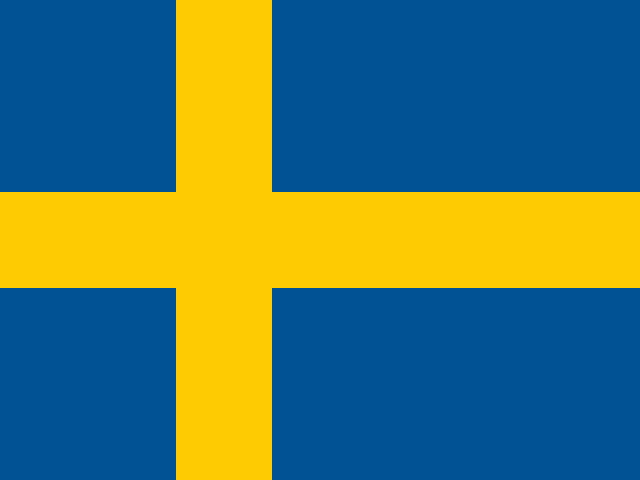
Highest of 114Sweden
0.925012022 · values only
Who leads
The three countries at the highest end of 114 compared, the three at the other end, and the first on each continent.
 1
1Photo: User:Pieter Kuiper · Public domain, greyscale
 2
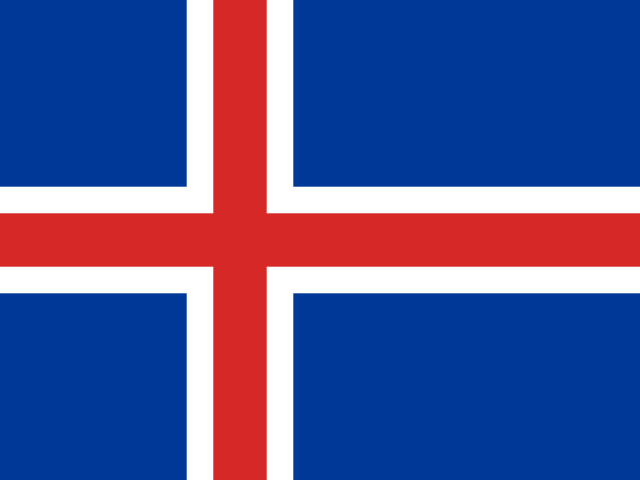
2Photo: Hansueli Krapf · CC BY-SA 3.0, greyscale
 3
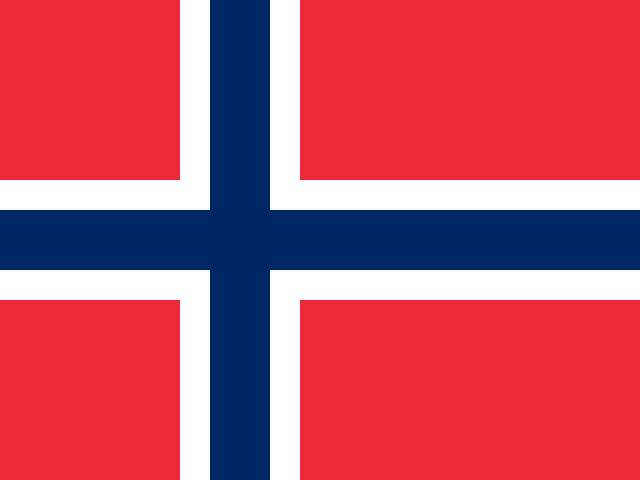
3Photo: Ximonic , Simo Räsänen · CC BY-SA 3.0, greyscale
02Every measured country
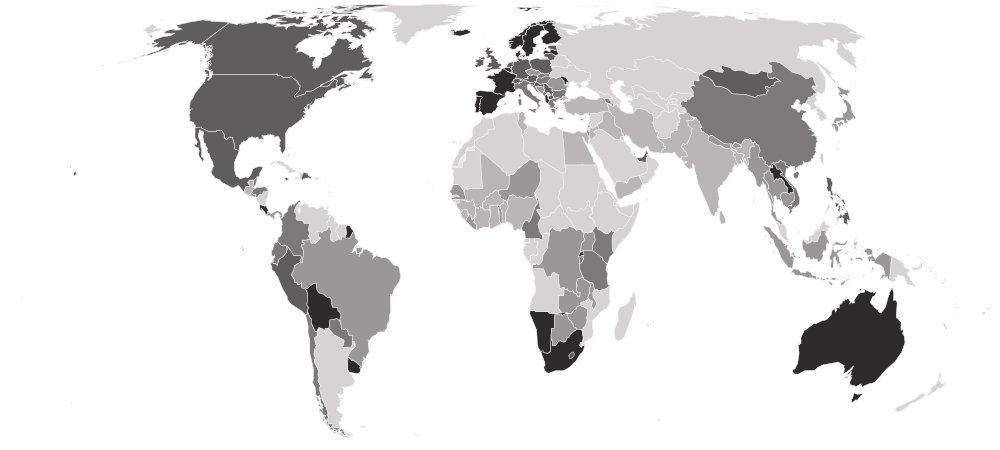
Global Gender Parity Index on a map
Each country is shaded by its value, in five groups holding the same number of countries. Hover a country for its value, or select it to open its profile. Below the map, each continent’s middle country.
Darker is a higher value — the better end.
- 0.141–0.595
- 0.598–0.680
- 0.693–0.770
- 0.771–0.821
- 0.823–0.925
- No reading in 2022
- Europe
0.803
the middle country, of 36 measured · 49 members
Sweden0.925 Bosnia and Herzegovina0.622
Highest and lowest reading in Europe.
- Americas
0.760
the middle country, of 19 measured · 48 members
 Costa Rica0.844
 Guatemala0.575
Highest and lowest reading in Americas.
- Africa
0.637
the middle country, of 30 measured · 55 members
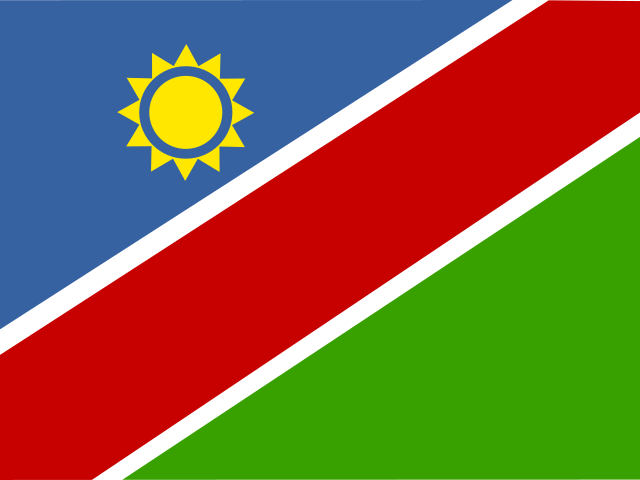 Namibia0.856
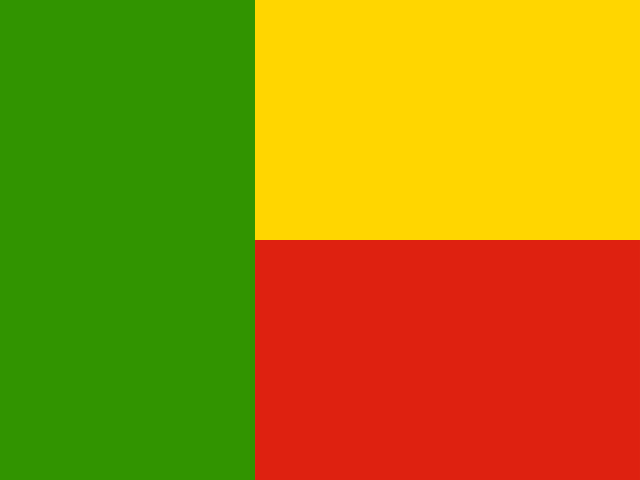 Benin0.497
Highest and lowest reading in Africa.
- Asia
0.622
the middle country, of 28 measured · 52 members
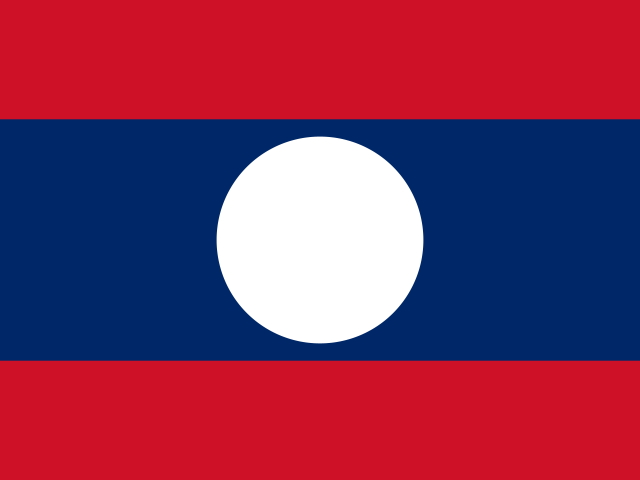 Laos0.839
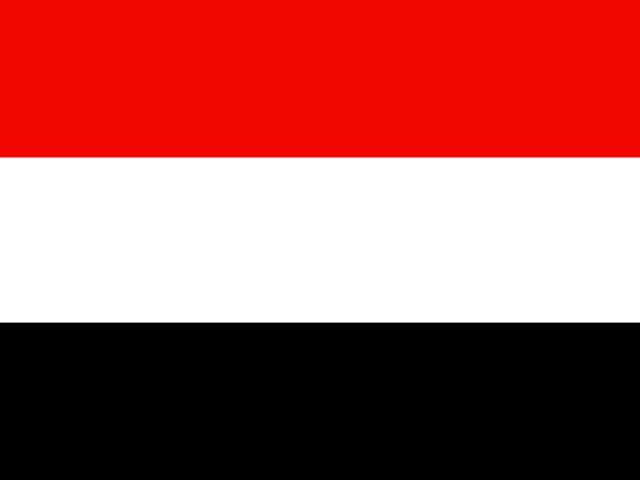 Yemen0.141
Highest and lowest reading in Asia.
- Oceania
1 of 21 measured — too few for a middle: Australia.
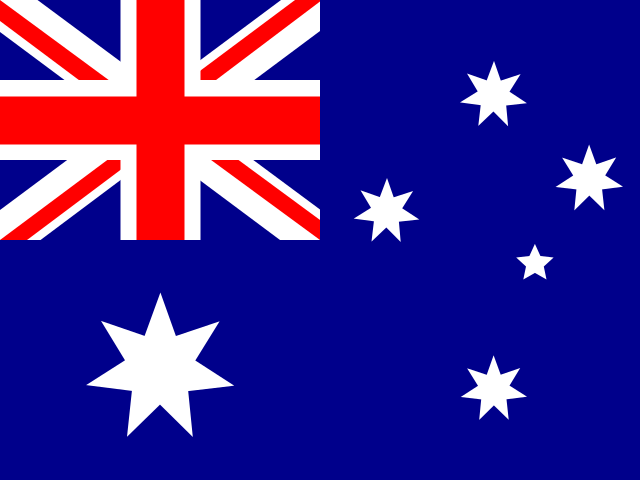 Australia0.870
Highest and lowest reading in Oceania.
- Every region
18 sub-regions, highest middle country first
- Northern Europe
0.838
the middle country, of 10 measured · 13 members
Sweden0.925 Estonia0.774
Highest and lowest reading in Northern Europe.
- Western Europe
0.808
the middle country, of 7 measured · 9 members
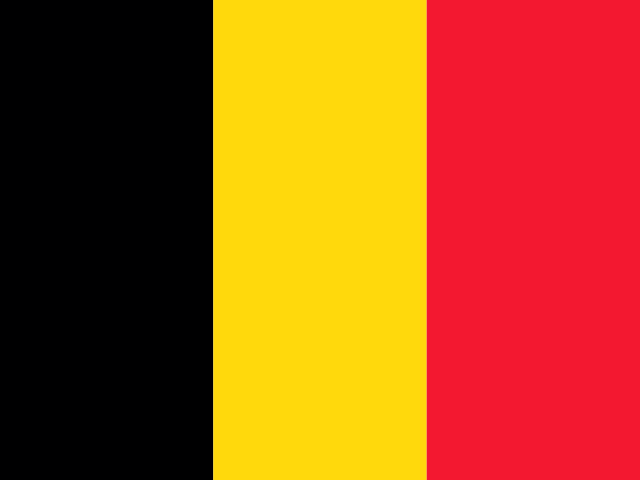 Belgium0.869
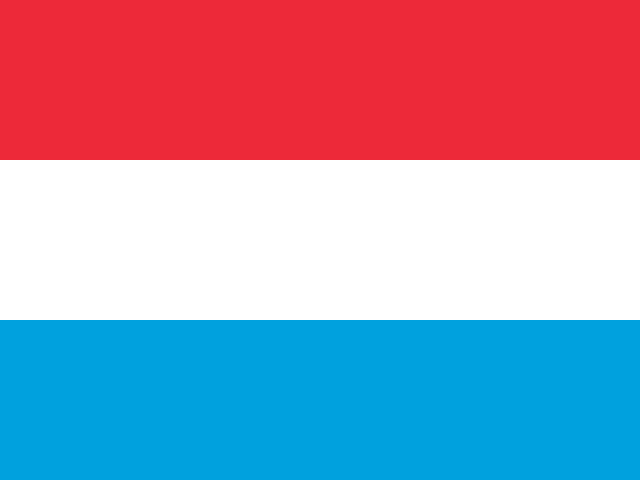 Luxembourg0.757
Highest and lowest reading in Western Europe.
- Southern Europe
0.774
the middle country, of 12 measured · 17 members
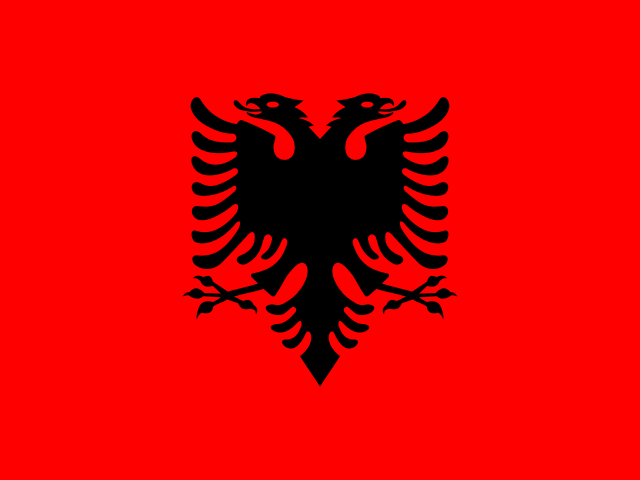 Albania0.860Bosnia and Herzegovina0.622
Highest and lowest reading in Southern Europe.
- South America
0.756
the middle country, of 8 measured · 12 members
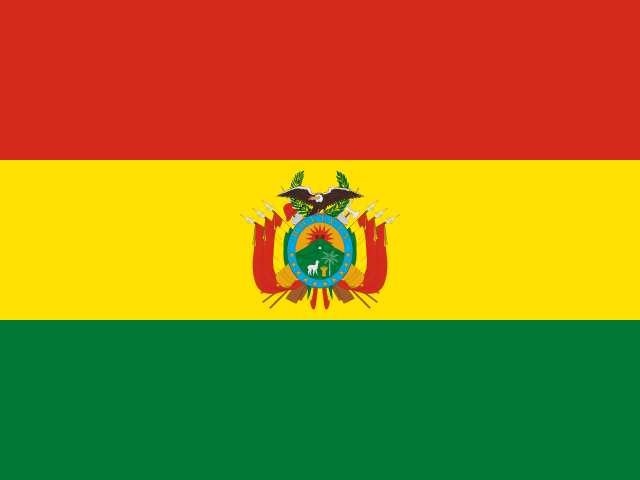 Bolivia0.829
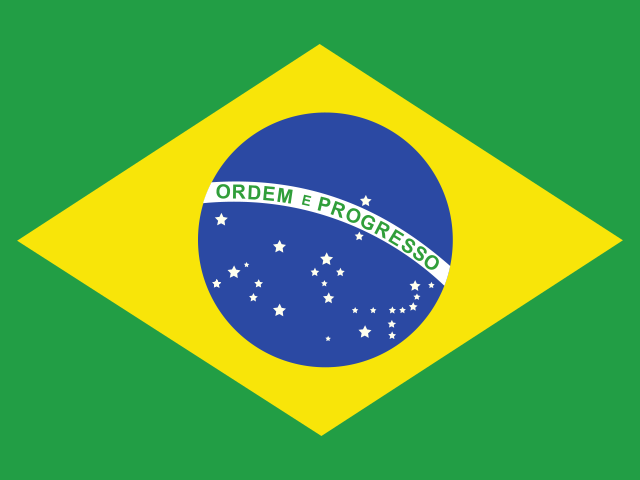 Brazil0.680
Highest and lowest reading in South America.
- Eastern Europe
0.718
the middle country, of 7 measured · 10 members
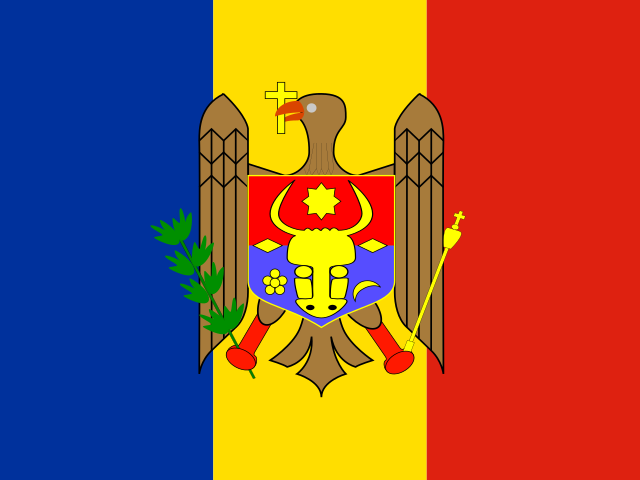 Moldova0.878
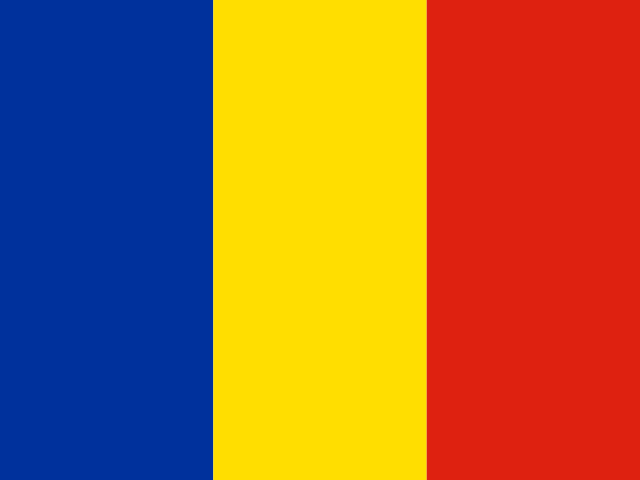 Romania0.658
Highest and lowest reading in Eastern Europe.
- South-eastern Asia
0.718
the middle country, of 8 measured · 11 members
Laos0.839 Myanmar0.598
Highest and lowest reading in South-eastern Asia.
- Central America
0.716
the middle country, of 7 measured · 8 members
Costa Rica0.844Guatemala0.575Highest and lowest reading in Central America.
- Eastern Africa
0.714
the middle country, of 9 measured · 19 members
 Rwanda0.846
 Malawi0.606
Highest and lowest reading in Eastern Africa.
- Western Africa
0.588
the middle country, of 13 measured · 16 members
 Togo0.664Benin0.497
Highest and lowest reading in Western Africa.
- Western Asia
0.562
the middle country, of 9 measured · 19 members
 United Arab Emirates0.783Yemen0.141
Highest and lowest reading in Western Asia.
- Southern Asia
0.544
the middle country, of 8 measured · 9 members
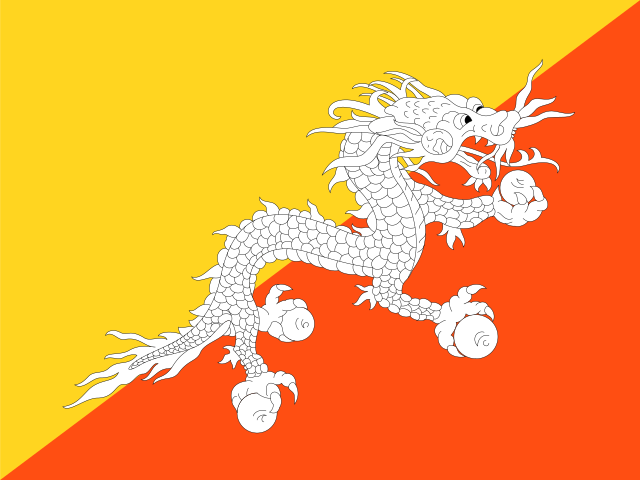 Bhutan0.625
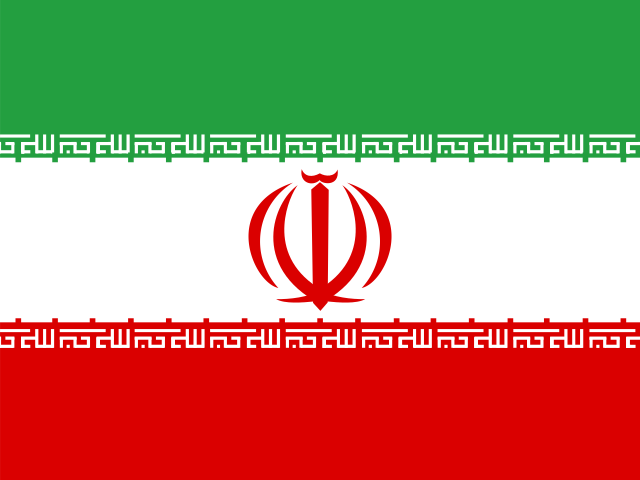 Iran0.393
Highest and lowest reading in Southern Asia.
- Australia and New Zealand
1 of 2 measured — too few for a middle: Australia.
Australia0.870Highest and lowest reading in Australia and New Zealand.
- Caribbean
2 of 24 measured — too few for a middle: Dominican Republic, Jamaica.
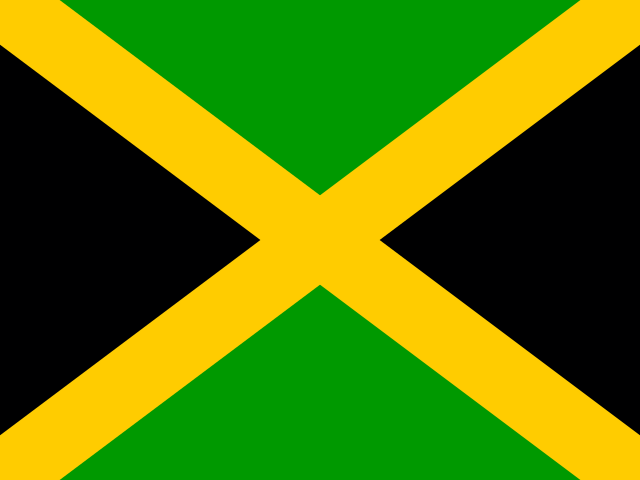 Jamaica0.824
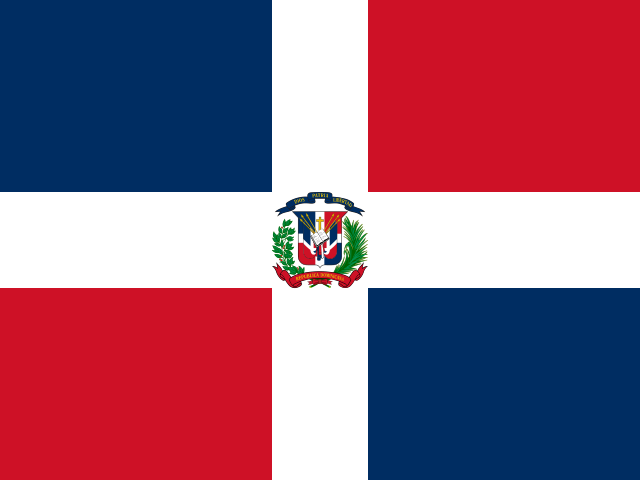 Dominican Republic0.771
Highest and lowest reading in Caribbean.
- Eastern Asia
3 of 8 measured — too few for a middle: China, Japan, Mongolia.
 Mongolia0.784
 Japan0.627
Highest and lowest reading in Eastern Asia.
- Middle Africa
2 of 9 measured — too few for a middle: Cameroon, DR Congo.
 Cameroon0.752
 DR Congo0.637
Highest and lowest reading in Middle Africa.
- Northern Africa
2 of 6 measured — too few for a middle: Egypt, Tunisia.
 Tunisia0.594
 Egypt0.534
Highest and lowest reading in Northern Africa.
- Northern America
2 of 4 measured — too few for a middle: Canada, United States.
 Canada0.806
 United States0.787
Highest and lowest reading in Northern America.
- Southern Africa
4 of 5 measured — too few for a middle: Botswana, Lesotho, Namibia, South Africa.
Namibia0.856 Botswana0.675
Highest and lowest reading in Southern Africa.
03The whole field at once
The spread
114 countries, one dot each, on one scale — further right is a higher value. Half the countries are above 0.726; a quarter are above 0.802, and a quarter below 0.622. The bar in each row marks that continent’s middle country.
04All 114 ever measured
Every country
In order, highest value first. No rank or position is shown: too many countries share the same value for an order to mean anything. This index compares women with men in the same country, so it can be high where both fare poorly and lower where both fare well — read it beside its twin, which looks at women's achievements on their own terms. Many countries could not be scored for lack of data and are absent, not zero. The publishers rank no country, and neither does this page; they sort countries into four groups instead, shown beside each score.
Showing 25 of 114 countries


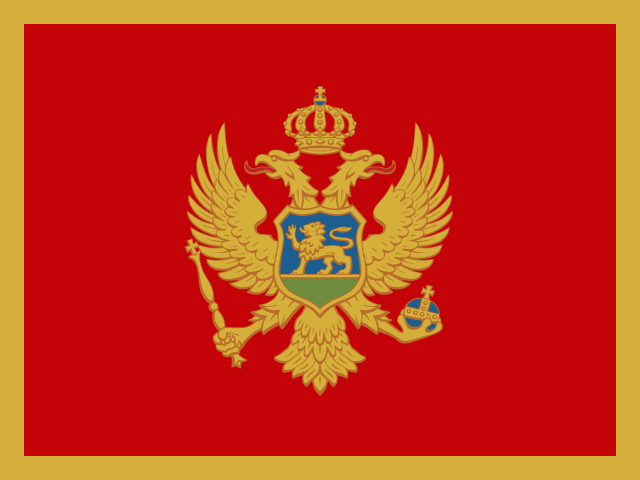
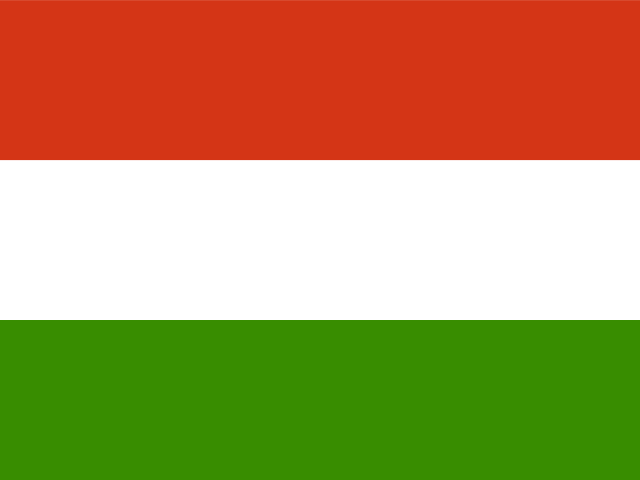

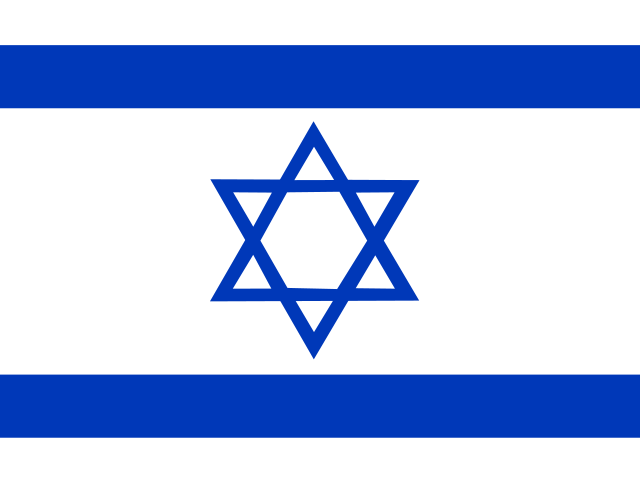
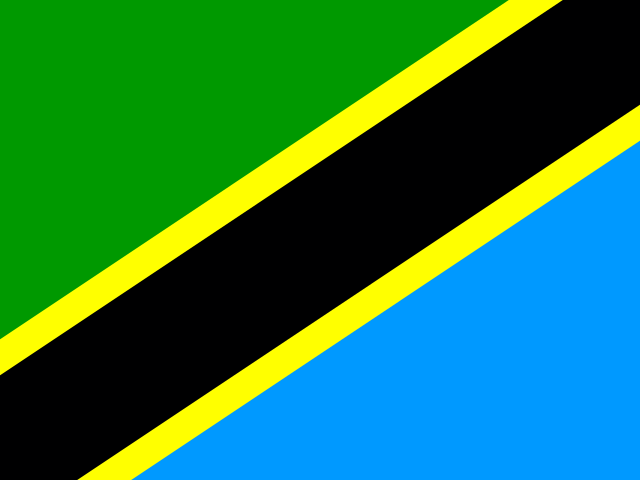





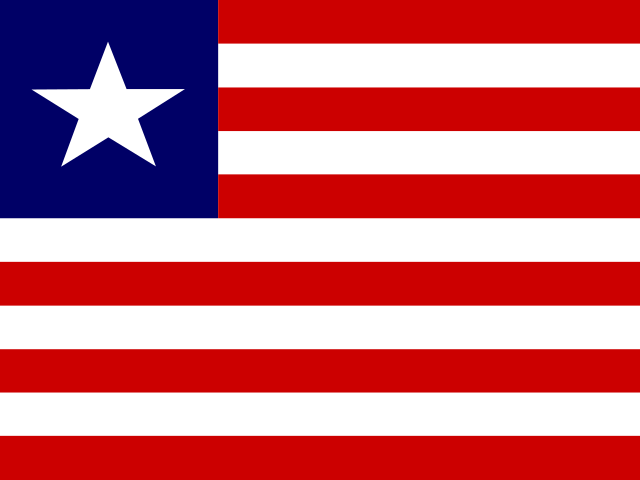
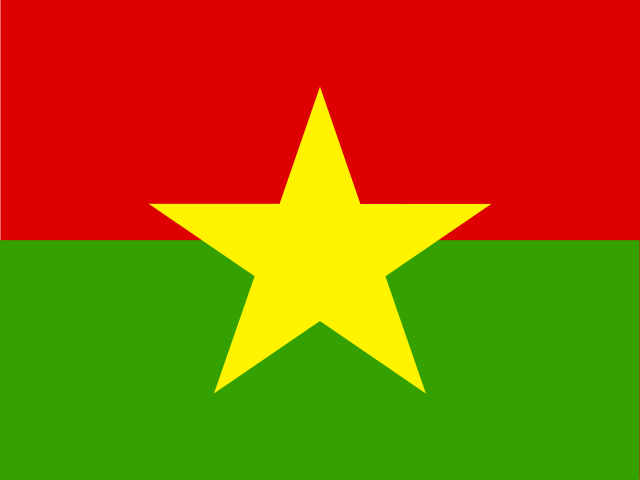
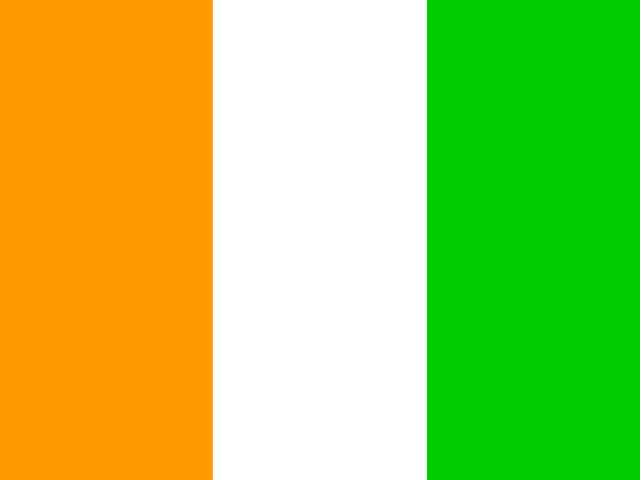
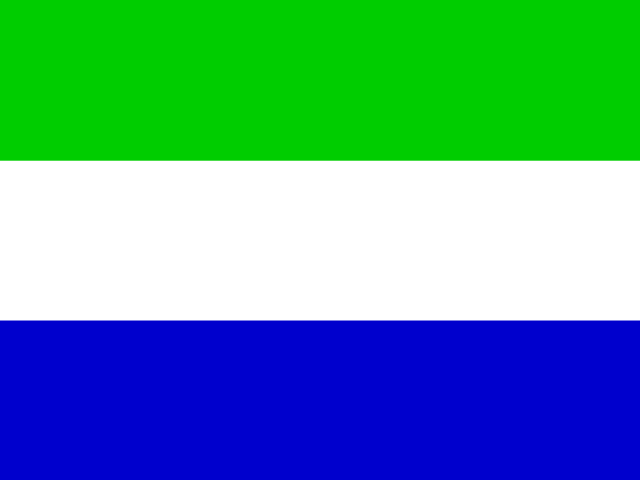

Values for 2022.
05In this edition
Global Gender Parity Index in records
The extremes of the statistic. A record reached by more than one country names none of them.
Highest reading
0.925
Global Gender Parity Index (women's achievements relative to men's; 1 = parity)
Lowest reading
0.141
Global Gender Parity Index (women's achievements relative to men's; 1 = parity)
06The measure
About Global Gender Parity Index
The Global Gender Parity Index measures women's achievements relative to men's in health, education, work and money, and decision-making. A value of 1 would mean parity; lower values mean women are further behind. It was published in 2023 by UNDP and UN Women as an experimental index, the twin of the Women's Empowerment Index.
What the number is: Global Gender Parity Index (women's achievements relative to men's; 1 = parity).
07Where it fits
Connections
Its part in the Country Index, the statistics whose values line up most closely with it across countries, and others on the same subject.
In the Country Index
Context, with no vote
This statistic is published in full under Gender & Equality, but does not help decide any Country Index standing.
Moves with
Where Global Gender Parity Index is higher, these tend to be higher too.
- Women's Empowerment IndexUNDP Human Development Report Office and UN Women · 114 countries in commonρ 0.82
- Women, Business and the LawKeyWorld Bank Group · 114 countries in commonρ 0.70
- State Capacity IndexJonathan K. Hanson (University of Michigan) and Rachel Sigman (Naval Postgraduate School) · 109 countries in commonρ 0.67
Moves against
Where Global Gender Parity Index is higher, these tend to be lower.
- Social Institutions and Gender IndexKeyOECD · 107 countries in commonρ −0.73
- Gender Inequality IndexUNDP Human Development Report Office · 114 countries in commonρ −0.67
- Average Household SizeUN DESA Population Division · 89 countries in commonρ −0.65
Rank correlation (ρ, from −1 to 1) across countries, on each statistic’s newest edition, out of 316 statistics sharing at least 80 countries with this one. Two statistics that move together do not cause each other.
08Keep reading
Explore further
The subject
The data, edition by edition
More from UNDP Human Development Report Office and UN Women
09Questions
Global Gender Parity Index: questions and answers
Which country has the highest Global Gender Parity Index?
Sweden, at 0.925, among the 114 countries compared in 2022.
Which country has the lowest Global Gender Parity Index?
Yemen, at 0.141, among the 114 countries compared in 2022.
How many countries does the Global Gender Parity Index cover?
114 in 2022.
What is the world average Global Gender Parity Index?
This site does not calculate a world average, which would depend on how countries are weighted. In the middle country of the 114 compared in 2022, the figure was 0.726.
Is this UNDP Human Development Report Office and UN Women’s own ranking?
No ranking is shown. UNDP Human Development Report Office and UN Women publishes values only, and too many countries share the same value for an ordering to mean anything, so none is derived.
How often is the Global Gender Parity Index published?
This site holds one edition, describing 2022.
Where does the data come from, and can I download it?
From UNDP Human Development Report Office and UN Women, under CC BY 3.0 IGO. From the statistical annex of The Paths to Equal (UNDP and UN Women, 2023), read from UNDP's Human Development Report Office copy and stored at the three decimals published. Only the index values are used, not the indicators from other agencies that go into them. Every edition is on this site’s Datasets pages as a full table, and downloads as a CSV file with every value unrounded.
10Method
Sources, method and citation
Source
Global Gender Parity Index — UNDP Human Development Report Office and UN Women
From the statistical annex of The Paths to Equal (UNDP and UN Women, 2023), read from UNDP's Human Development Report Office copy and stored at the three decimals published. Only the index values are used, not the indicators from other agencies that go into them.
Newest edition
Report year 2023Data year 2022
Cite the source as: UNDP and UN Women. 2023. The Paths to Equal: Twin Indices on Women's Empowerment and Gender Equality. New York: United Nations Development Programme and UN Women.
Licence: CC BY 3.0 IGO, checked 2026-10-03.
How this page reads the numbers
- No rank or position is shown: UNDP Human Development Report Office and UN Women publishes values only, and too many countries share the same value for an ordering to mean anything.
- Which end is better follows the publisher’s own reading of the measure.
- A country is named at an end only when it holds that value alone. Where several share it, the page says how many and names none first.
- Values are stored exactly as published and trimmed only for display. “The middle country” is the median of the countries measured, not a world average.
The file itself, column by column — where it came from, what each column holds, and every edition as a CSV — is on its dataset page.
Photographs
The countries at the top of this statistic, from their profiles: Wikimedia Commons, shown in greyscale, each used under the licence named.
- Sweden — User:Pieter Kuiper, Public domain
- Iceland — Hansueli Krapf, CC BY-SA 3.0
- Norway — Ximonic , Simo Räsänen, CC BY-SA 3.0
Cite this page
Nations Inquiry (2026). Global Gender Parity Index by country: Global Gender Parity Index, data from UNDP Human Development Report Office and UN Women. https://nationsinquiry.com/statistics/gender-parity-index