Loading…
World Bank Group · Mobile Phone Ownership
Mobile phone ownership by country
What share of adults own a mobile phone?
Libya placed first of the 140 countries compared in 2024, at 100.0000%, and Madagascar last, at 45.8336%. In the middle country the figure was 91.6827%.
Part ofDigital & Technology
Mobile phone ownership · 2024
Context statistic
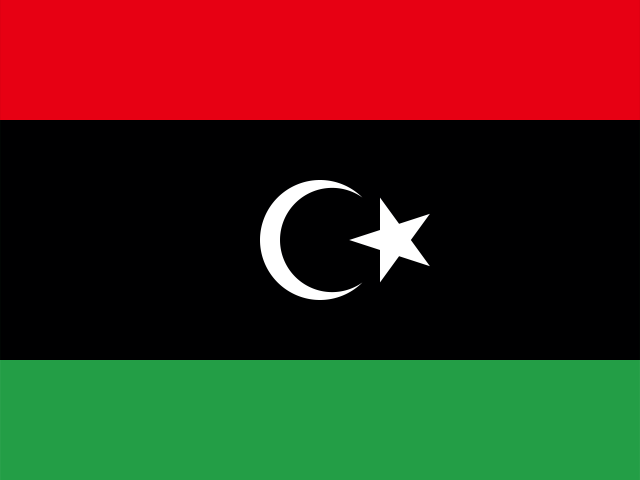
Highest of 140Libya
100.0000%012024 · position · derived
Who leads
The three countries at the highest end of 140 compared, the three at the other end, and the first on each continent.
 1
1Photo: Maher A. A. Abdussalam · CC0, greyscale
 2
2Photo: Ximonic , Simo Räsänen · CC BY-SA 3.0, greyscale
 3
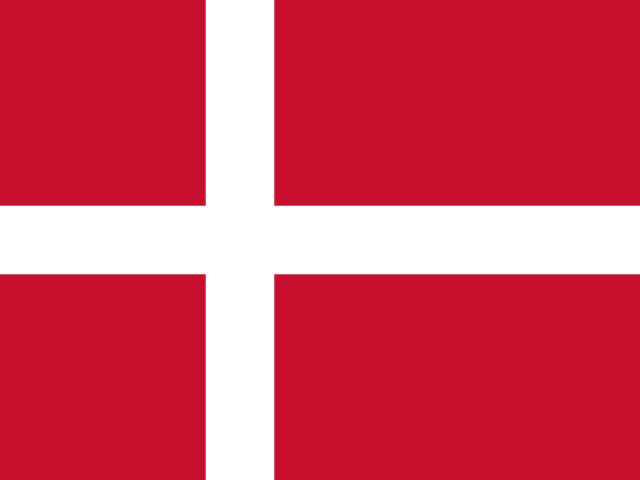
3Photo: User:Aconcagua · CC BY-SA 3.0, greyscale
Lowest in 2024
- 140
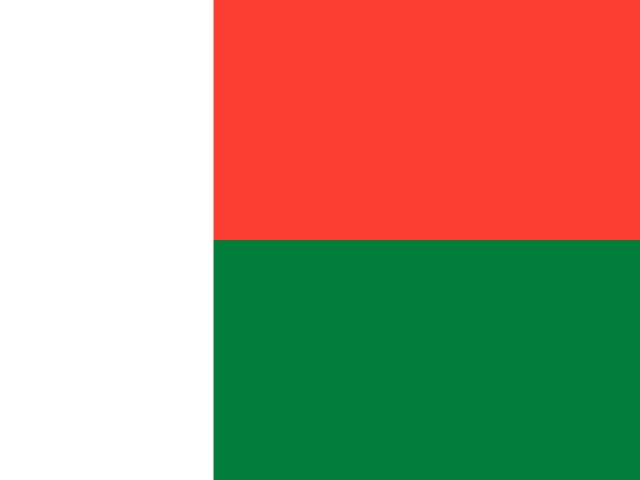 Madagascar45.8336%
 - 139
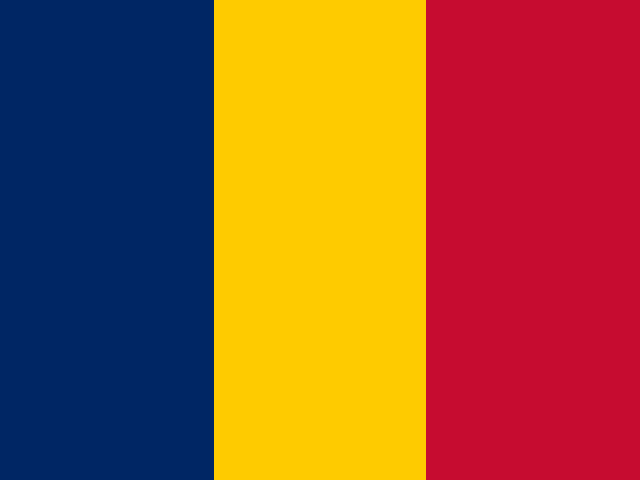 Chad53.4068%
 - 138
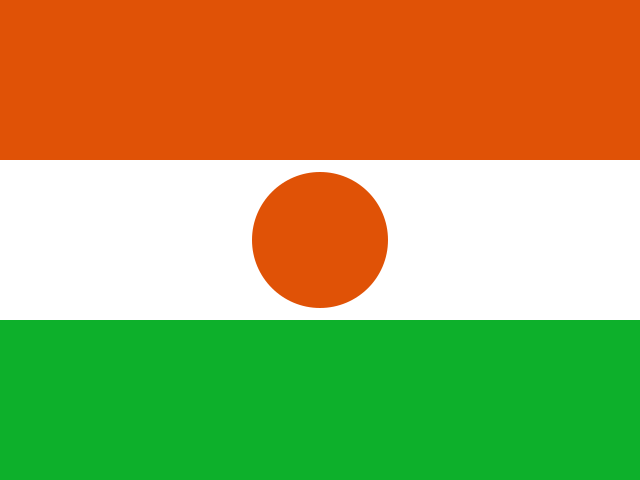 Niger53.7114%
Positions out of 140. Where a country sits says how it compares with the others measured, and nothing about why.
02Every measured country
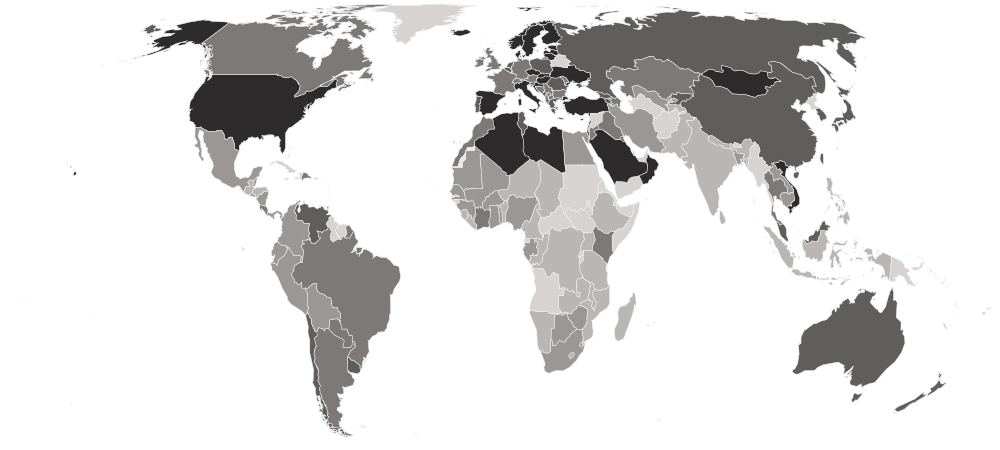
Mobile phone ownership on a map
Each country is shaded by its value, in five groups holding the same number of countries. Hover a country for its value, or select it to open its profile. Below the map, each continent’s middle country.
Darker is a higher value — the better end.
- 45.8336–80.9670%
- 81.3248–88.2642%
- 88.3818–93.5026%
- 93.5529–96.6465%
- 96.7599–100.0000%
- No reading in 2024
- Europe
94.9741%
the middle country, of 38 measured · 49 members
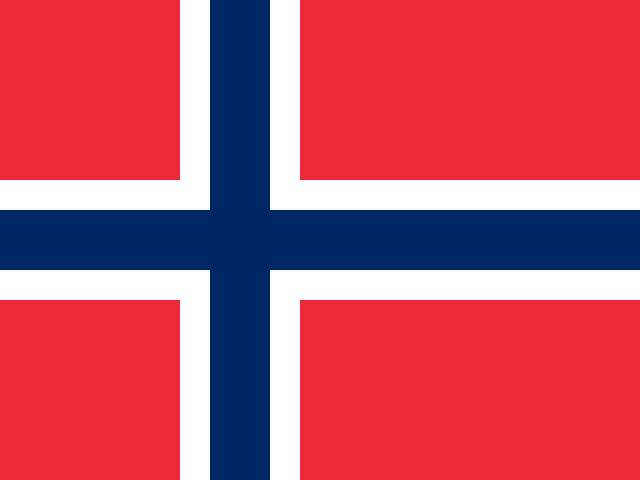 Norway99.7616%
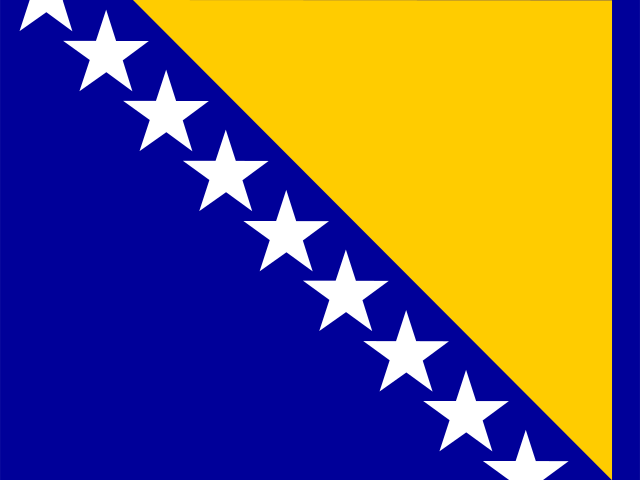 Bosnia and Herzegovina90.3260%
Highest and lowest reading in Europe.
- Asia
94.3240%
the middle country, of 38 measured · 52 members
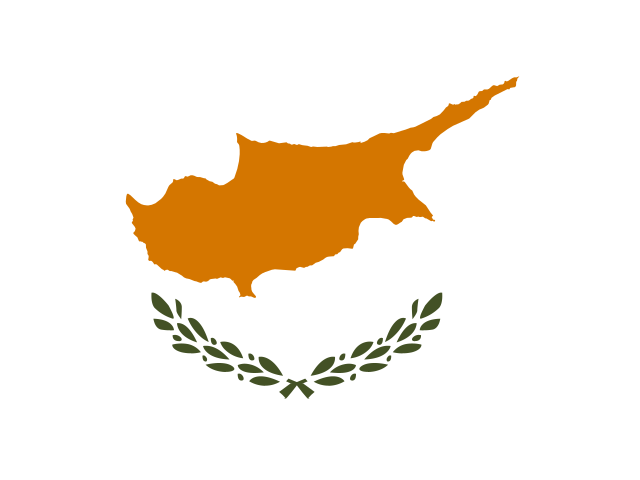 Cyprus98.4684%
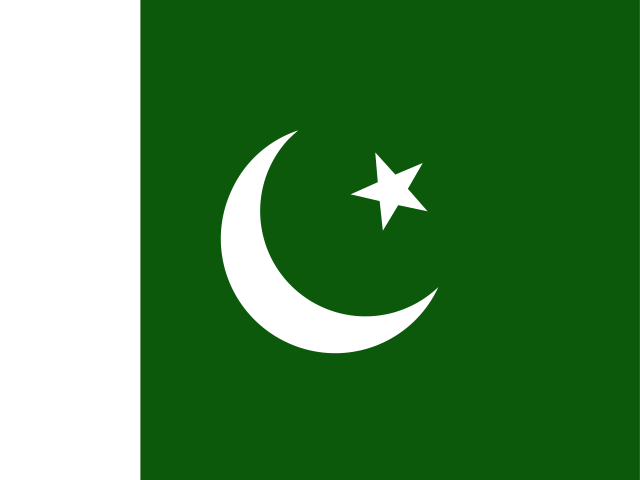 Pakistan62.9353%
Highest and lowest reading in Asia.
- Americas
88.6772%
the middle country, of 22 measured · 48 members
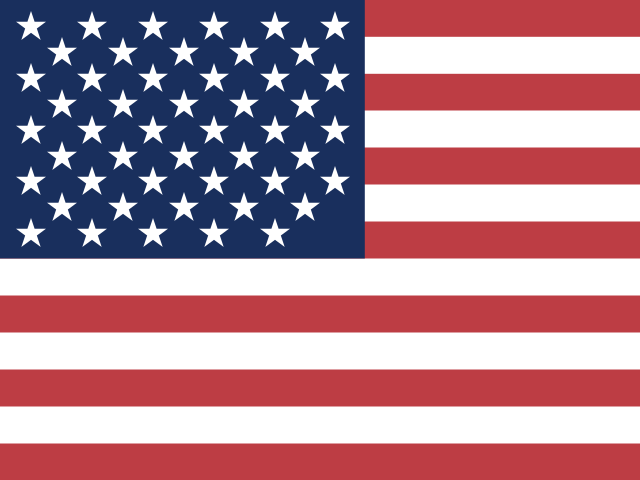 United States98.0131%
 Honduras80.7264%
Highest and lowest reading in Americas.
- Africa
81.9356%
the middle country, of 40 measured · 55 members
Libya100.0000%Madagascar45.8336%Highest and lowest reading in Africa.
- Oceania
2 of 21 measured — too few for a middle: Australia, New Zealand.
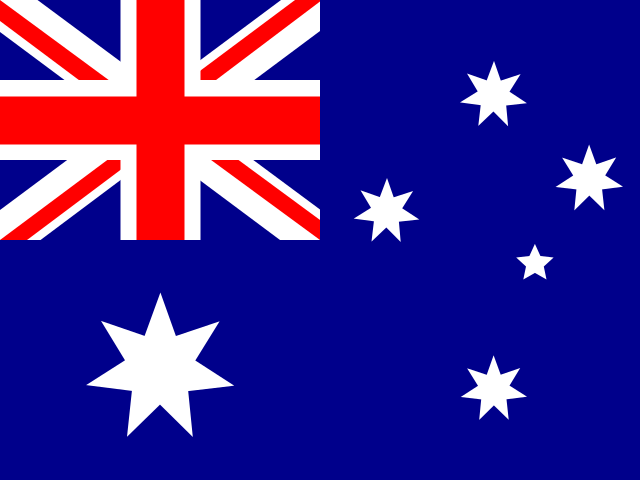 Australia95.4859%
 New Zealand94.3796%
Highest and lowest reading in Oceania.
- Every region
19 sub-regions, highest middle country first
- Northern Europe
99.0956%
the middle country, of 10 measured · 13 members
Norway99.7616% United Kingdom91.7809%
Highest and lowest reading in Northern Europe.
- Eastern Asia
96.3467%
the middle country, of 6 measured · 8 members
 Hong Kong98.3708%
 Japan93.8493%
Highest and lowest reading in Eastern Asia.
- Northern Africa
95.7576%
the middle country, of 5 measured · 6 members
Libya100.0000% Egypt84.5551%
Highest and lowest reading in Northern Africa.
- Eastern Europe
95.2340%
the middle country, of 9 measured · 10 members
 Hungary97.0627%
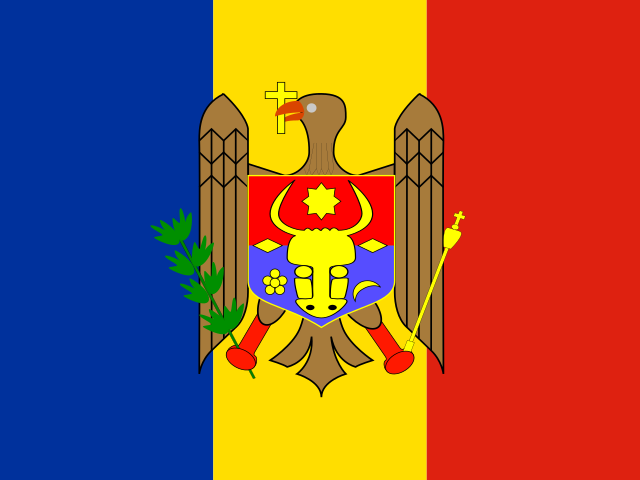 Moldova91.5844%
Highest and lowest reading in Eastern Europe.
- Western Asia
95.1891%
the middle country, of 14 measured · 19 members
Cyprus98.4684%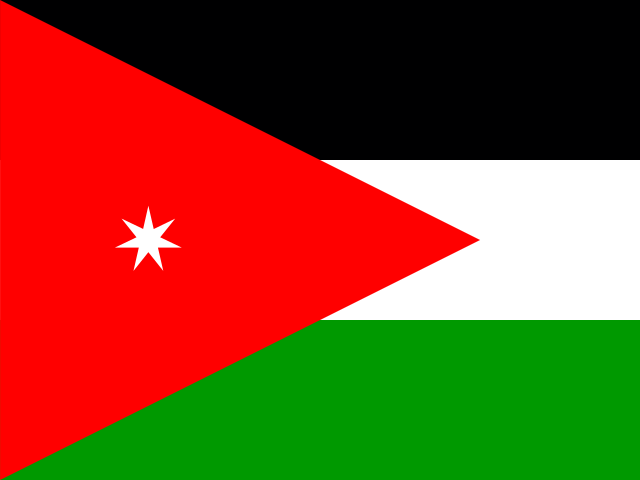 Jordan88.3818%
Highest and lowest reading in Western Asia.
- Southern Europe
94.6984%
the middle country, of 13 measured · 17 members
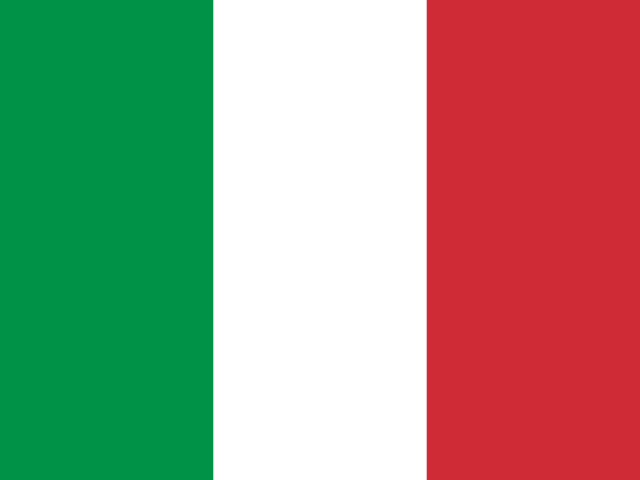 Italy98.9889%Bosnia and Herzegovina90.3260%
Highest and lowest reading in Southern Europe.
- Western Europe
92.3531%
the middle country, of 6 measured · 9 members
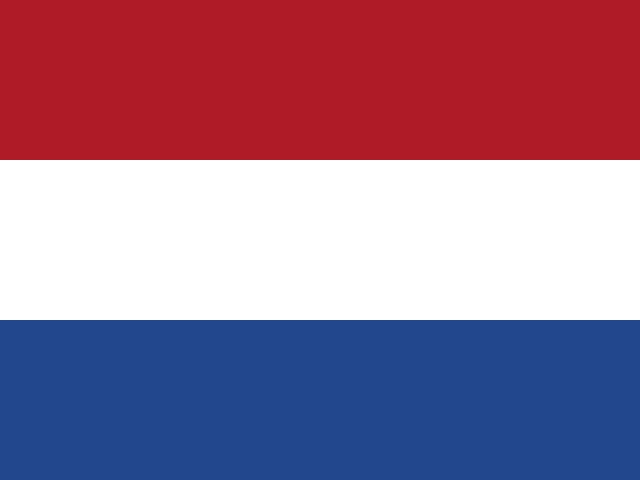 Netherlands95.2039%
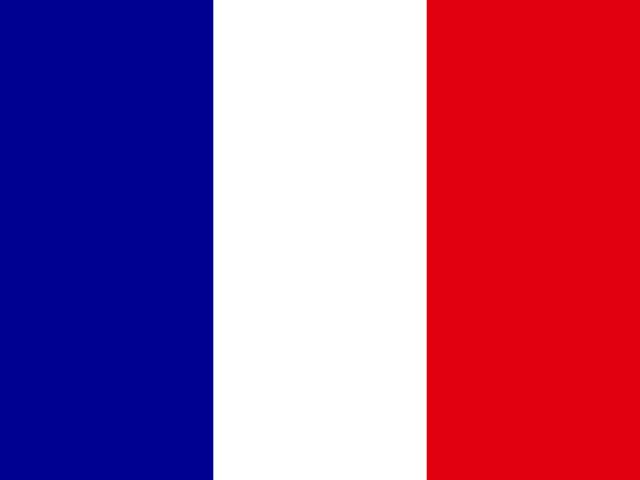 France90.9917%
Highest and lowest reading in Western Europe.
- South America
91.2600%
the middle country, of 10 measured · 12 members
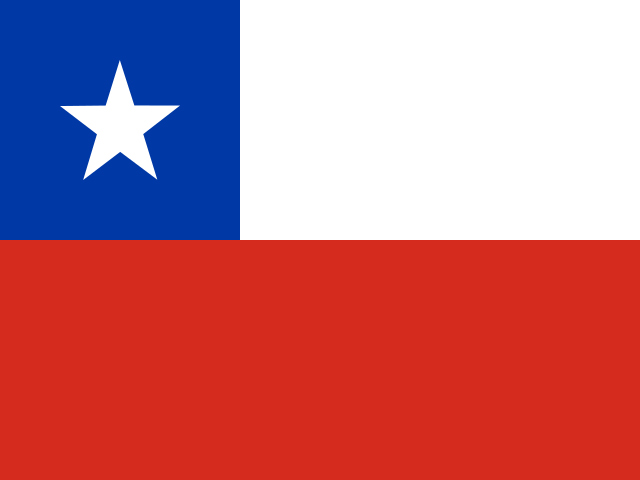 Chile95.5730%
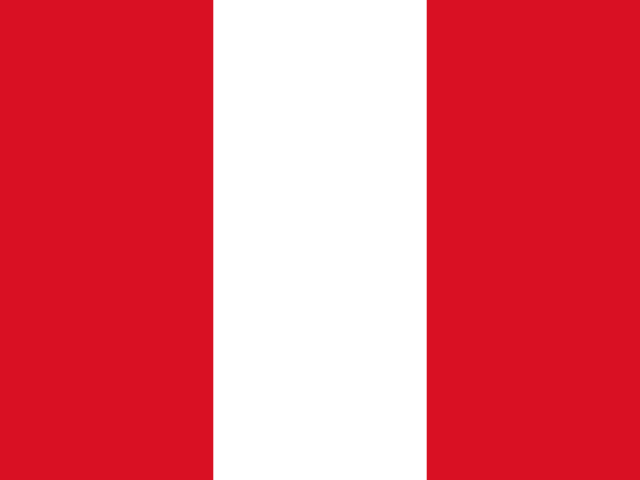 Peru85.7406%
Highest and lowest reading in South America.
- South-eastern Asia
88.2269%
the middle country, of 8 measured · 11 members
 Vietnam97.7785%
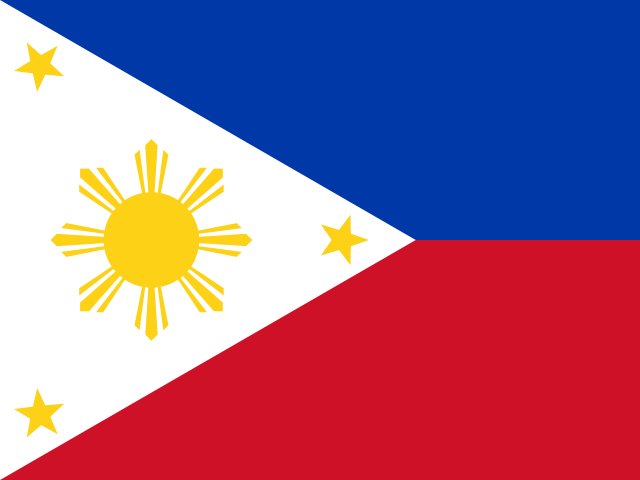 Philippines78.0017%
Highest and lowest reading in South-eastern Asia.
- Southern Africa
86.1918%
the middle country, of 5 measured · 5 members
 Botswana88.2642%
 Lesotho78.9785%
Highest and lowest reading in Southern Africa.
- Central America
84.4564%
the middle country, of 8 measured · 8 members
 Costa Rica91.8943%Honduras80.7264%
Highest and lowest reading in Central America.
- Western Africa
83.1582%
the middle country, of 14 measured · 16 members
 Côte d’Ivoire89.1916%Niger53.7114%
Highest and lowest reading in Western Africa.
- Eastern Africa
77.7877%
the middle country, of 11 measured · 19 members
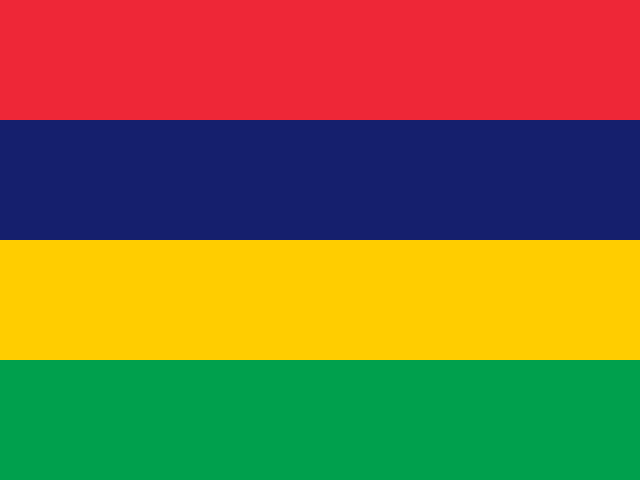 Mauritius93.5529%Madagascar45.8336%
Highest and lowest reading in Eastern Africa.
- Southern Asia
77.5208%
the middle country, of 6 measured · 9 members
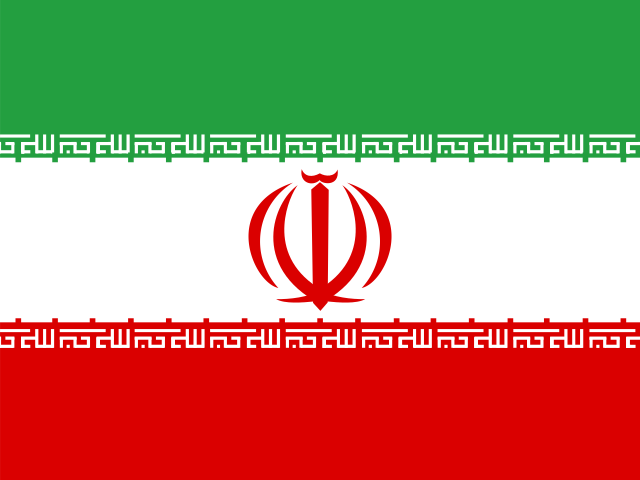 Iran87.0066%Pakistan62.9353%
Highest and lowest reading in Southern Asia.
- Middle Africa
73.2309%
the middle country, of 5 measured · 9 members
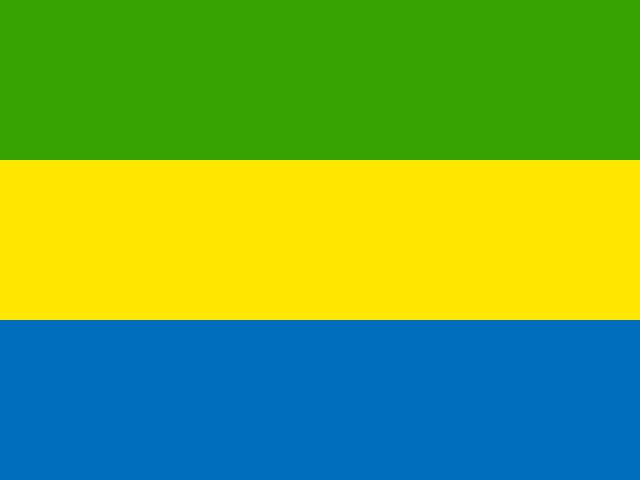 Gabon87.2227%Chad53.4068%
Highest and lowest reading in Middle Africa.
- Australia and New Zealand
2 of 2 measured — too few for a middle: Australia, New Zealand.
Australia95.4859%New Zealand94.3796%Highest and lowest reading in Australia and New Zealand.
- Caribbean
2 of 24 measured — too few for a middle: Dominican Republic, Trinidad and Tobago.
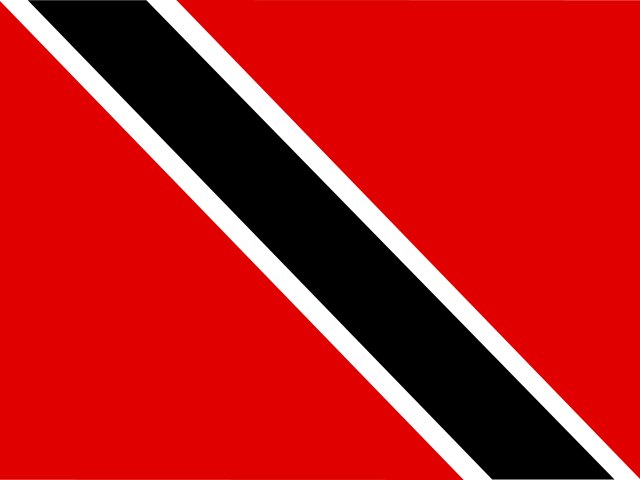 Trinidad and Tobago91.8208%
 Dominican Republic89.1744%
Highest and lowest reading in Caribbean.
- Central Asia
4 of 5 measured — too few for a middle: Kazakhstan, Kyrgyzstan, Tajikistan, Uzbekistan.
 Kyrgyzstan95.9796%
 Tajikistan77.5134%
Highest and lowest reading in Central Asia.
- Northern America
2 of 4 measured — too few for a middle: Canada, United States.
United States98.0131% Canada89.4378%
Highest and lowest reading in Northern America.
03The whole field at once
The spread
140 countries, one dot each, on one scale — further right is a higher value. Half the countries are above 91.6827%; a quarter are above 95.5077%, and a quarter below 83.5236%. The bar in each row marks that continent’s middle country.
04All 140 ever measured
Every country
In order, highest value first. “=” marks a position shared with another country. World Bank Group ranks nobody on this measure; the position is derived here by ordering the published values. In much of the world ownership is close to universal, so the top of this table is crowded and the gaps there are smaller than the survey's own margin of error. The differences that matter are further down, where one adult in three or more has no phone of their own.
Showing 25 of 140 countries











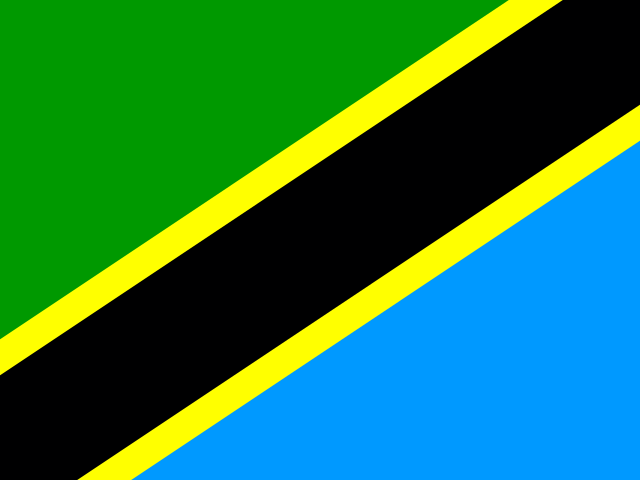
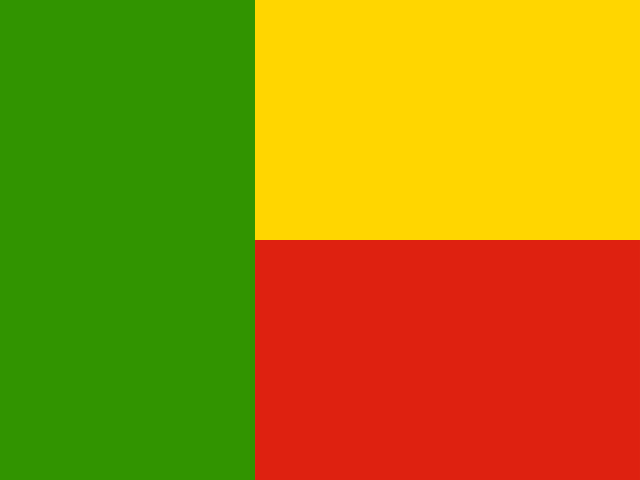

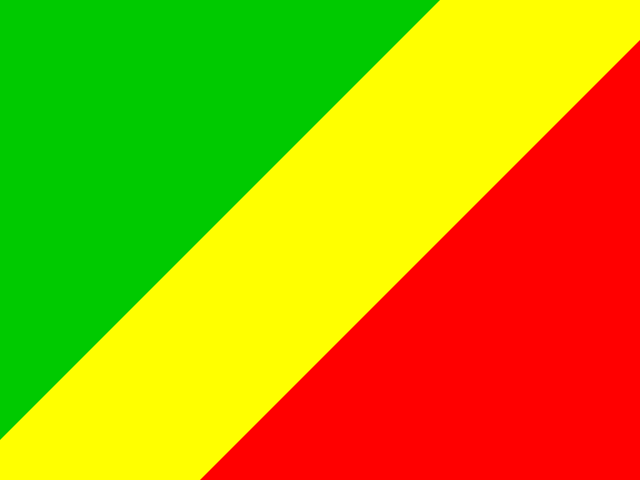
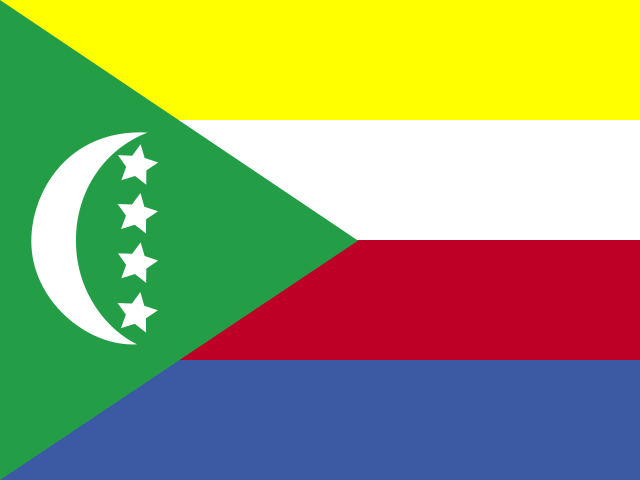

Values for 2024.
05In this edition
Mobile phone ownership in records
The extremes of the statistic. A record reached by more than one country names none of them.
Highest reading
100.0000%
Adults who own a mobile phone (% of population aged 15+)
Lowest reading
45.8336%
Adults who own a mobile phone (% of population aged 15+)
06By sex
Inside the number
World Bank Group also publishes separate female and male readings. The gap between them, where both exist.
Of the 140 countries with both readings, the female reading is higher in 32, the male reading in 107, and they are equal in 1. The widest gaps each way:
07The measure
About mobile phone ownership
Mobile phone ownership is the share of adults who personally own a mobile phone, from the World Bank's Global Findex survey. It asks people, not phone companies, so it shows who actually holds a phone — the precondition for mobile money, digital government services and most of the modern economy.
What the number is: Adults who own a mobile phone (% of population aged 15+).
What it does not measure
It asks whether an adult owns a phone, not what kind of phone, whether it can reach the internet, or how often it is used. It is a survey of people, not a count of subscriptions, so it does not match mobile-subscription figures.
08Where it fits
Connections
Its part in the Country Index, the statistics whose values line up most closely with it across countries, and others on the same subject.
In the Country Index
Context, with no vote
This statistic is published in full under Digital & Technology, but does not help decide any Country Index standing.
Moves with
Where mobile phone ownership is higher, these tend to be higher too.
- Smartphone OwnershipWorld Bank Group · 140 countries in commonρ 0.89
- Ecological FootprintKeyGlobal Footprint Network · 99 countries in commonρ 0.82
- Inequality-adjusted Human Development IndexUNDP Human Development Report Office · 130 countries in commonρ 0.80
Moves against
Where mobile phone ownership is higher, these tend to be lower.
- Stunting Prevalence in Children Under FiveKeyUNICEF, WHO and World Bank Group (Joint Malnutrition Estimates) · 101 countries in commonρ −0.80
- Coefficient of Human InequalityUNDP Human Development Report Office · 130 countries in commonρ −0.77
- Self-Employment RateILO · 135 countries in commonρ −0.77
Rank correlation (ρ, from −1 to 1) across countries, on each statistic’s newest edition, out of 177 statistics sharing at least 80 countries with this one. Two statistics that move together do not cause each other.
09Keep reading
Explore further
The subject
The data, edition by edition
More from World Bank Group
- Access to Electricity
- Account Ownership at a Financial Institution
- Adjusted Net Savings
- Agriculture, Forestry and Fishing Value Added (% of GDP)
- Average Time to Clear Exports Through Customs
- Business Ready: Operational Efficiency
- Business Ready: Public Services
- Business Ready: Regulatory Framework
- All statistics
10Questions
Mobile phone ownership: questions and answers
Which country has the highest mobile phone ownership?
Libya, at 100.0000%, among the 140 countries compared in 2024.
Which country has the lowest mobile phone ownership?
Madagascar, at 45.8336%, among the 140 countries compared in 2024.
How many countries does the Mobile Phone Ownership cover?
140 in 2024.
What is the world average mobile phone ownership?
This site does not calculate a world average, which would depend on how countries are weighted. In the middle country of the 140 compared in 2024, the figure was 91.6827%.
Is this World Bank Group’s own ranking?
No. World Bank Group publishes the values but ranks nobody; the position on this page is derived by Nations Inquiry by ordering the published values, and equal values share a position.
How often is the Mobile Phone Ownership published?
This site holds one edition, describing 2024.
Where does the data come from, and can I download it?
From World Bank Group, under CC BY 4.0. From World Bank Data360 (Global Findex 2025, survey wave 2024). Female and male shares are the Bank's own. The United Arab Emirates is not included because the Bank does not publish its 2024 figures. Every edition is on this site’s Datasets pages as a full table, and downloads as a CSV file with every value unrounded.
11Method
Sources, method and citation
Source
Mobile Phone Ownership — World Bank Group
From World Bank Data360 (Global Findex 2025, survey wave 2024). Female and male shares are the Bank's own. The United Arab Emirates is not included because the Bank does not publish its 2024 figures.
Newest edition
Report year 2024Data year 2024
Cite the source as: World Bank. The Global Findex Database 2025. Washington, DC: World Bank Group.
Licence: CC BY 4.0, checked 2026-09-26.
How this page reads the numbers
- World Bank Group ranks nobody on this measure. The position is derived by Nations Inquiry by ordering the published values; equal values share a position.
- Which end is better follows the publisher’s own reading of the measure.
- A country is named at an end only when it holds that value alone. Where several share it, the page says how many and names none first.
- Values are stored exactly as published and trimmed only for display. “The middle country” is the median of the countries measured, not a world average.
The file itself, column by column — where it came from, what each column holds, and every edition as a CSV — is on its dataset page.
Photographs
The countries at the top of this statistic, from their profiles: Wikimedia Commons, shown in greyscale, each used under the licence named.
- Libya — Maher A. A. Abdussalam, CC0
- Norway — Ximonic , Simo Räsänen, CC BY-SA 3.0
- Denmark — User:Aconcagua, CC BY-SA 3.0
Cite this page
Nations Inquiry (2026). Mobile phone ownership by country: Mobile Phone Ownership, data from World Bank Group. https://nationsinquiry.com/statistics/mobile-phone-ownership