World Bank Group · Catastrophic Out-of-Pocket Health Spending
Catastrophic health spending by country
What share of people live in households that spend more than a tenth of their budget on health care out of their own pockets?
Of the 117 countries compared in the 2019 edition, Georgia had the highest reading, 31.208%, and Somalia had the lowest reading, 0.133%. In the middle country the figure was 6.516%. 22 readings from before 2009 are listed but not compared.
Share
Catastrophic health spending · the 2019 edition
Context statistic
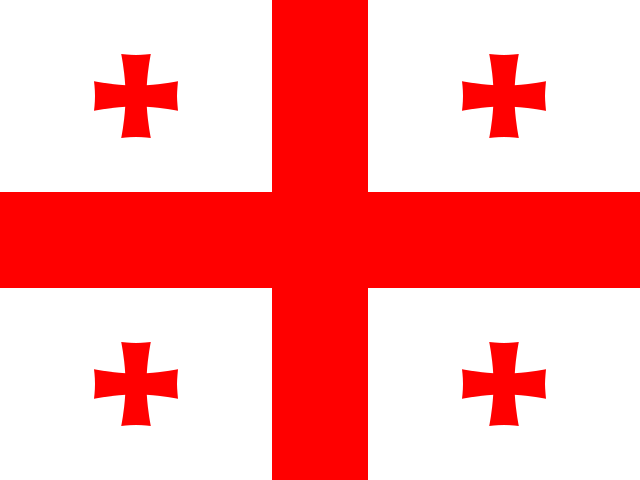
Highest of 117Georgia
31.208%01the 2019 edition · values only
The highest and the lowest
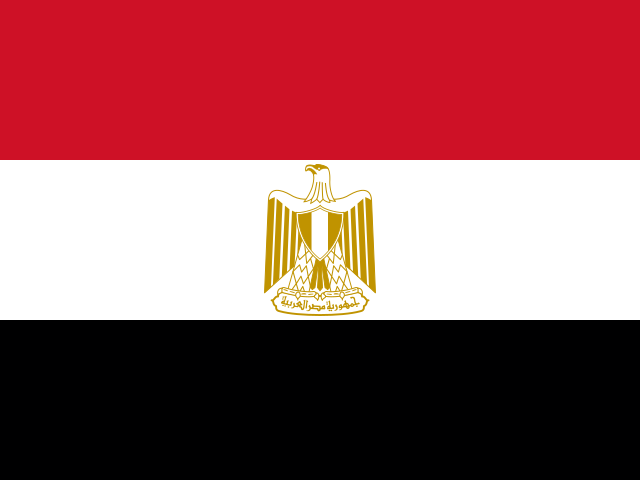
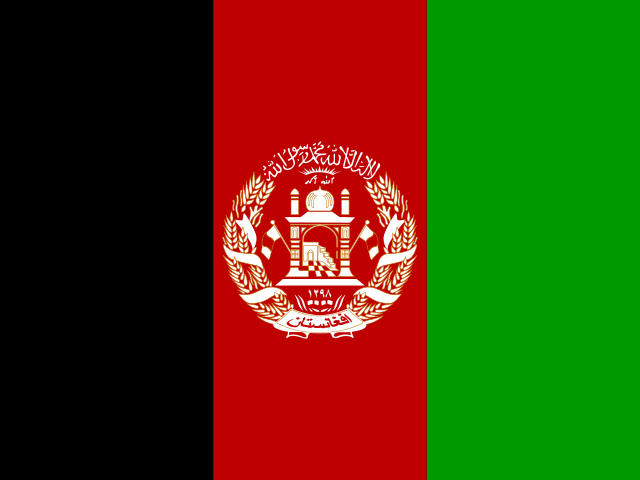
The three countries with the highest values of 117 compared, the three with the lowest, and the highest on each continent. This statistic has no better end, so no country is shown as leading.
- 1
- 2
- 3

02Every measured country
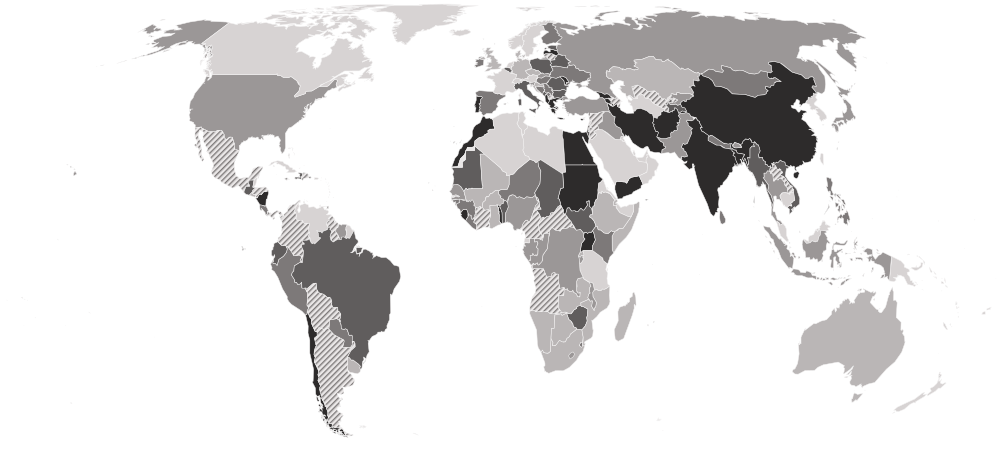
Catastrophic health spending on a map
Each country is shaded by its value, in five groups holding the same number of countries. Hover a country for its value, or select it to open its profile. Below the map, each continent’s middle country.
Darker is a higher value. This statistic has no better end, so the shades describe size, not success.
- 0.133–3.130%
- 3.186–4.871%
- 4.995–8.454%
- 8.687–14.113%
- 14.637–31.208%
- Hatched: a reading from before 2009, listed but not compared (22)
- No reading in the 2019 edition
- Asia
9.135%
the middle country, of 28 measured · 52 members
Georgia31.208% Kazakhstan2.539%
Highest and lowest reading in Asia.
- Americas
8.286%
the middle country, of 15 measured · 48 members
 Nicaragua24.732%
 El Salvador1.692%
Highest and lowest reading in Americas.
- Europe
8.112%
the middle country, of 30 measured · 49 members
 Moldova18.684%
 Germany1.528%
Highest and lowest reading in Europe.
- Africa
4.581%
the middle country, of 43 measured · 55 members
Egypt31.144% Somalia0.133%
Highest and lowest reading in Africa.
- Oceania
1 of 21 measured — too few for a middle: Australia.
 Australia2.759%
Highest and lowest reading in Oceania.
- Every region
19 sub-regions, highest middle country first
- Western Asia
13.236%
the middle country, of 8 measured · 19 members
Georgia31.208% Türkiye3.186%
Highest and lowest reading in Western Asia.
- Southern Asia
9.815%
the middle country, of 9 measured · 9 members
Afghanistan26.931% Bhutan3.985%
Highest and lowest reading in Southern Asia.
- Eastern Europe
8.741%
the middle country, of 10 measured · 10 members
Moldova18.684% Czechia2.219%
Highest and lowest reading in Eastern Europe.
- South America
8.286%
the middle country, of 7 measured · 12 members
 Chile18.849%
 Uruguay2.343%
Highest and lowest reading in South America.
- Southern Europe
8.177%
the middle country, of 11 measured · 17 members
 Portugal18.378%
 Croatia2.799%
Highest and lowest reading in Southern Europe.
- Western Africa
6.387%
the middle country, of 14 measured · 16 members
 Togo17.556%
 Gambia0.198%
Highest and lowest reading in Western Africa.
- South-eastern Asia
6.310%
the middle country, of 5 measured · 11 members
 Myanmar13.823%
 Thailand3.391%
Highest and lowest reading in South-eastern Asia.
- Northern Europe
5.971%
the middle country, of 6 measured · 13 members
 Latvia16.327%
 United Kingdom2.274%
Highest and lowest reading in Northern Europe.
- Middle Africa
4.820%
the middle country, of 5 measured · 9 members
 Chad8.687%
 Gabon3.834%
Highest and lowest reading in Middle Africa.
- Eastern Africa
3.079%
the middle country, of 16 measured · 19 members
 Uganda15.271%Somalia0.133%
Highest and lowest reading in Eastern Africa.
- Southern Africa
1.519%
the middle country, of 5 measured · 5 members
 Eswatini4.995%
 South Africa0.751%
Highest and lowest reading in Southern Africa.
- Australia and New Zealand
1 of 2 measured — too few for a middle: Australia.
Australia2.759%Highest and lowest reading in Australia and New Zealand.
- Caribbean
3 of 24 measured — too few for a middle: Barbados, Haiti, Trinidad and Tobago.
 Barbados16.507%
 Trinidad and Tobago3.876%
Highest and lowest reading in Caribbean.
- Central America
4 of 8 measured — too few for a middle: Costa Rica, El Salvador, Guatemala, Nicaragua.
Nicaragua24.732%El Salvador1.692%Highest and lowest reading in Central America.
- Central Asia
3 of 5 measured — too few for a middle: Kazakhstan, Kyrgyzstan, Tajikistan.
 Tajikistan10.251%Kazakhstan2.539%
Highest and lowest reading in Central Asia.
- Eastern Asia
3 of 8 measured — too few for a middle: China, Japan, Mongolia.
 China23.980%
 Japan4.363%
Highest and lowest reading in Eastern Asia.
- Northern Africa
3 of 6 measured — too few for a middle: Egypt, Morocco, Sudan.
Egypt31.144% Sudan18.357%
Highest and lowest reading in Northern Africa.
- Northern America
1 of 4 measured — too few for a middle: United States.
 United States4.467%
Highest and lowest reading in Northern America.
- Western Europe
3 of 9 measured — too few for a middle: Belgium, Germany, Luxembourg.
 Belgium11.447%Germany1.528%
Highest and lowest reading in Western Europe.
03The whole field at once
The spread
117 countries, one dot each, on one scale — further right is a higher value. Half the countries are above 6.516%; a quarter are above 11.657%, and a quarter below 3.391%. The bar in each row marks that continent’s middle country.
04All 139 ever measured
Every country
In order, highest value first. No rank or position is shown: too many countries share the same value for an order to mean anything. Neither end of this table is the good one. A low share can mean that insurance or a public health service pays, or that people cannot afford care and go without — both happen, and the lowest readings include some of the poorest countries in the world. Read a country’s figure beside its health outcomes, and check the year of its survey.
Showing 25 of 139 countries




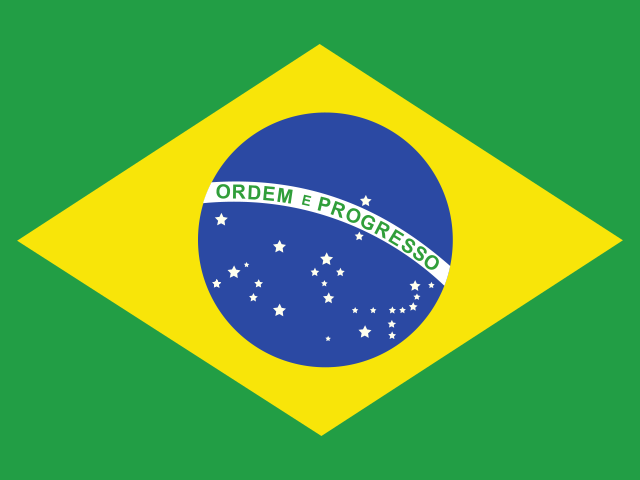
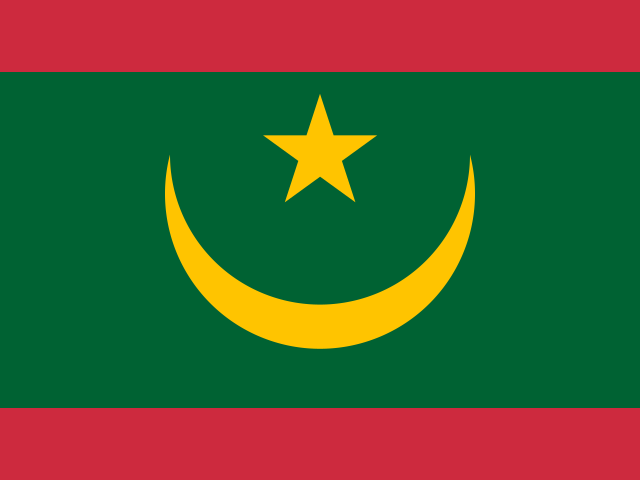
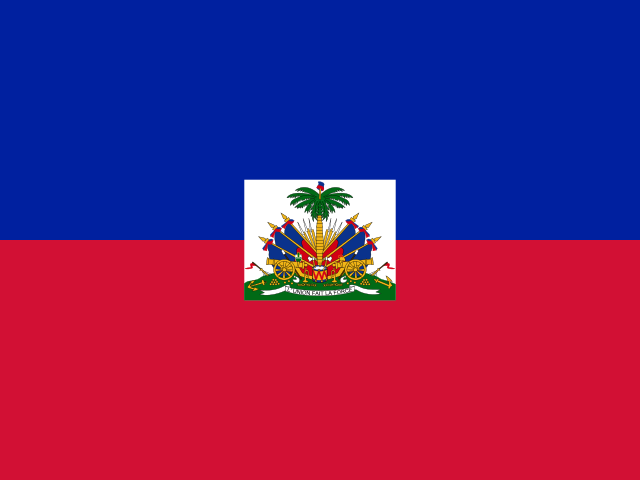
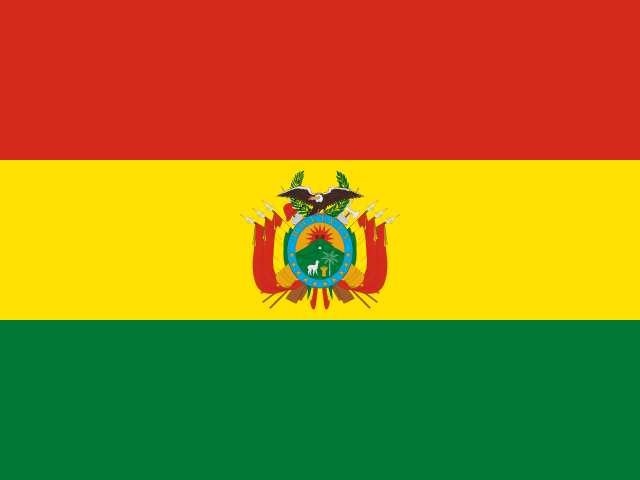








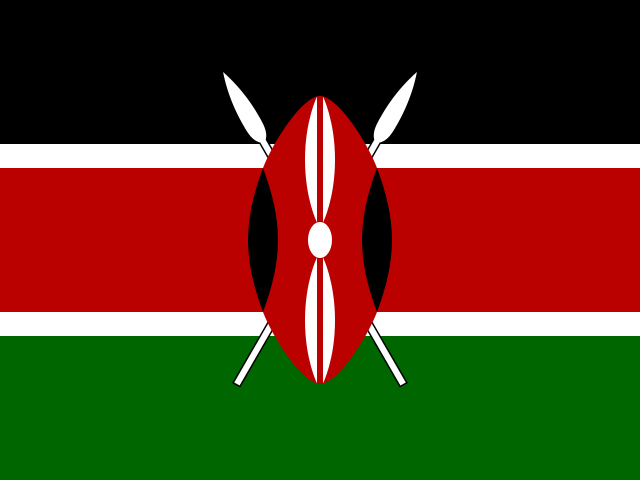

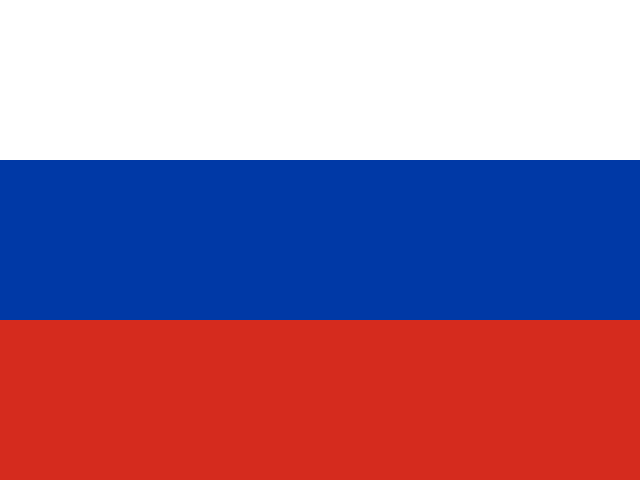
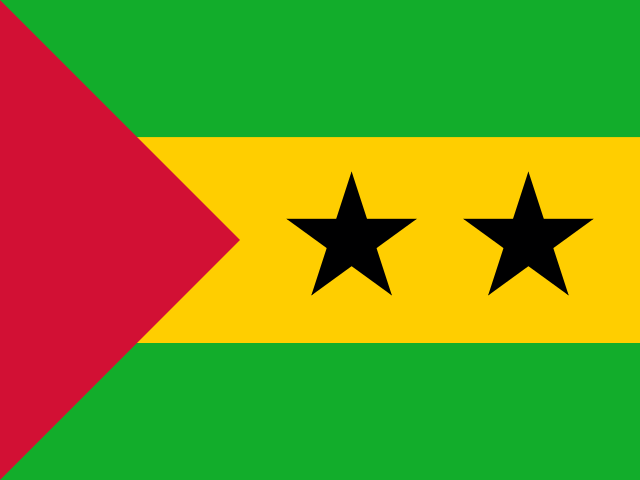
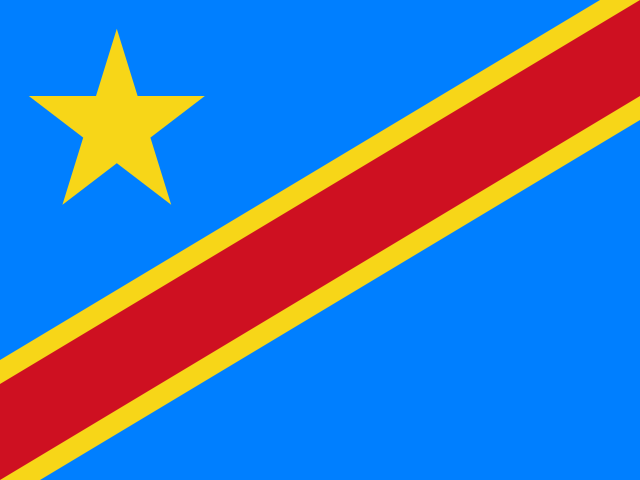








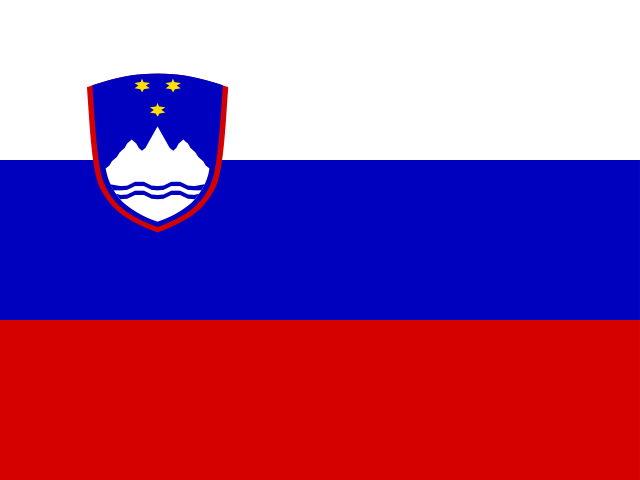
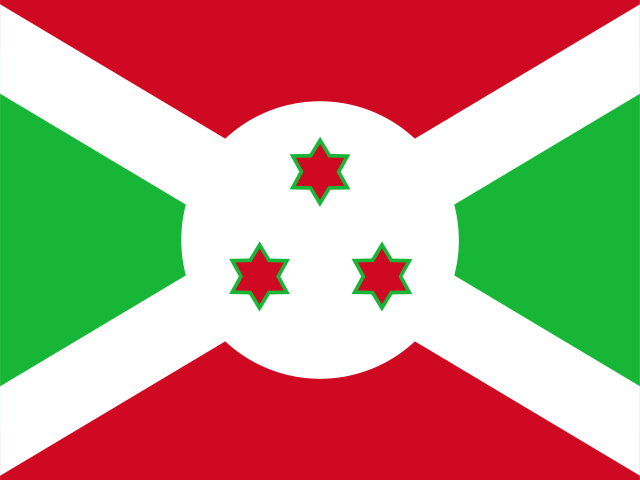
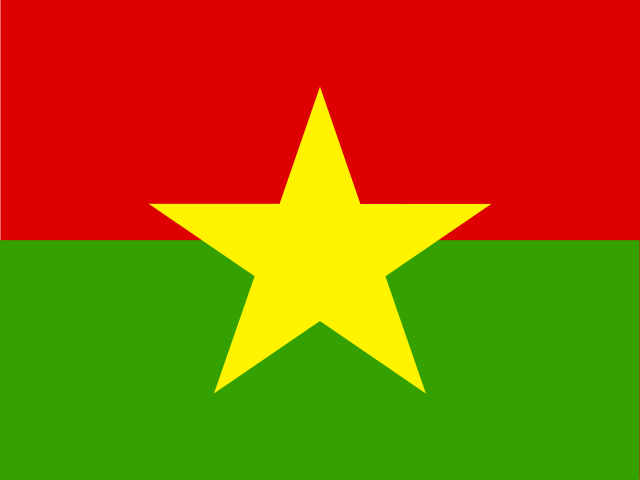

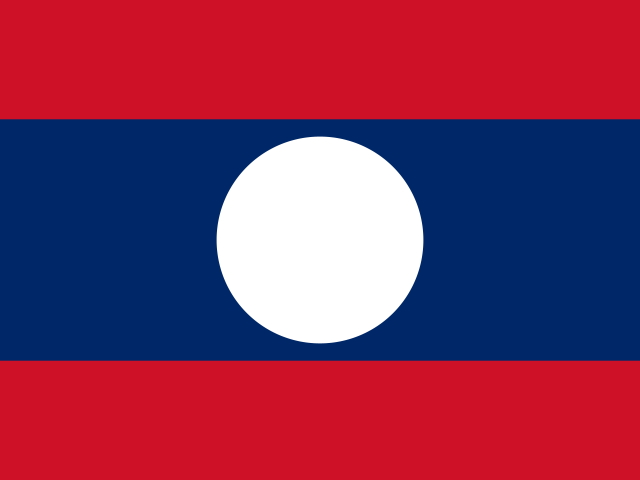







Values for the 2019 edition.
05In this edition
Catastrophic health spending in records
The extremes of the statistic. A record reached by more than one country names none of them.
Highest reading
31.208%
Population in households spending more than 10% of their budget on health out of pocket (%)
Lowest reading
0.133%
Population in households spending more than 10% of their budget on health out of pocket (%)
06The measure
About catastrophic health spending
This is the share of people living in households that spend more than a tenth of their whole budget on health care they pay for directly — doctors’ fees, medicines, tests — rather than through insurance or the state. It is the World Bank’s measure of the UN goal of protecting people from ruinous medical bills (SDG 3.8.2).
What the number is: Population in households spending more than 10% of their budget on health out of pocket (%).
07Where it fits
Connections
Its part in the Country Index, the statistics whose values line up most closely with it across countries, and others on the same subject.
In the Country Index
Context, with no vote
This statistic is published in full under Health & Wellbeing and Poverty & Inequality, but does not help decide any Country Index standing.
Health & WellbeingPoverty & InequalityWhich statistics vote, and why
Moves with
Where catastrophic health spending is higher, these tend to be higher too.
No statistic lines up this closely.
Moves against
Where catastrophic health spending is higher, these tend to be lower.
No statistic lines up this closely.
Rank correlation (ρ, from −1 to 1) across countries, on each statistic’s newest edition, out of 311 statistics sharing at least 80 countries with this one. Two statistics that move together do not cause each other.
08Keep reading
Explore further
The subject
The data, edition by edition
More from World Bank Group
09Questions
Catastrophic health spending: questions and answers
Which country has the highest catastrophic health spending?
Georgia, at 31.208%, among the 117 countries compared in the 2019 edition.
Which country has the lowest catastrophic health spending?
Somalia, at 0.133%, among the 117 countries compared in the 2019 edition.
How many countries does the Catastrophic Out-of-Pocket Health Spending cover?
117 in the 2019 edition, and 139 at least once across all editions.
What is the world average catastrophic health spending?
This site does not calculate a world average, which would depend on how countries are weighted. In the middle country of the 117 compared in the 2019 edition, the figure was 6.516%.
Is this World Bank Group’s own ranking?
No ranking is shown. World Bank Group publishes values only, and too many countries share the same value for an ordering to mean anything, so none is derived.
How often is the Catastrophic Out-of-Pocket Health Spending published?
This site holds one edition, describing 2019.
Where does the data come from, and can I download it?
From World Bank Group, under CC BY 4.0. From the World Bank’s Health Equity and Financial Protection Indicators database (2022 update), computed from household surveys and read from the Bank’s own Stata file. The survey behind each reading is named in the download. Every edition is on this site’s Datasets pages as a full table, and downloads as a CSV file with every value unrounded.
10Method
Sources, method and citation
Source
Catastrophic Out-of-Pocket Health Spending — World Bank Group
From the World Bank’s Health Equity and Financial Protection Indicators database (2022 update), computed from household surveys and read from the Bank’s own Stata file. The survey behind each reading is named in the download.
Newest edition
Report year 2019Data year not recorded
Cite the source as: World Bank. Health Equity and Financial Protection Indicators (HEFPI), 2022 update. Washington, DC: World Bank Group.
Licence: CC BY 4.0, checked 2026-10-03.
How this page reads the numbers
- No rank or position is shown: World Bank Group publishes values only, and too many countries share the same value for an ordering to mean anything.
- This statistic has no better end, so the page describes higher and lower values and never calls a country a leader.
- A country is named at an end only when it holds that value alone. Where several share it, the page says how many and names none first.
- The file gives each country’s most recent reading, so the rows are from different years. Readings from before 2009 are listed but left out of every comparison on this page.
- Values are stored exactly as published and trimmed only for display. “The middle country” is the median of the countries measured, not a world average.
The file itself, column by column — where it came from, what each column holds, and every edition as a CSV — is on its dataset page.
Cite this page
Nations Inquiry (2026). Catastrophic health spending by country: Catastrophic Out-of-Pocket Health Spending, data from World Bank Group. https://nationsinquiry.com/statistics/catastrophic-health-spending