Dataset · UNICEF
Minimum Dietary Diversity, Children Aged 6–23 Months
Minimum Dietary Diversity, Children Aged 6–23 Months, 2025 compilation · 115 countries
This is the share of children aged 6 to 23 months who ate foods from at least five of eight food groups on the previous day. Variety is the simplest test of whether a young child's diet supplies the vitamins and minerals that growth needs, and it is the standard measure WHO and UNICEF use.
This site holds one edition, Minimum Dietary Diversity, Children Aged 6–23 Months, 2025 compilation, read from UNICEF’s own data and stored exactly as published.
Minimum Dietary Diversity, Children Aged 6–23 Months · the file
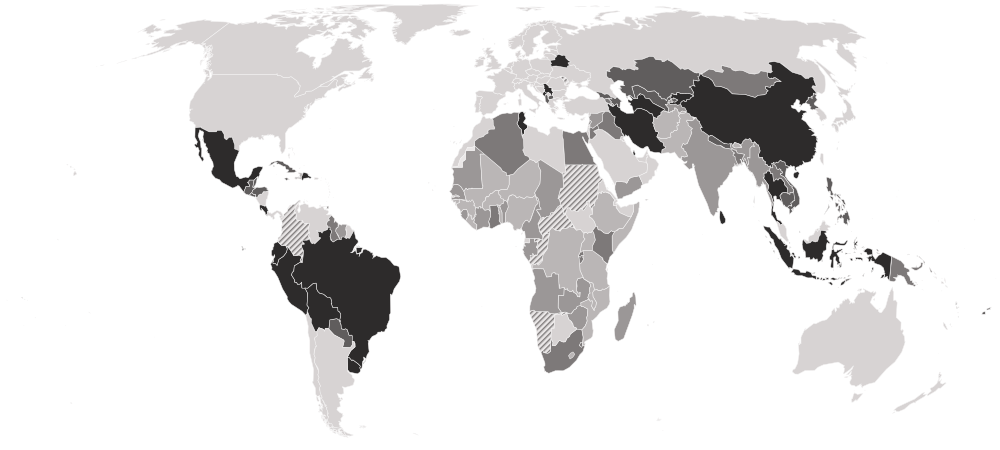
- Newest
- Minimum Dietary Diversity, Children Aged 6–23 Months, 2025 compilation
- Held
- 1 edition · 115 rows
- Licence
- CC BY 3.0 IGO
01One edition
Every edition
Newest first. Each opens the full table for that edition, and each downloads as a CSV.
| Edition | Countries | Change | Read | Download |
|---|---|---|---|---|
| Minimum Dietary Diversity, Children Aged 6–23 Months, 2025 compilation | 115 | — | October 3, 2026 | CSV |
Every edition in one file, one row per country per edition: child-dietary-diversity-all-editions-nations-inquiry.csv
025 columns
What’s in the file
Every column, what it holds, how it is stored and what its values look like — what a reader needs before opening the file.
| Column | What it holds | Stored as | Range, 2025 | Distinct | Empty | Spread |
|---|---|---|---|---|---|---|
ISO Codecountry_codeIdentifier | The ISO 3166-1 alpha-3 code, added by this site. Every table here joins on it. | Text · 3 letters | — | 115 | 0 | |
CountrycountryName | The country’s name, as this file spells it. | Text | — | 115 | 0 | |
Survey yearreference_yearReading year | The year this country’s reading describes. Readings from different years sit side by side. | Year | — | 15 | 0 | |
Children aged 6-23 months fed from at least 5 of 8 food groups (%)child_dietary_diversityHeadline | The headline figure: Children aged 6-23 months fed from at least 5 of 8 food groups (%). | Number · up to 4 decimals | 8.09 Guinea-Bissau85.88 Guinea-Bissau85.88 Serbiamiddle 37.57 Serbiamiddle 37.57 | 115 | 0 | |
UNICEF observation statusobservation_statusFlag | Whether UNICEF re-analysed the survey's own data for this reading or took the figure from the survey's published report, in UNICEF's words. | Text | — | 3 | 0 |
Profiled from the newest file. Range: the lowest and highest value, with the country holding it when only one does. Spread: countries in ten equal steps from lowest to highest. A higher value is the better result.
03115 countries across every edition
Who is covered
How many countries each edition holds, continent by continent, who joined and who left, and which places this site covers that the dataset never has.
| 2025 | |
|---|---|
| Africa | 44 |
| Americas | 21 |
| Asia | 35 |
| Europe | 6 |
| Oceania | 9 |
| All | 115 |
One edition, covering 115 countries.
Not in this dataset · 110 places this site covers
UNICEF gives no figure for these in any edition held here. It is the publisher’s choice of scope, and each place’s profile shows what is measured.
 American Samoa
 Andorra
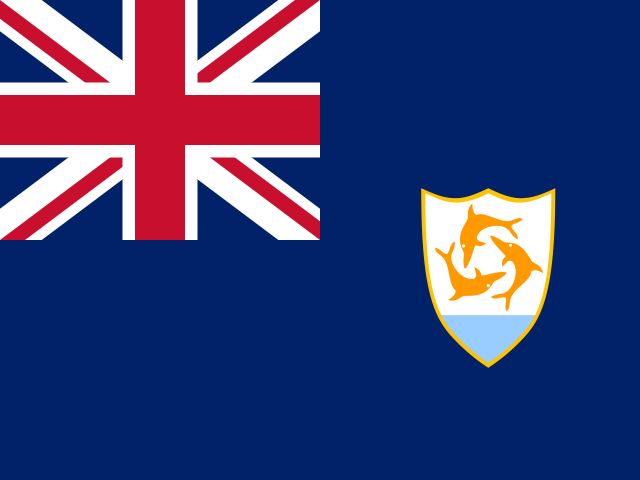 Anguilla
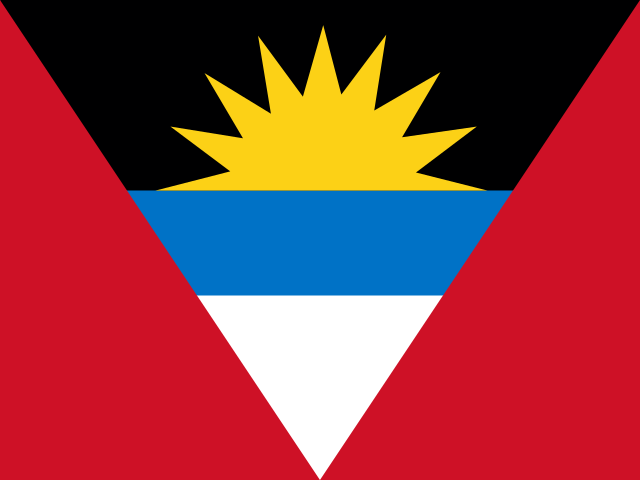 Antigua and Barbuda
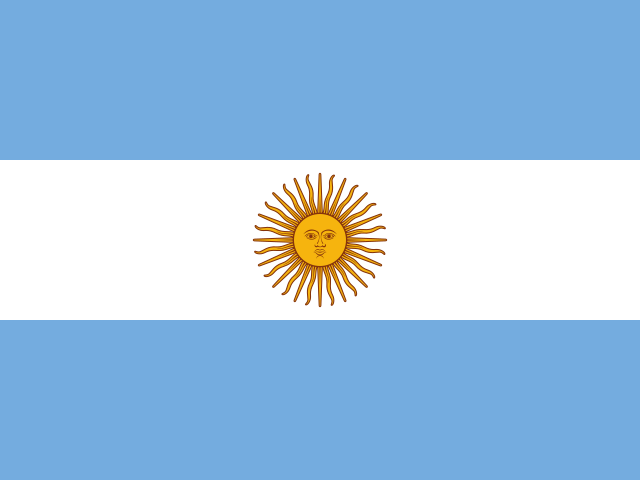 Argentina
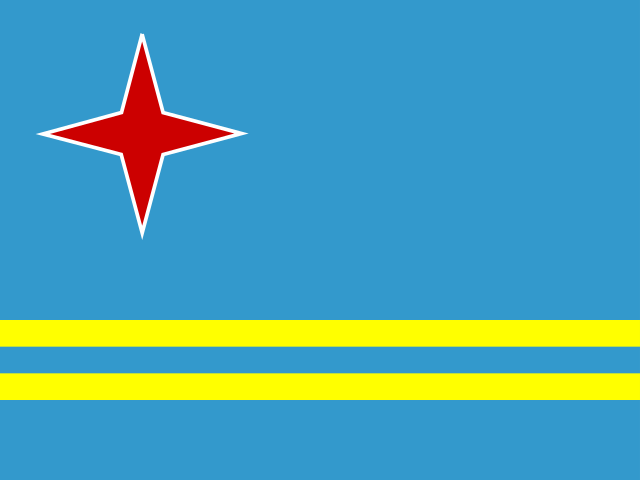 Aruba
Aruba Australia
 Austria
 Bahamas
 Bahrain
 Barbados
 Belgium
 Bermuda
 Bosnia and Herzegovina
 Botswana
 British Virgin Islands
 Brunei
 Bulgaria
 Cabo Verde
 Canada
 Cayman IslandsChannel Islands
 Chile
Chile Cook Islands
 Croatia
 Curaçao
 Cyprus
 Czechia
 Denmark
 Djibouti
 Dominica
 Equatorial Guinea
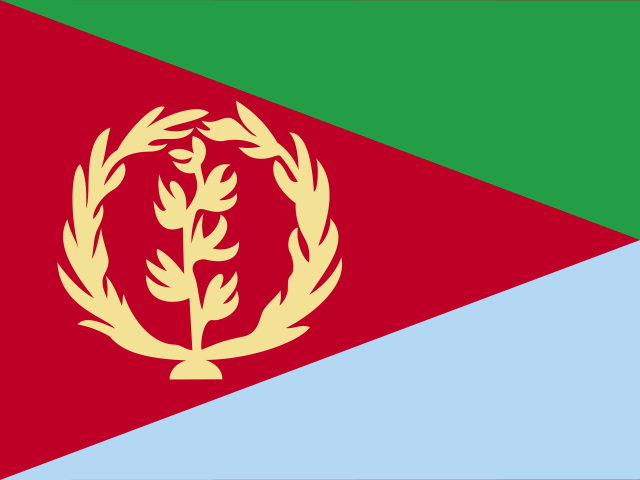 Eritrea
 Estonia
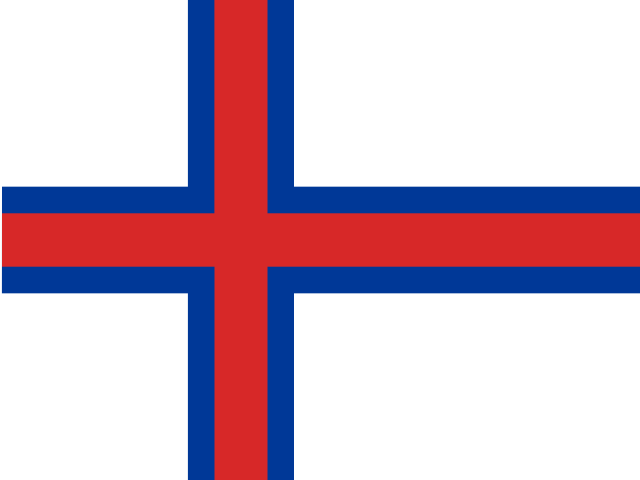 Faroe Islands
 Finland
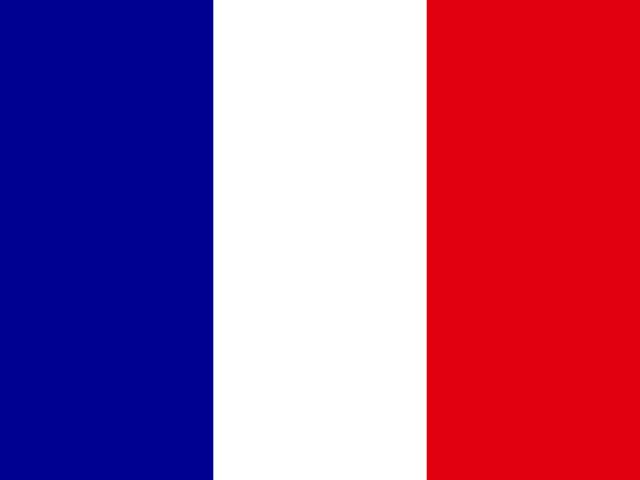 France
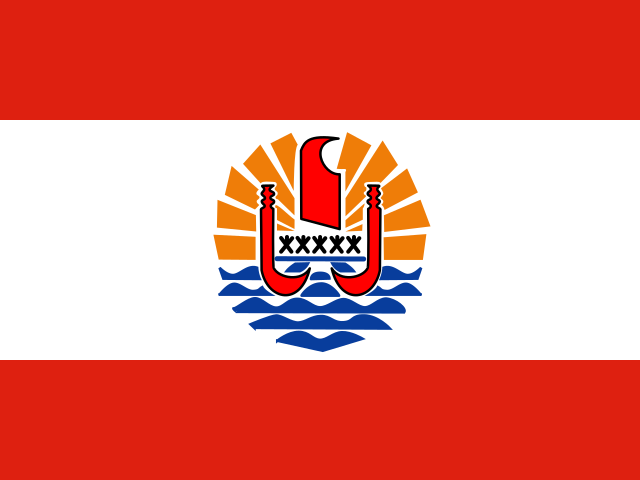 French Polynesia
 Germany
 Gibraltar
 Greece
 Greenland
 Grenada
 Guam
Guam Hong Kong
 Hungary
 Iceland
 Ireland
 Isle of Man
 Israel
 Italy
Italy Japan
Japan Kosovo
 Kuwait
 Latvia
 Libya
Libya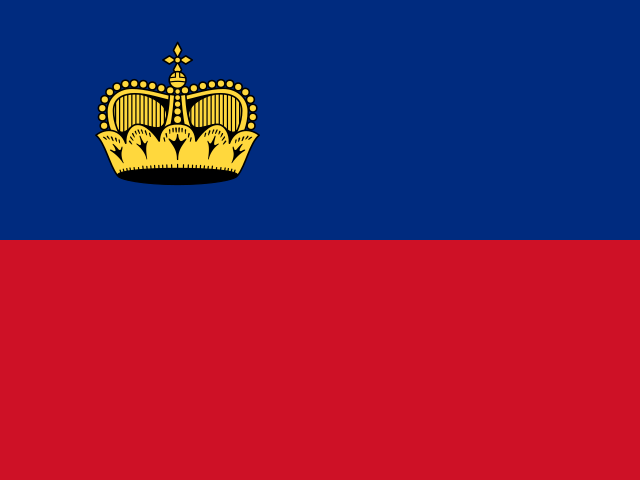 Liechtenstein
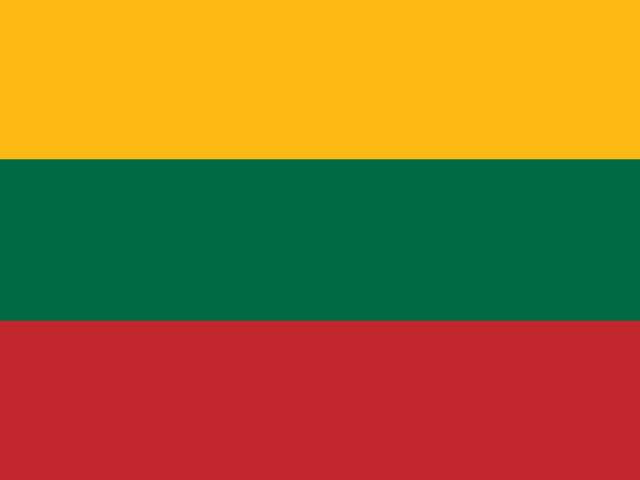 Lithuania
 Luxembourg
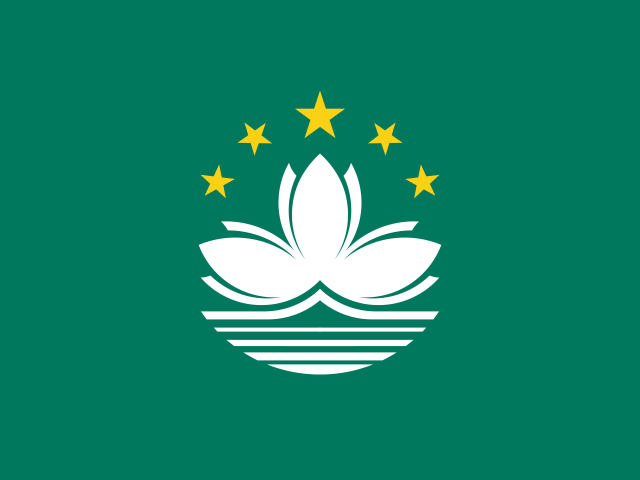 Macau
Macau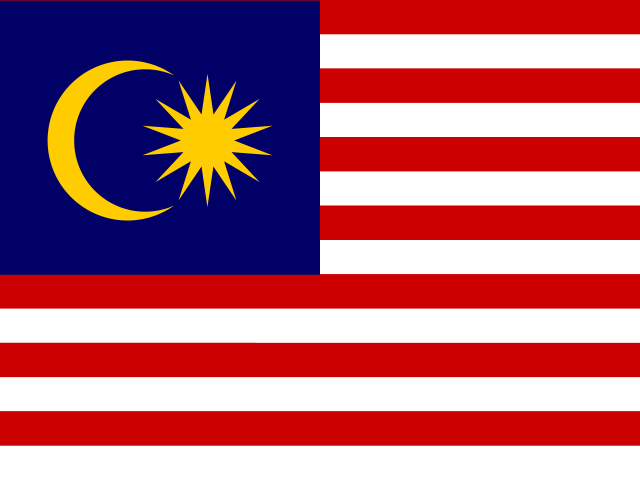 Malaysia
 Malta
Malta Mauritius
 Micronesia
 Monaco
 Montserrat
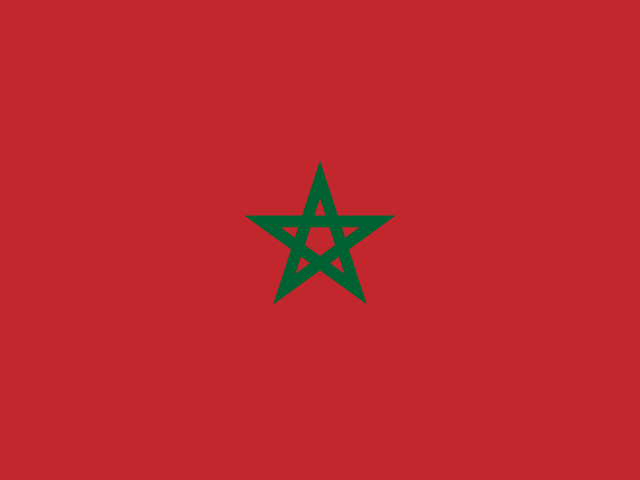 Morocco
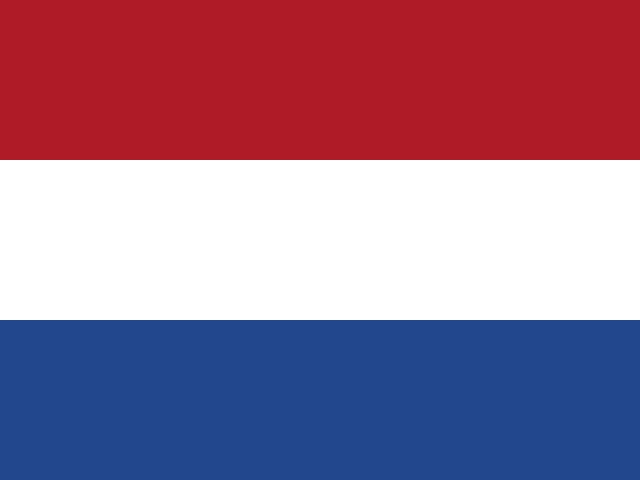 Netherlands
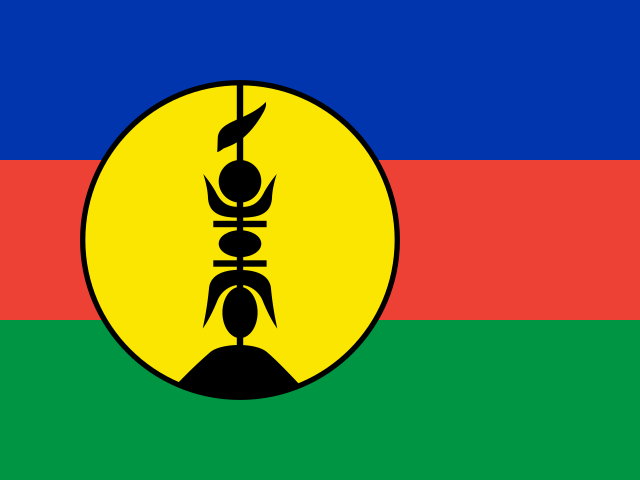 New Caledonia
 New Zealand
 Nicaragua
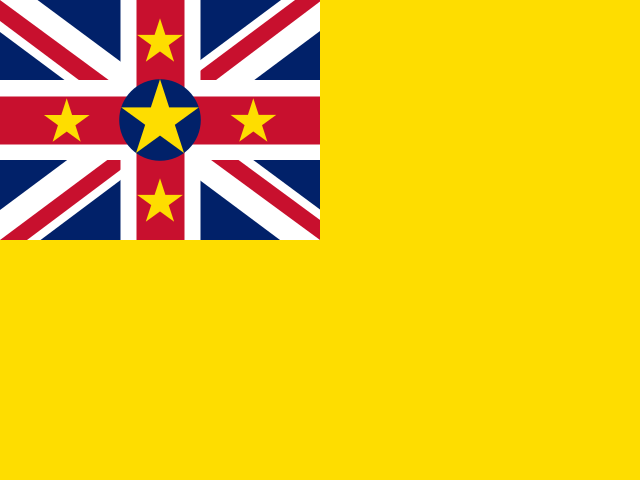 NiueNorthern Cyprus
 Northern Mariana Islands
 Norway
 Oman
Oman Palau
Palau Panama
 Poland
 Portugal
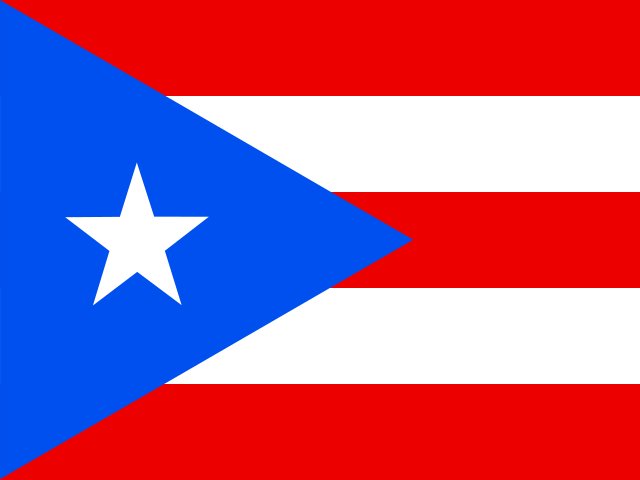 Puerto Rico
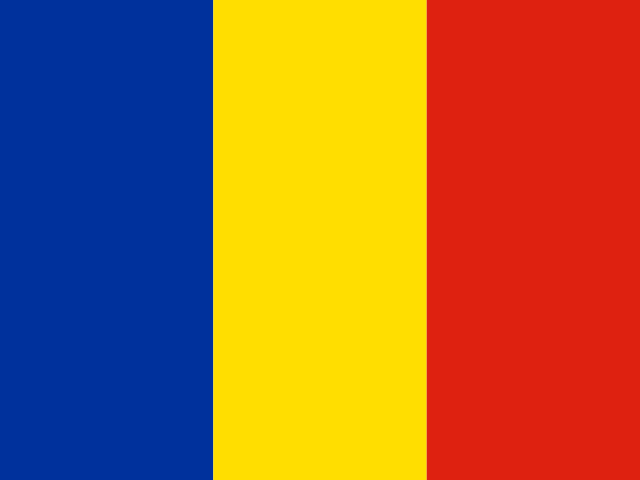 Romania
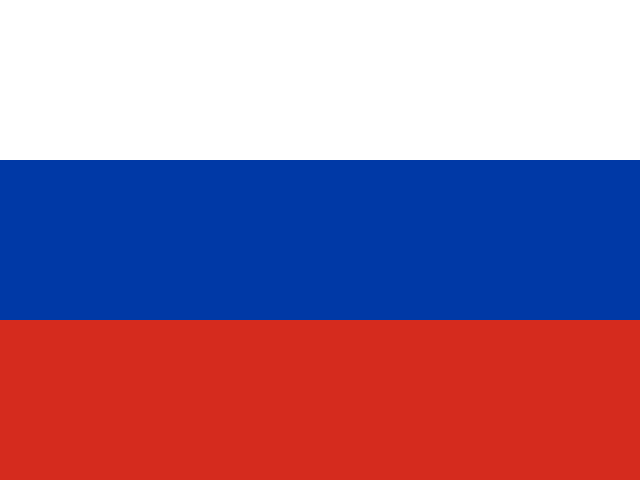 Russia
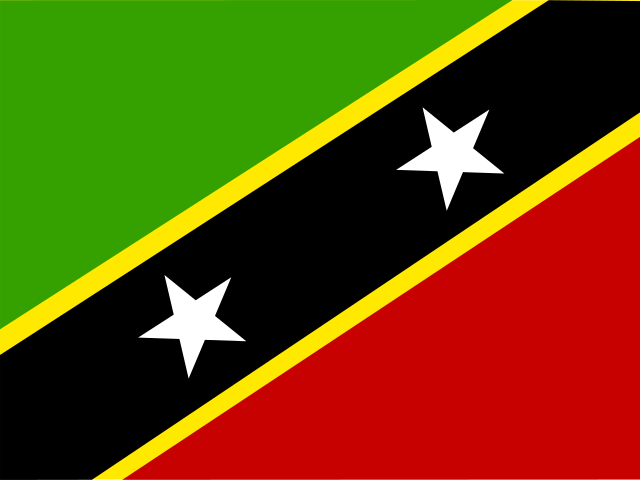 Saint Kitts and Nevis
 Saint Lucia
 Saint Martin
 Saint Vincent and the Grenadines
 San Marino
 Saudi Arabia
 Seychelles
 Singapore
 Sint Maarten
 Slovakia
 Slovenia
 Solomon IslandsSomaliland
 South Korea
 South Sudan
 Spain
Spain Sweden
 Switzerland
 Taiwan
 Türkiye
 Ukraine
 United Arab Emirates
 United Kingdom
 United States
 United States Virgin Islands
 Vatican City
 Venezuela
04Provenance
Where it comes from
The path from the publisher to this page, and what was checked and changed on the way.
1 · Publisher
UNICEF
2 · Their file
Minimum Dietary Diversity, Children Aged 6–23 Months (surveys to 2025)
3 · Read by this site
October 3, 2026
Imported by a script that parses each figure and writes it down unrounded.4 · Stored as
1 file, one per edition
It downloads as a CSV: child-dietary-diversity-all-editions-nations-inquiry.csv5 · Used on
Its statistic page, and every profile it measures
Precision
The headline is stored to 4 decimals, as published.
Rounded by this site
Never. Tables on screen may show fewer decimals; the files never do.
Changed by this site
Reshaped into one row per country: regional and income-group totals are left out, only the columns listed are kept, each row gets its ISO 3166 code, and some country names are brought to one spelling. No value is recalculated, rescaled or rounded.
From UNICEF's Global Infant and Young Child Feeding Databases, read from UNICEF's own data warehouse, which carries more decimal places than UNICEF's published workbooks. Each reading is marked as re-analysed by UNICEF or as reported by the survey itself.
05Reuse
Licence and credit
What the publisher’s licence lets you do, what it asks of you, and a credit line and citation ready to copy.
Licence · checked October 3, 2026
- Share and redistribute it
- Adapt it and build on it
- Use it commercially
- Credit the publisher
- Say what you changed
The version of CC BY written for intergovernmental organisations. Credit the publisher and say what you changed.
A credit line
Source: UNICEF, Minimum Dietary Diversity, Children Aged 6–23 Months, via Nations Inquiry.
Cite this dataset
UNICEF. Minimum Dietary Diversity, Children Aged 6–23 Months, Minimum Dietary Diversity, Children Aged 6–23 Months, 2025 compilation [data set]. As held by Nations Inquiry, https://nationsinquiry.com/datasets/child-dietary-diversity
The publisher’s own citation: UNICEF. Global Infant and Young Child Feeding Databases, December 2025. New York: UNICEF.
Plain-language summary, not legal advice. The licence text is what binds.
06Where it is used
Around the site
Where these numbers appear on this site, and the datasets nearest to it.
Charted
Minimum Dietary Diversity, Children Aged 6–23 Months by countryWho is highest, the map, the spread, who rose and fell, and the records.
Subjects
Near neighbours
- Life Expectancy at BirthUN DESA Population Division · 74 held · 1950–2023
- Under-Five Mortality RateUN IGME · 73 held · 1952–2024
- Prevalence of Severe Food InsecurityFAO · 9 held · 2015–2023
07Questions
Minimum Dietary Diversity, Children Aged 6–23 Months: questions and answers
What is the Minimum Dietary Diversity, Children Aged 6–23 Months?
This is the share of children aged 6 to 23 months who ate foods from at least five of eight food groups on the previous day. Variety is the simplest test of whether a young child's diet supplies the vitamins and minerals that growth needs, and it is the standard measure WHO and UNICEF use.
Which editions of the Minimum Dietary Diversity, Children Aged 6–23 Months can I download?
One: Minimum Dietary Diversity, Children Aged 6–23 Months, 2025 compilation, as a CSV file.
Does UNICEF rank countries on it?
No. UNICEF publishes values only. The positions shown on this site are derived by ordering the published values, and are labelled as ours.
Can I use it commercially?
Yes, under CC BY 3.0 IGO, with credit to UNICEF. The licence text is linked on this page.