Loading…
ILO · Trade Union Density
Trade union density by country
What share of employees belong to a trade union?
Iceland placed first of the 134 countries compared in the 2020 edition, at 91.423%, and Venezuela last, at 0.200%. In the middle country the figure was 16.468%. 5 readings from before 2010 are listed but not compared.
Trade union density · the 2020 edition
Context statistic

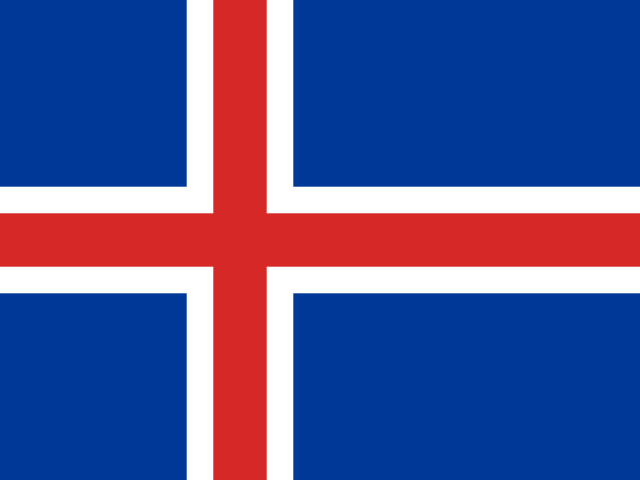
Highest of 134Iceland
91.423%01the 2020 edition · position · derived
Who leads
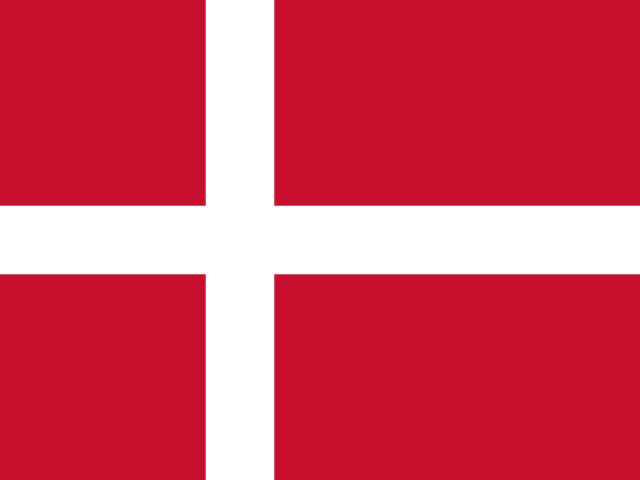
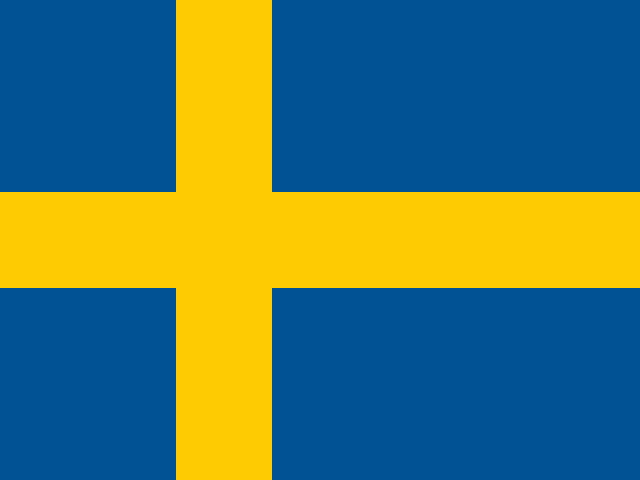
The three countries at the highest end of 134 compared, the three at the other end, and the first on each continent.
 1
1Photo: Hansueli Krapf · CC BY-SA 3.0, greyscale
 2
2Photo: User:Aconcagua · CC BY-SA 3.0, greyscale
 3
3Photo: User:Pieter Kuiper · Public domain, greyscale
02Every measured country
Trade union density on a map
Each country is shaded by its value, in five groups holding the same number of countries. Hover a country for its value, or select it to open its profile. Below the map, each continent’s middle country.
Darker is a higher value — the better end.
- 0.200–8.698%
- 8.730–12.990%
- 13.033–20.082%
- 20.538–27.700%
- 28.229–91.423%
- Hatched: a reading from before 2010, listed but not compared (5)
- No reading in the 2020 edition
- Europe
22.375%
the middle country, of 38 measured · 49 members
Iceland91.423% Estonia6.017%
Highest and lowest reading in Europe.
- Asia
17.342%
the middle country, of 28 measured · 52 members
 Vietnam49.613%
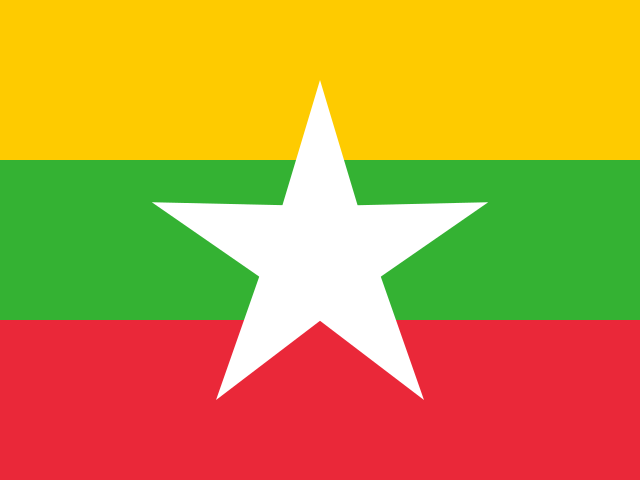 Myanmar1.000%
Highest and lowest reading in Asia.
- Africa
13.456%
the middle country, of 38 measured · 55 members
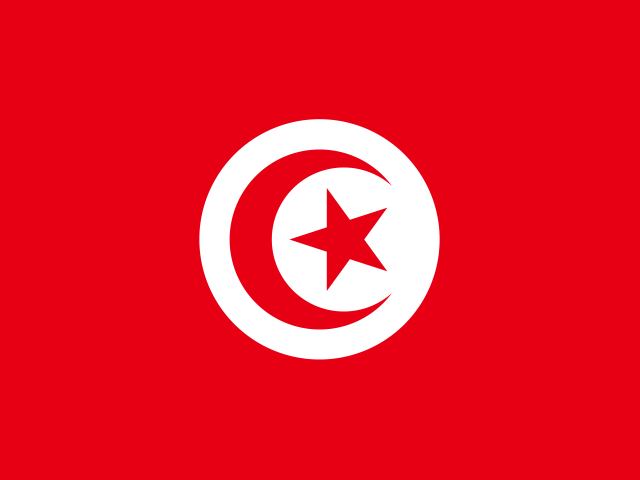 Tunisia38.106%
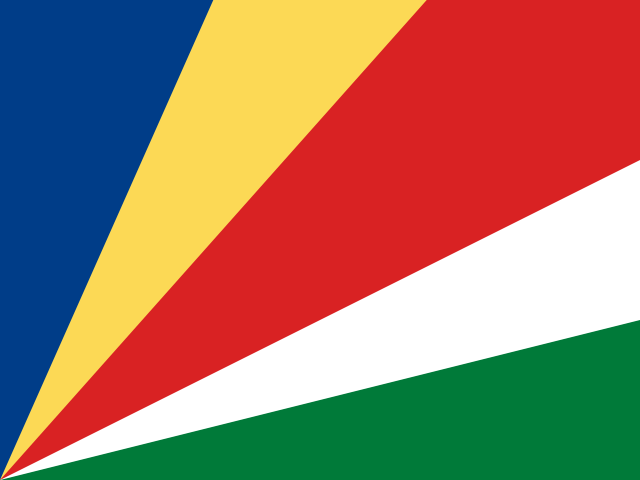 Seychelles2.041%
Highest and lowest reading in Africa.
- Americas
11.169%
the middle country, of 26 measured · 48 members
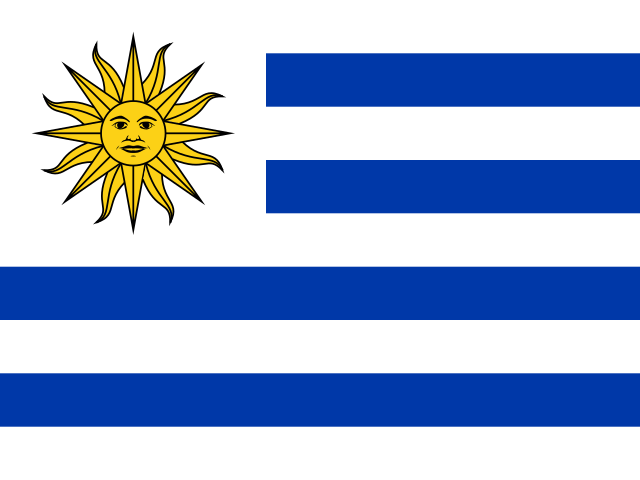 Uruguay30.096%
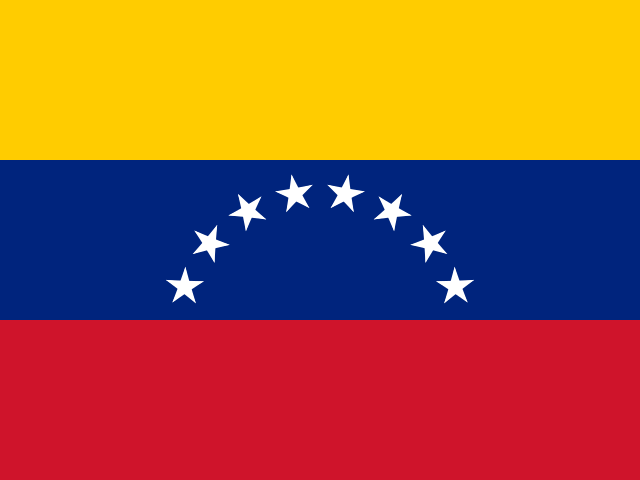 Venezuela0.200%
Highest and lowest reading in Americas.
- Oceania
4 of 21 measured — too few for a middle: Australia, Fiji, New Zealand, Samoa.
 New Zealand18.895%
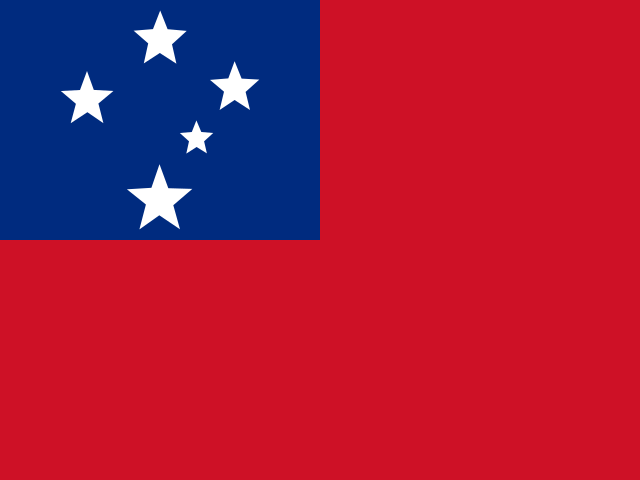 Samoa11.818%
Highest and lowest reading in Oceania.
- Every region
21 sub-regions, highest middle country first
- Northern Europe
37.900%
the middle country, of 10 measured · 13 members
Iceland91.423%Estonia6.017%Highest and lowest reading in Northern Europe.
- Eastern Asia
28.421%
the middle country, of 6 measured · 8 members
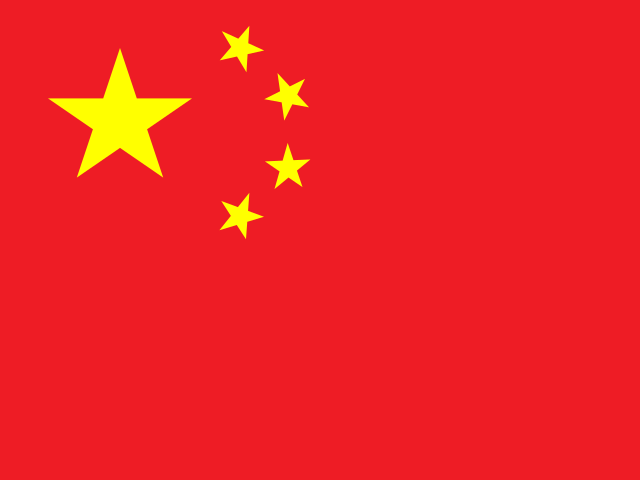 China44.249%
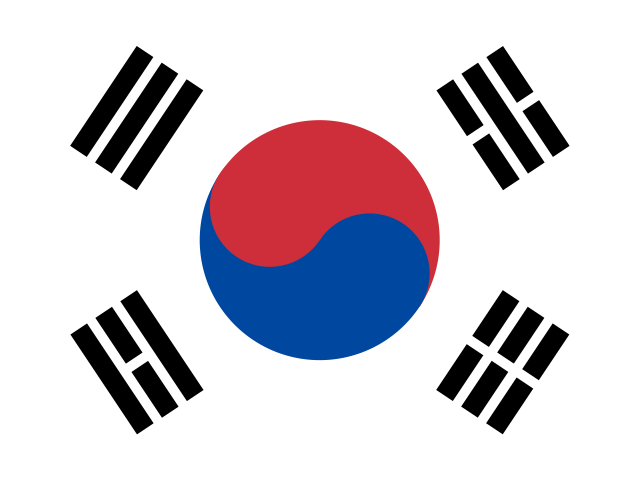 South Korea12.370%
Highest and lowest reading in Eastern Asia.
- Southern Europe
26.367%
the middle country, of 12 measured · 17 members
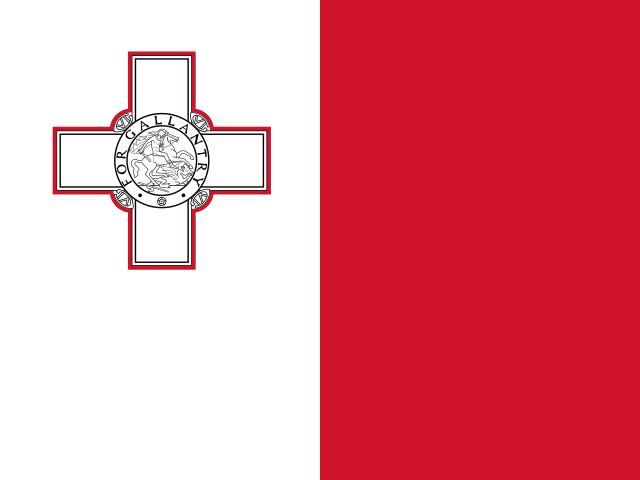 Malta41.894%
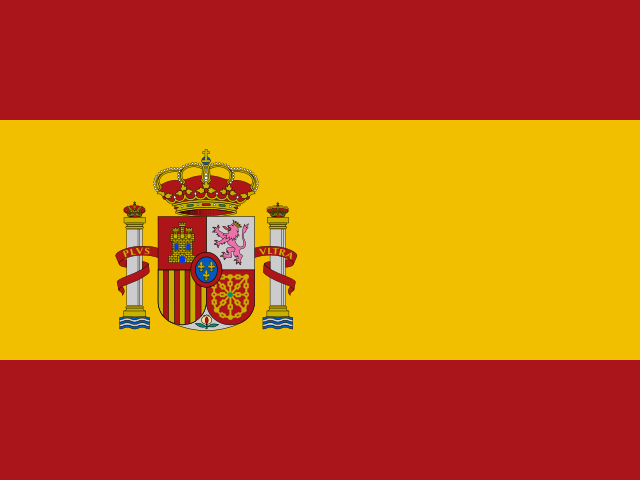 Spain12.449%
Highest and lowest reading in Southern Europe.
- Southern Africa
23.879%
the middle country, of 5 measured · 5 members
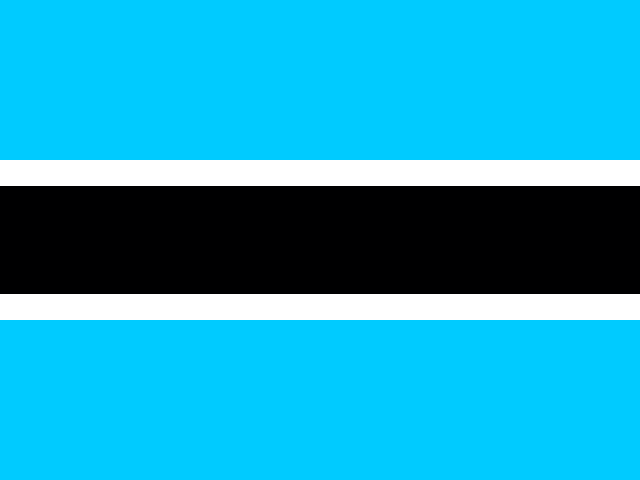 Botswana29.963%
 Lesotho4.753%
Highest and lowest reading in Southern Africa.
- Western Asia
20.915%
the middle country, of 6 measured · 19 members
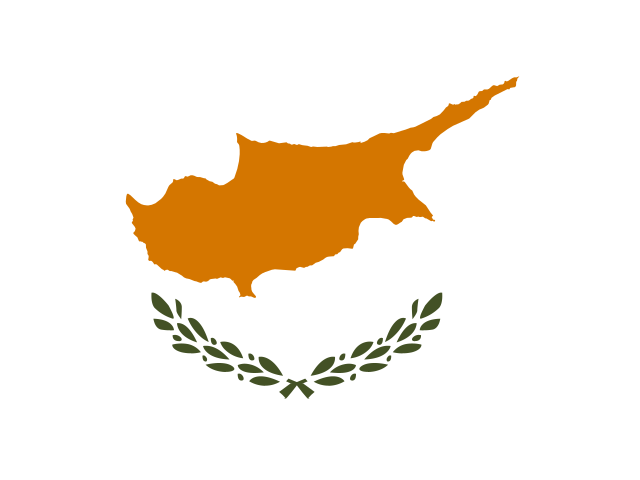 Cyprus43.285%
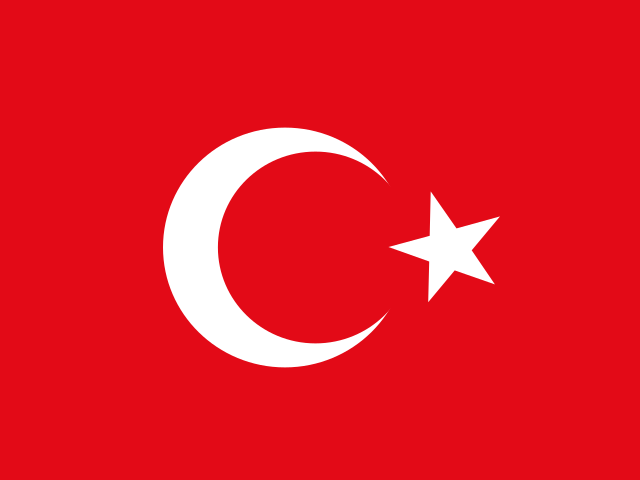 Türkiye9.853%
Highest and lowest reading in Western Asia.
- Western Europe
16.255%
the middle country, of 7 measured · 9 members
 Belgium49.082%
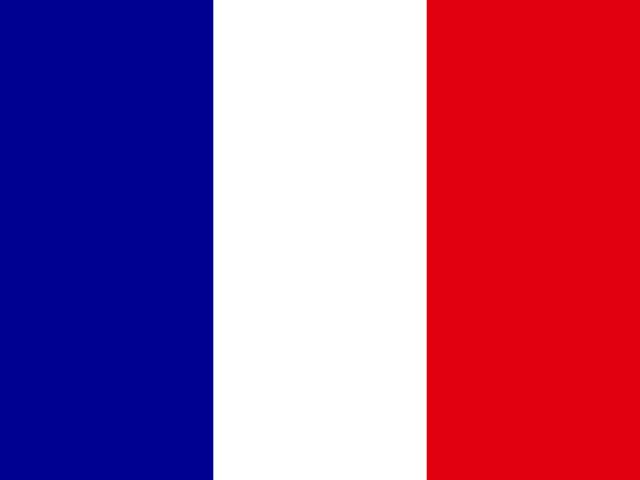 France8.890%
Highest and lowest reading in Western Europe.
- Western Africa
15.365%
the middle country, of 12 measured · 16 members
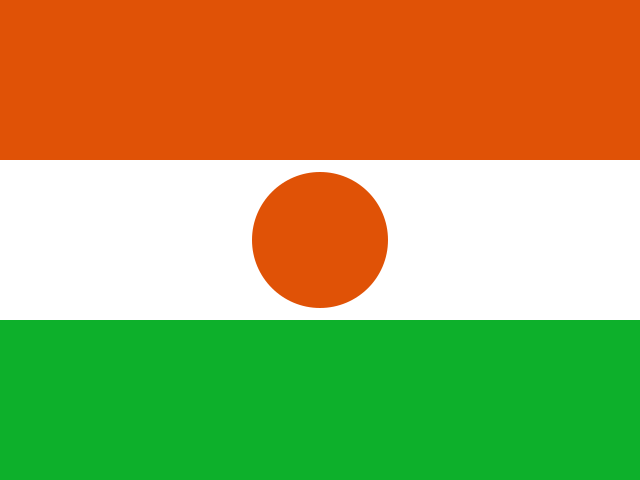 Niger26.995%
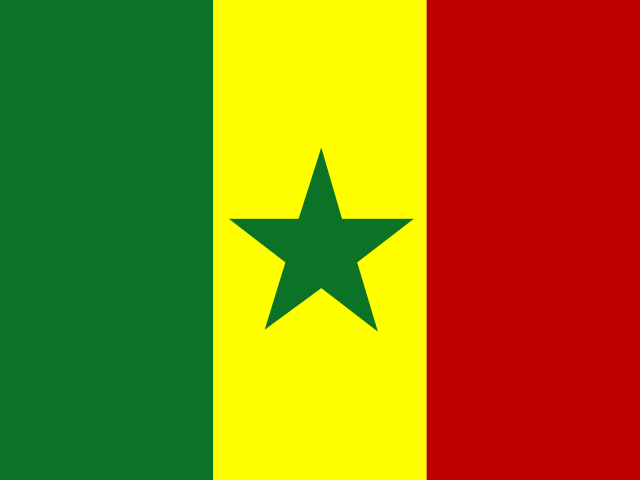 Senegal7.356%
Highest and lowest reading in Western Africa.
- Southern Asia
14.332%
the middle country, of 6 measured · 9 members
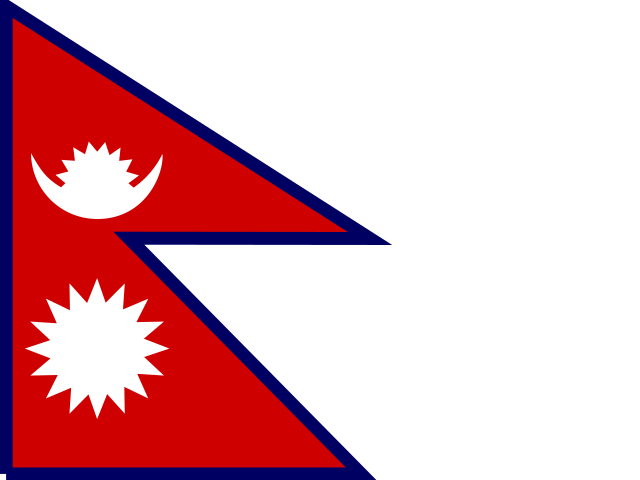 Nepal30.165%
 Pakistan4.729%
Highest and lowest reading in Southern Asia.
- Eastern Europe
13.700%
the middle country, of 9 measured · 10 members
 Ukraine36.637%
 Hungary8.650%
Highest and lowest reading in Eastern Europe.
- South America
12.539%
the middle country, of 10 measured · 12 members
Uruguay30.096%Venezuela0.200%Highest and lowest reading in South America.
- Eastern Africa
10.256%
the middle country, of 15 measured · 19 members
 Mauritius27.684%Seychelles2.041%
Highest and lowest reading in Eastern Africa.
- South-eastern Asia
9.630%
the middle country, of 9 measured · 11 members
Vietnam49.613%Myanmar1.000%Highest and lowest reading in South-eastern Asia.
- Central America
8.083%
the middle country, of 8 measured · 8 members
 Panama26.320%
 Honduras2.568%
Highest and lowest reading in Central America.
- Caribbean
7.490%
the middle country, of 5 measured · 24 members
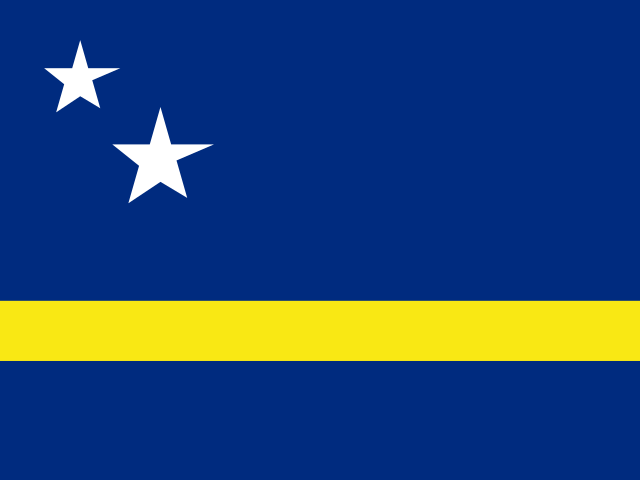 Curaçao23.491%
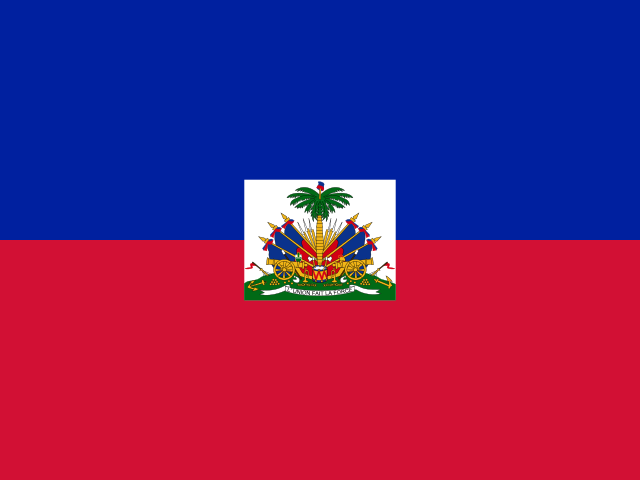 Haiti1.723%
Highest and lowest reading in Caribbean.
- Australia and New Zealand
2 of 2 measured — too few for a middle: Australia, New Zealand.
New Zealand18.895%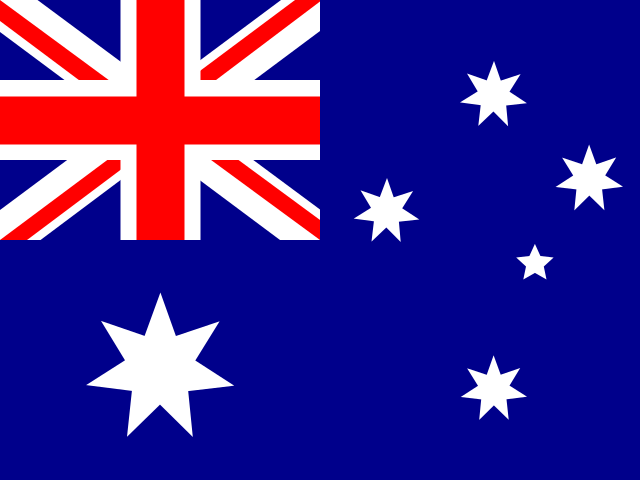 Australia13.656%
Highest and lowest reading in Australia and New Zealand.
- Central Asia
1 of 5 measured — too few for a middle: Kazakhstan.
 Kazakhstan46.923%
Highest and lowest reading in Central Asia.
- Melanesia
1 of 5 measured — too few for a middle: Fiji.
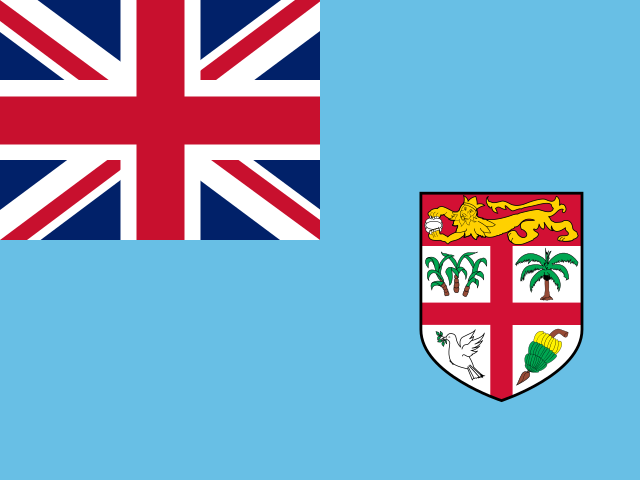 Fiji13.181%
Highest and lowest reading in Melanesia.
- Middle Africa
2 of 9 measured — too few for a middle: Cameroon, DR Congo.
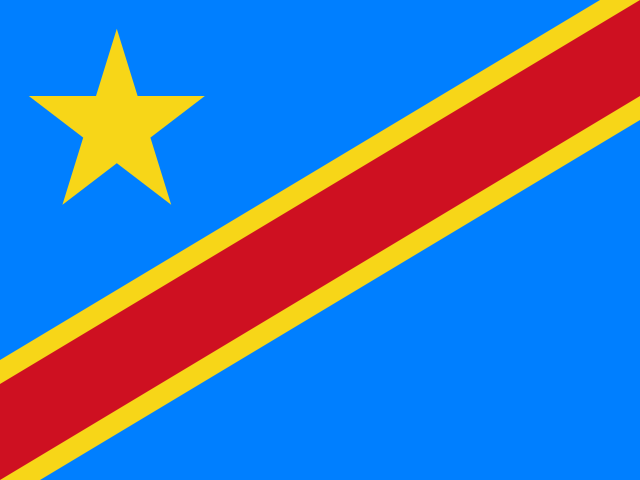 DR Congo13.560%
 Cameroon5.018%
Highest and lowest reading in Middle Africa.
- Northern Africa
4 of 6 measured — too few for a middle: Egypt, Morocco, Sudan, Tunisia.
Tunisia38.106%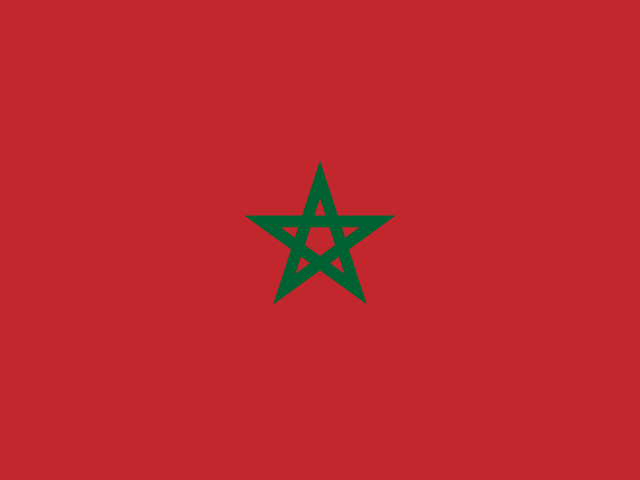 Morocco10.897%
Highest and lowest reading in Northern Africa.
- Northern America
3 of 4 measured — too few for a middle: Bermuda, Canada, United States.
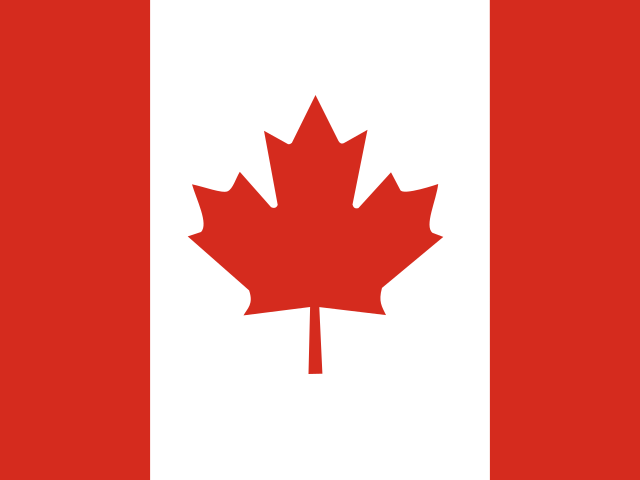 Canada29.387%
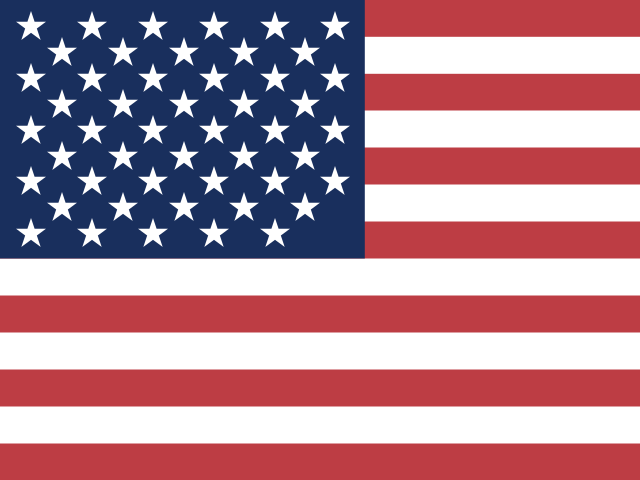 United States10.293%
Highest and lowest reading in Northern America.
- Polynesia
1 of 7 measured — too few for a middle: Samoa.
Samoa11.818%Highest and lowest reading in Polynesia.
03The whole field at once
The spread
134 countries, one dot each, on one scale — further right is a higher value. Half the countries are above 16.468%; a quarter are above 26.001%, and a quarter below 9.824%. The bar in each row marks that continent’s middle country.
04All 139 ever measured
Every country
In order, highest value first. “=” marks a position shared with another country. International Labour Organization (ILO) ranks nobody on this measure; the position is derived here by ordering the published values. Membership is not the same as coverage. France sits near the bottom of this table while collective agreements cover almost all its employees, because French law extends those agreements beyond union members. Read a low figure as low membership, not as workers without a negotiated contract.
Showing 25 of 139 countries
















Values for the 2020 edition.
05In this edition
Trade union density in records
The extremes of the statistic. A record reached by more than one country names none of them.
Highest reading
91.423%
Employees who are trade union members (%)
Lowest reading
0.200%
Employees who are trade union members (%)
06The measure
About trade union density
Trade union density is the share of employees who belong to a trade union. It is the most widely reported measure of organised labour, and the only openly licensed one on this site.
What the number is: Employees who are trade union members (%).
07Where it fits
Connections
Its part in the Country Index, the statistics whose values line up most closely with it across countries, and others on the same subject.
In the Country Index
Context, with no vote
This statistic is published in full under Governance & Institutions and Work & Labour, but does not help decide any Country Index standing.
Governance & InstitutionsWork & LabourWhich statistics vote, and why
Moves with
Where trade union density is higher, these tend to be higher too.
- Public Sector EmploymentWorld Bank Group · 100 countries in commonρ 0.53
- GNI per Capita (PPP)World Bank Group · 84 countries in commonρ 0.47
- GDP per Person EmployedWorld Bank Group · 125 countries in commonρ 0.44
Moves against
Where trade union density is higher, these tend to be lower.
- Child MarriageUNICEF · 83 countries in commonρ −0.48
- Gender Inequality IndexKeyUNDP Human Development Report Office · 126 countries in commonρ −0.41
Rank correlation (ρ, from −1 to 1) across countries, on each statistic’s newest edition, out of 108 statistics sharing at least 80 countries with this one. Two statistics that move together do not cause each other.
08Keep reading
Explore further
The subject
The data, edition by edition
09Questions
Trade union density: questions and answers
Which country has the highest trade union density?
Iceland, at 91.423%, among the 134 countries compared in the 2020 edition.
Which country has the lowest trade union density?
Venezuela, at 0.200%, among the 134 countries compared in the 2020 edition.
How many countries does the Trade Union Density cover?
134 in the 2020 edition, and 139 at least once across all editions.
What is the world average trade union density?
This site does not calculate a world average, which would depend on how countries are weighted. In the middle country of the 134 compared in the 2020 edition, the figure was 16.468%.
Is this International Labour Organization (ILO)’s own ranking?
No. International Labour Organization (ILO) publishes the values but ranks nobody; the position on this page is derived by Nations Inquiry by ordering the published values, and equal values share a position.
How often is the Trade Union Density published?
This site holds one edition, describing 2020.
Where does the data come from, and can I download it?
From International Labour Organization (ILO), under CC BY 4.0. Read from ILOSTAT directly (ILR_TUMT_NOC_RT), one reading per country because no single year covers enough of them. Every edition is available on this site’s Datasets pages as a full table, unrounded.
10Method
Sources, method and citation
Source
Trade Union Density — International Labour Organization (ILO)
Read from ILOSTAT directly (ILR_TUMT_NOC_RT), one reading per country because no single year covers enough of them.
Newest edition
Report year 2020Data year not recorded
Cite the source as: International Labour Organization. ILOSTAT. Geneva: ILO.
Licence: CC BY 4.0, checked 2026-09-10.
How this page reads the numbers
- International Labour Organization (ILO) ranks nobody on this measure. The position is derived by Nations Inquiry by ordering the published values; equal values share a position.
- Which end is better follows the publisher’s own reading of the measure.
- A country is named at an end only when it holds that value alone. Where several share it, the page says how many and names none first.
- The file gives each country’s most recent reading, so the rows are from different years. Readings from before 2010 are listed but left out of every comparison on this page.
- Values are stored exactly as published and trimmed only for display. “The middle country” is the median of the countries measured, not a world average.
The full note on this data
139 countries, each from its own most recent reading (2007–2020), read from ILOSTAT directly (ILR_TUMT_NOC_RT). The share of employees who are trade union members. It covers ground the ITUC Global Rights Index would, and unlike that index it is openly licensed — which is why it is here. ⚠ ONE READING PER COUNTRY rather than annual editions: per year this reaches 80 countries only twice in twenty-one years while 139 countries have reported at some point, so each row carries its own year. ⚠ DENSITY IS NOT BARGAINING COVERAGE, and conflating them is the standard mistake: France has low membership and collective agreements covering almost every employee, because coverage there is extended by law. A low figure is not evidence that few workers are covered by a union-negotiated contract. The ILO ranks nobody, so no rank is stored; the POSITION is derived here and labelled as ours.
Photographs
The countries at the top of this statistic, from their profiles: Wikimedia Commons, shown in greyscale, each used under the licence named.
- Iceland — Hansueli Krapf, CC BY-SA 3.0
- Denmark — User:Aconcagua, CC BY-SA 3.0
- Sweden — User:Pieter Kuiper, Public domain
Cite this page
Nations Inquiry (2026). Trade union density by country: Trade Union Density, data from International Labour Organization (ILO). https://nationsinquiry.com/statistics/union-density