UIS · Minimum Proficiency in Reading, End of Primary
Reading proficiency at the end of primary by country
What share of pupils can read at a minimum level by the end of primary school?
Of the 115 countries compared in the 2023 edition, Canada had the highest reading, 98.7773%, and Laos had the lowest reading, 2.0000%. In the middle country the figure was 58.5980%. 7 readings from before 2013 are listed but not compared.
Part ofEducation & Knowledge
Reading proficiency at the end of primary · the 2023 edition
Context statistic

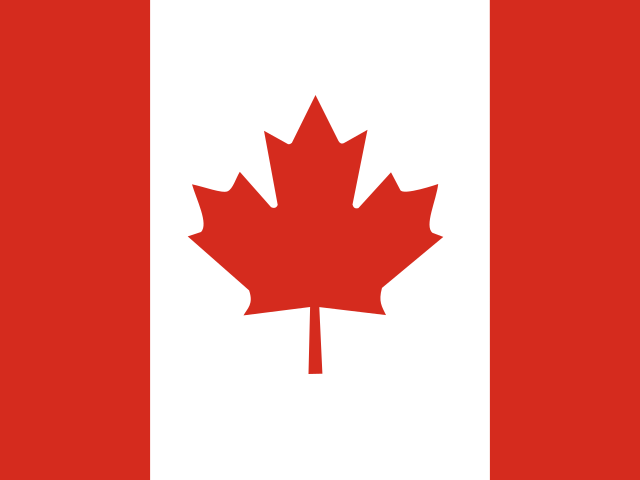
Highest of 115Canada
98.7773%01the 2023 edition · values only
Who leads
The three countries at the highest end of 115 compared, the three at the other end, and the first on each continent.
 1
1Photo: User:Florian Fuchs · CC BY 3.0, greyscale
 2
2Photo: Strokin.ru derivative work: Jjtkk · CC BY 3.0, greyscale
 3
3Photo: Base64 and Derivative work by Globe-trotter · CC BY-SA 3.0, greyscale
Lowest in the 2023 edition
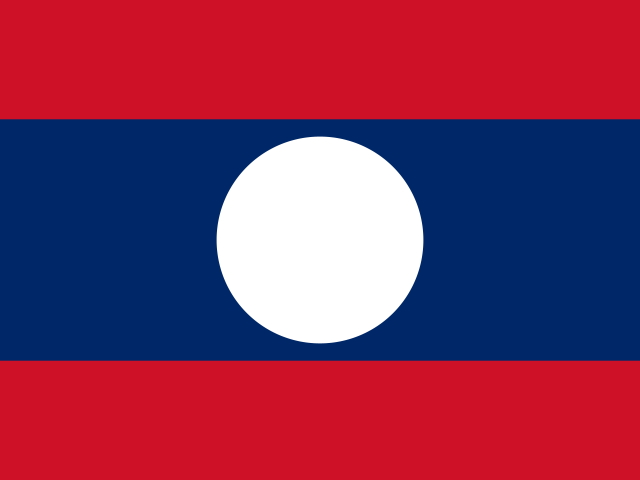 Laos2.0000%
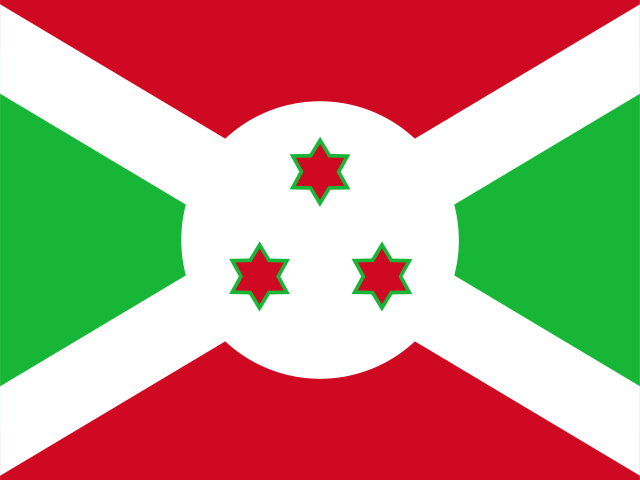 Burundi4.5000%
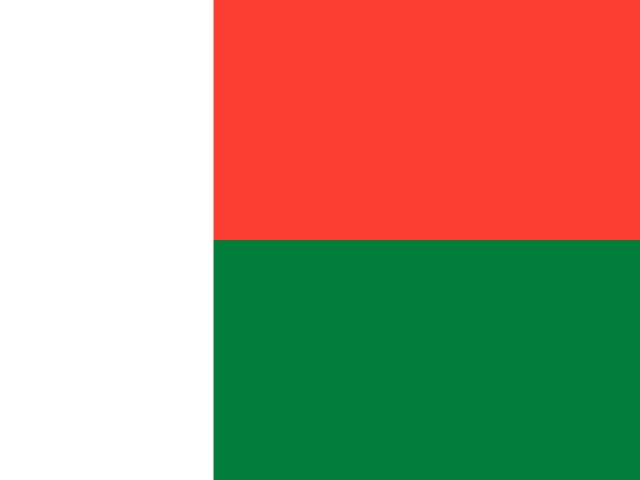 Madagascar6.3000%
Where a country sits says how it compares with the others measured, and nothing about why.
02Every measured country
Reading proficiency at the end of primary on a map
Each country is shaded by its value, in five groups holding the same number of countries. Hover a country for its value, or select it to open its profile. Below the map, each continent’s middle country.
Darker is a higher value — the better end.
- 2.0000–20.1000%
- 22.0000–44.5000%
- 45.4000–74.6700%
- 75.0267–93.6522%
- 93.8626–98.7773%
- Hatched: a reading from before 2013, listed but not compared (7)
- No reading in the 2023 edition
- Europe
94.3437%
the middle country, of 26 measured · 49 members
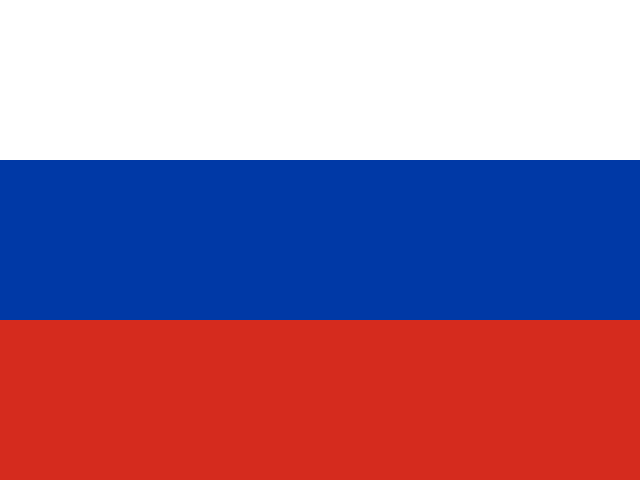 Russia98.3621%
 North Macedonia69.9594%
Highest and lowest reading in Europe.
- Asia
71.0714%
the middle country, of 25 measured · 52 members
 Hong Kong98.2799%Laos2.0000%
Highest and lowest reading in Asia.
- Oceania
50.5950%
the middle country, of 12 measured · 21 members
 Palau93.5400%
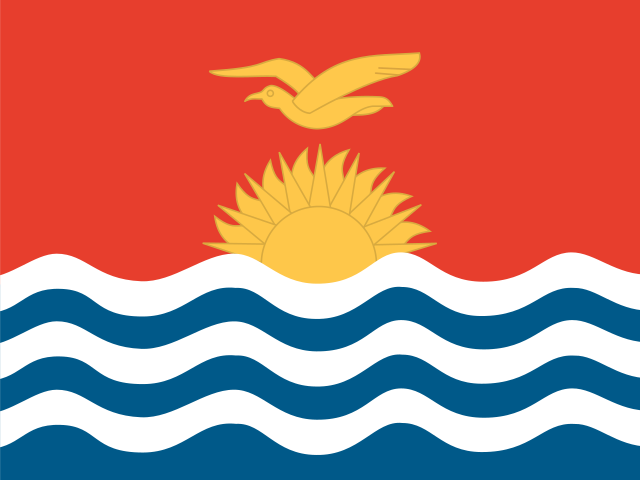 Kiribati13.7500%
Highest and lowest reading in Oceania.
- Americas
37.5000%
the middle country, of 21 measured · 48 members
Canada98.7773% Nicaragua13.0000%
Highest and lowest reading in Americas.
- Africa
33.6000%
the middle country, of 31 measured · 55 members
 Eswatini84.3000%Burundi4.5000%
Highest and lowest reading in Africa.
- Every region
22 sub-regions, highest middle country first
- Northern Europe
96.4831%
the middle country, of 5 measured · 13 members
 Lithuania97.1105%
 Latvia94.2879%
Highest and lowest reading in Northern Europe.
- Eastern Europe
95.0719%
the middle country, of 6 measured · 10 members
Russia98.3621% Bulgaria92.8799%
Highest and lowest reading in Eastern Europe.
- Western Europe
94.3110%
the middle country, of 5 measured · 9 members
 Netherlands96.4456%
 Germany93.5874%
Highest and lowest reading in Western Europe.
- Southern Europe
93.4901%
the middle country, of 10 measured · 17 members
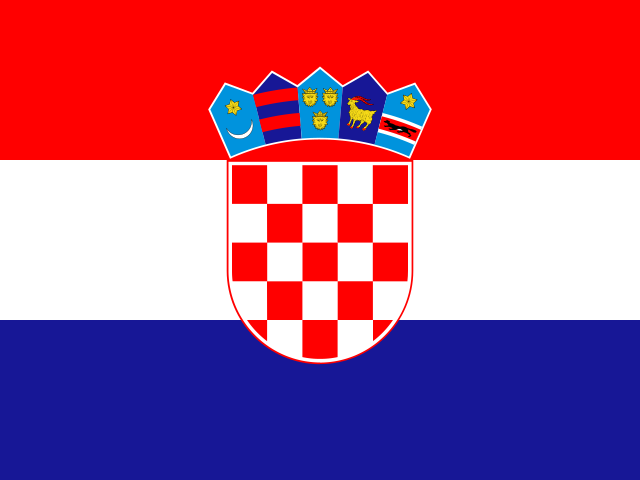 Croatia98.0773%North Macedonia69.9594%
Highest and lowest reading in Southern Europe.
- Western Asia
73.1050%
the middle country, of 12 measured · 19 members
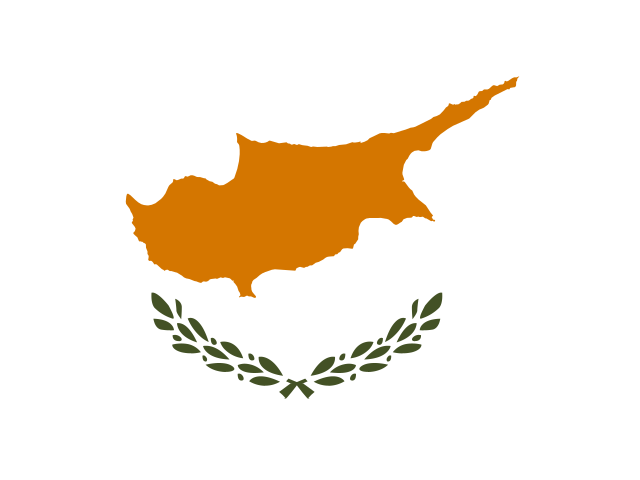 Cyprus91.7917%
 Palestine42.2700%
Highest and lowest reading in Western Asia.
- Southern Africa
61.2000%
the middle country, of 5 measured · 5 members
Eswatini84.3000% Lesotho10.8000%
Highest and lowest reading in Southern Africa.
- South America
37.5000%
the middle country, of 9 measured · 12 members
 Chile58.4000%
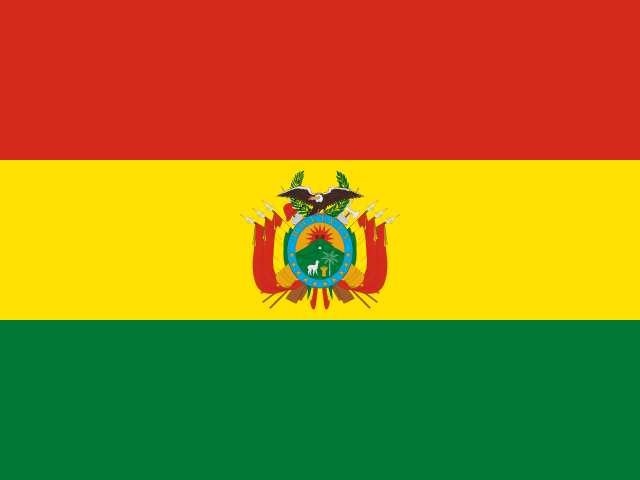 Bolivia15.2000%
Highest and lowest reading in South America.
- Eastern Africa
36.3000%
the middle country, of 11 measured · 19 members
 Seychelles79.9000%Burundi4.5000%
Highest and lowest reading in Eastern Africa.
- Middle Africa
30.2000%
the middle country, of 5 measured · 9 members
 Gabon76.3000%
 Chad7.6000%
Highest and lowest reading in Middle Africa.
- Western Africa
22.1000%
the middle country, of 8 measured · 16 members
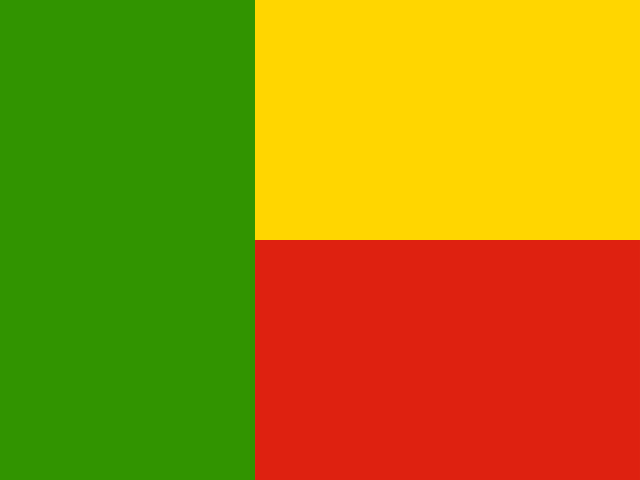 Benin45.5000%
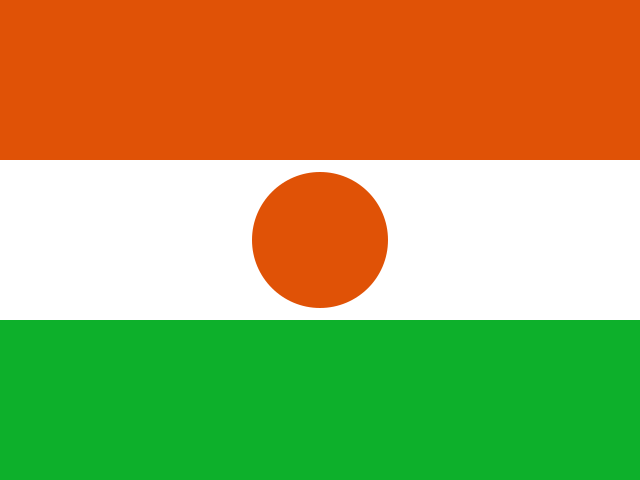 Niger14.4000%
Highest and lowest reading in Western Africa.
- Central America
17.5000%
the middle country, of 7 measured · 8 members
 Costa Rica54.0000%Nicaragua13.0000%
Highest and lowest reading in Central America.
- South-eastern Asia
11.0000%
the middle country, of 7 measured · 11 members
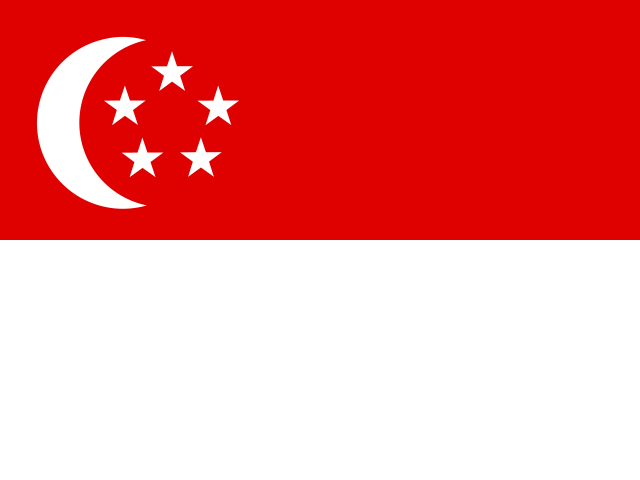 Singapore96.6598%Laos2.0000%
Highest and lowest reading in South-eastern Asia.
- Australia and New Zealand
1 of 2 measured — too few for a middle: New Zealand.
 New Zealand89.8775%
Highest and lowest reading in Australia and New Zealand.
- Caribbean
3 of 24 measured — too few for a middle: Cuba, Dominican Republic, Trinidad and Tobago.
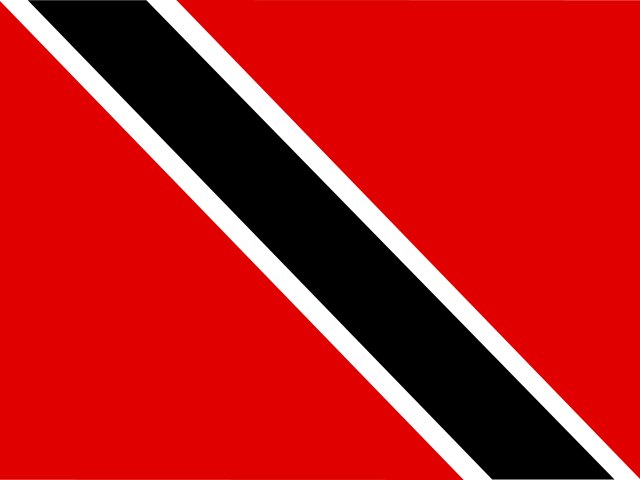 Trinidad and Tobago80.3357%
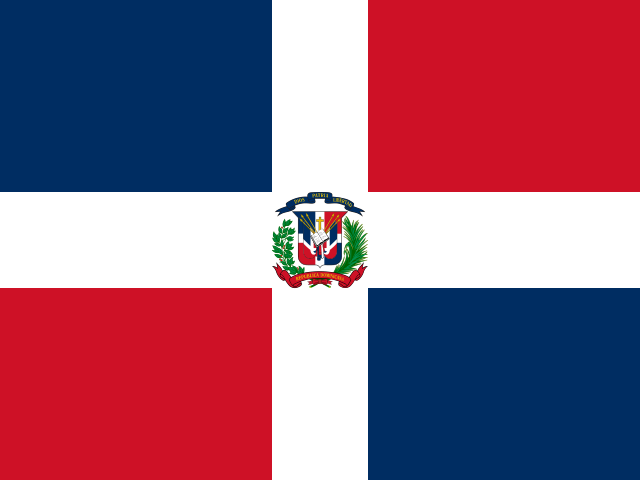 Dominican Republic16.4000%
Highest and lowest reading in Caribbean.
- Central Asia
2 of 5 measured — too few for a middle: Kazakhstan, Uzbekistan.
 Kazakhstan90.6980%
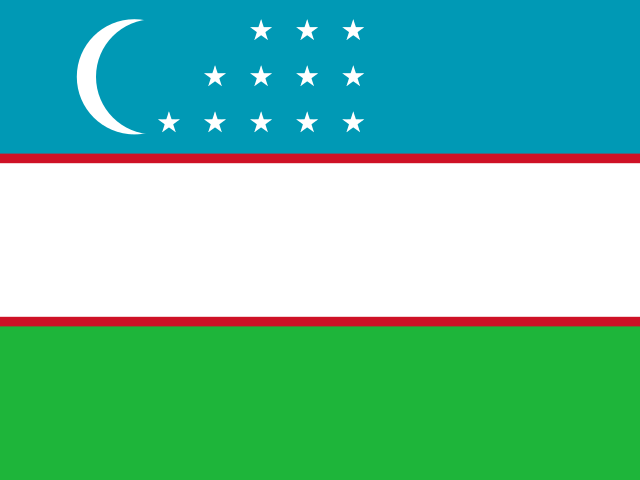 Uzbekistan69.8382%
Highest and lowest reading in Central Asia.
- Eastern Asia
2 of 8 measured — too few for a middle: Hong Kong, Macau.
Hong Kong98.2799% Macau95.9180%
Highest and lowest reading in Eastern Asia.
- Melanesia
3 of 5 measured — too few for a middle: Fiji, Papua New Guinea, Solomon Islands.
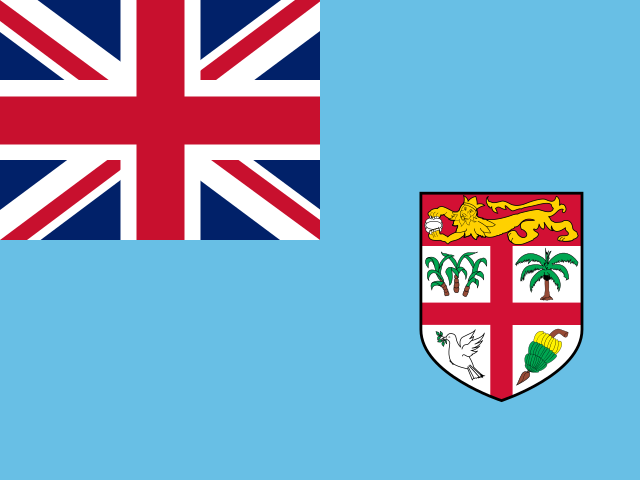 Fiji59.5500%
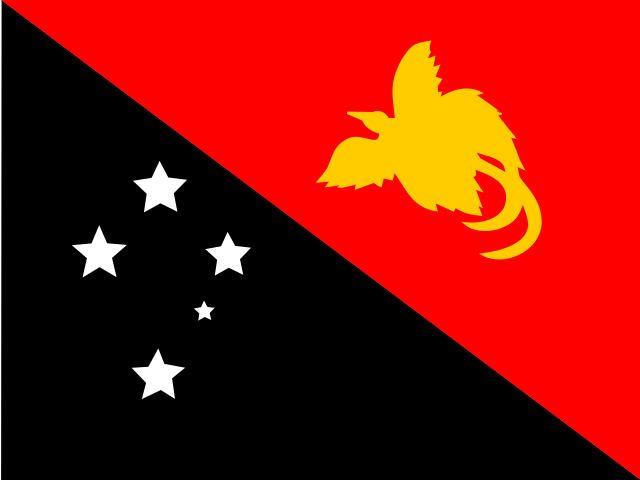 Papua New Guinea48.4100%
Highest and lowest reading in Melanesia.
- Micronesia
4 of 7 measured — too few for a middle: Kiribati, Marshall Islands, Micronesia, Palau.
Palau93.5400%Kiribati13.7500%Highest and lowest reading in Micronesia.
- Northern Africa
2 of 6 measured — too few for a middle: Egypt, Morocco.
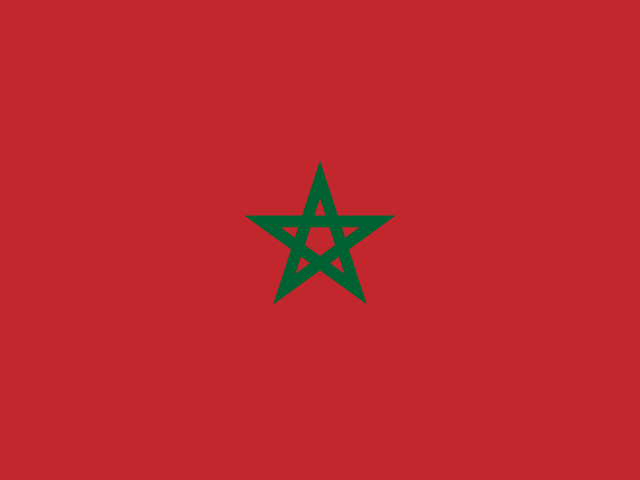 Morocco40.5830%
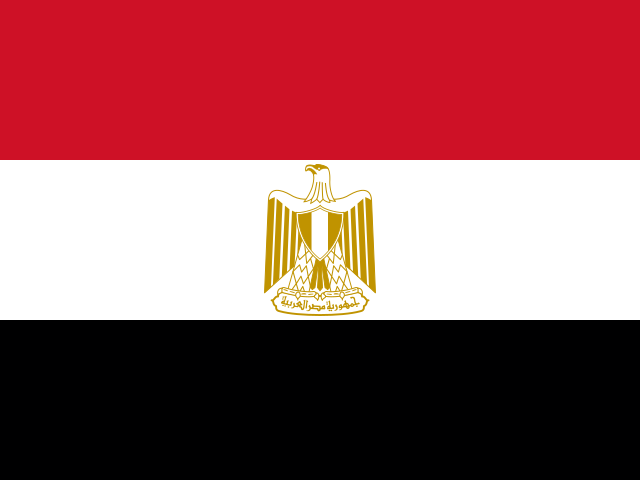 Egypt34.0900%
Highest and lowest reading in Northern Africa.
- Northern America
2 of 4 measured — too few for a middle: Canada, United States.
Canada98.7773% United States94.5066%
Highest and lowest reading in Northern America.
- Polynesia
4 of 7 measured — too few for a middle: Cook Islands, Niue, Tonga, Tuvalu.
 Niue80.9700%
 Tonga20.1000%
Highest and lowest reading in Polynesia.
- Southern Asia
2 of 9 measured — too few for a middle: Iran, Pakistan.
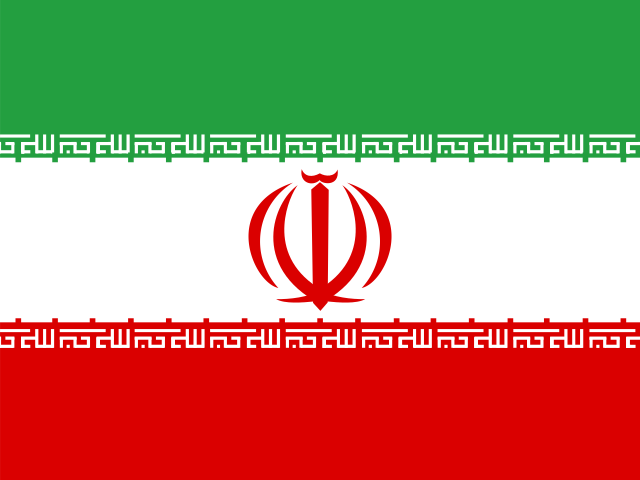 Iran58.5980%
 Pakistan24.1900%
Highest and lowest reading in Southern Asia.
03The whole field at once
The spread
115 countries, one dot each, on one scale — further right is a higher value. Half the countries are above 58.5980%; a quarter are above 91.9556%, and a quarter below 29.8000%. The bar in each row marks that continent’s middle country.
04All 122 ever measured
Every country
In order, highest value first. No rank or position is shown: too many countries share the same value for an order to mean anything. The readings come from different assessments — PIRLS, and regional tests in Latin America, francophone and southern Africa, the Pacific and South-East Asia — each with its own benchmark and school grade, and UNESCO says results from different assessments cannot be compared directly. The assessment behind each row is named beside it, and no position is derived. A few readings cover only part of a country, such as a single province. Readings more than ten years older than the edition are listed but not compared.
Showing 25 of 122 countries




















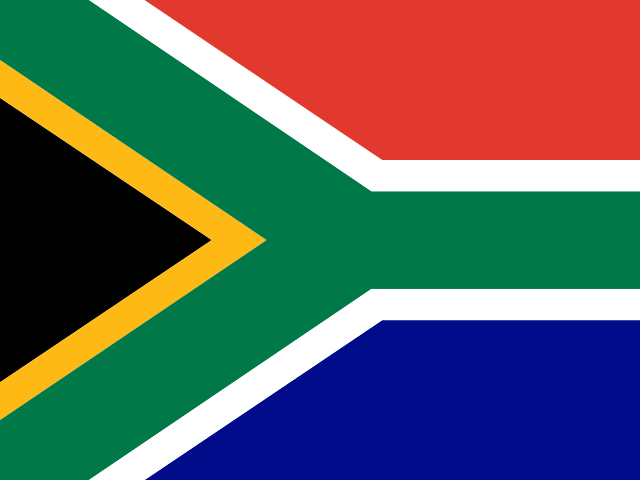
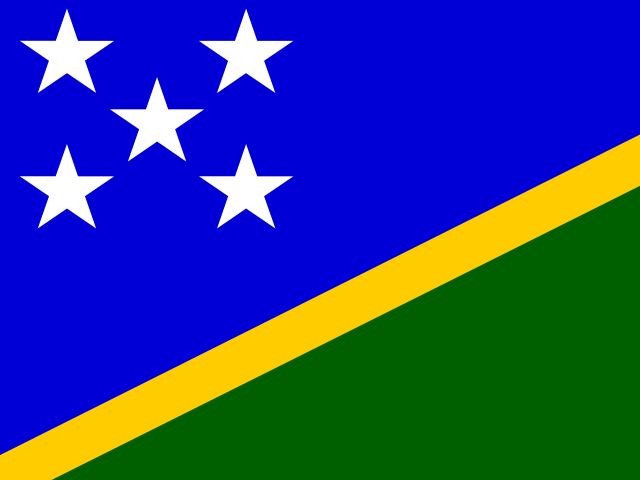

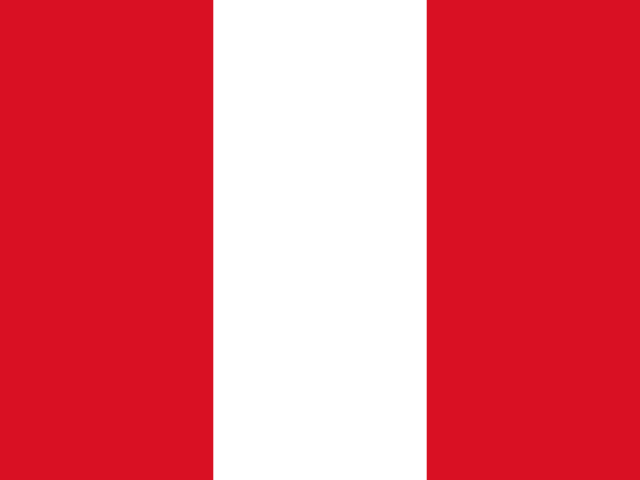
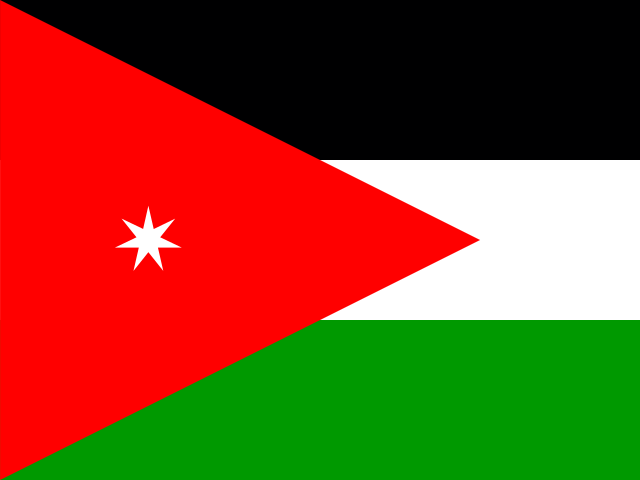

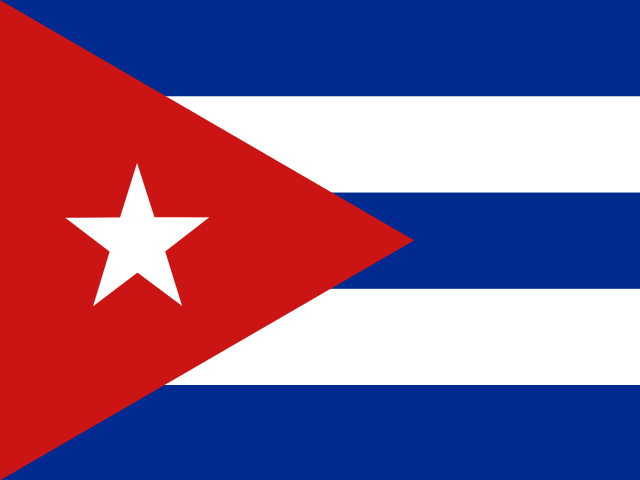
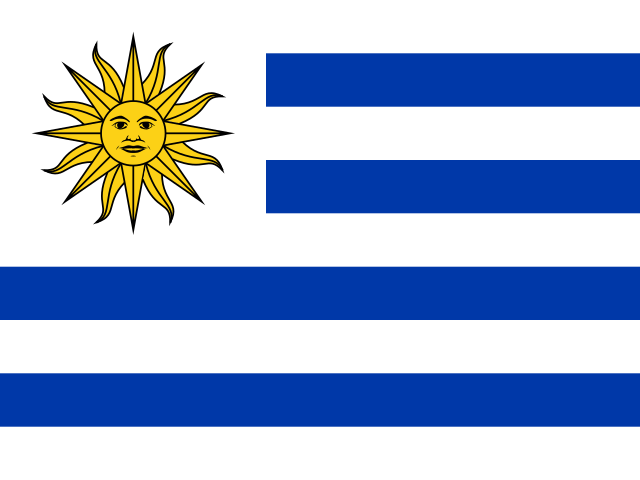
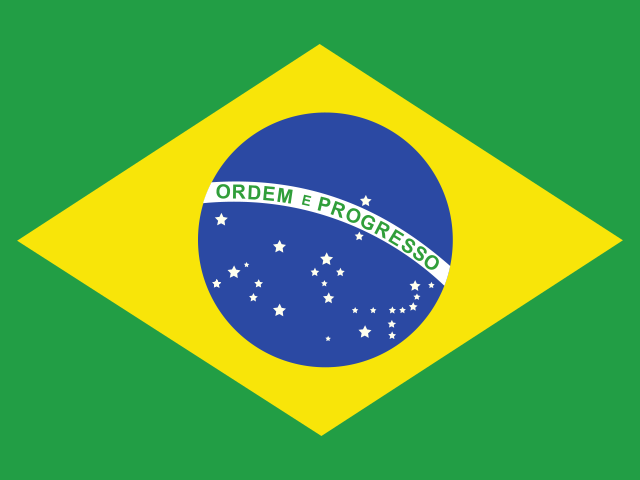
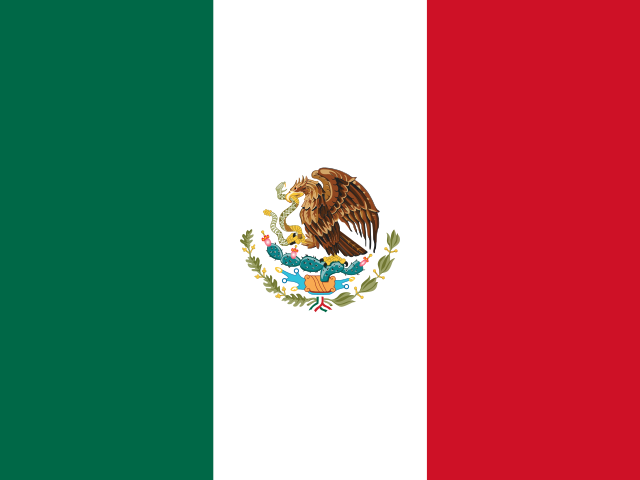









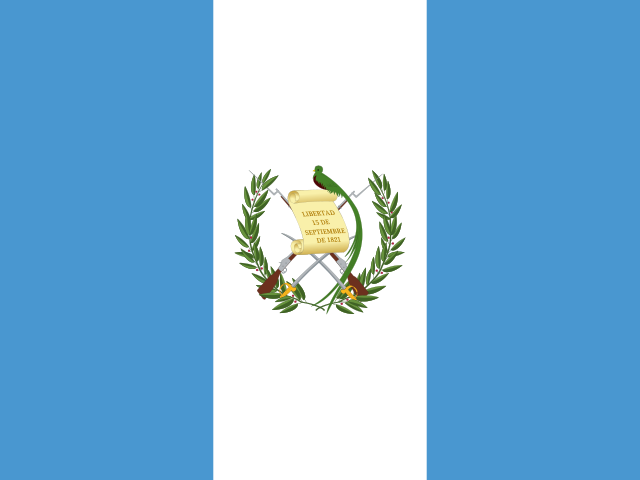





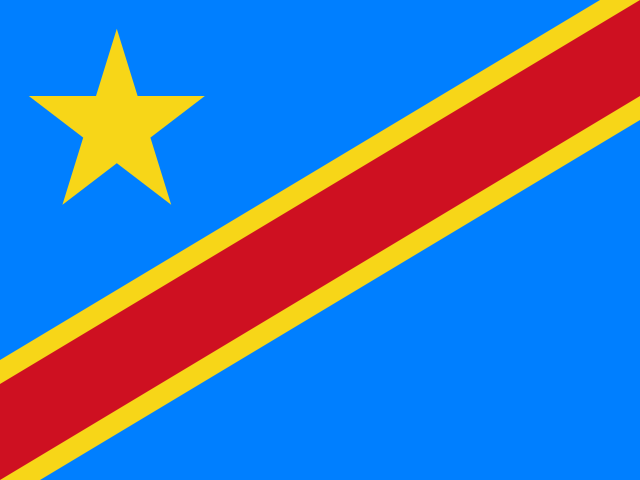
Values for the 2023 edition.
05In this edition
Reading proficiency at the end of primary in records
The extremes of the statistic. A record reached by more than one country names none of them.
Highest reading
98.7773%
Pupils at the end of primary reaching minimum proficiency in reading (%)
Lowest reading
2.0000%
Pupils at the end of primary reaching minimum proficiency in reading (%)
06By sex
Inside the number
UNESCO Institute for Statistics (UIS) also publishes separate female and male readings. The gap between them, where both exist.
Of the 103 countries with both readings, the female reading is higher in 97, the male reading in 6. The widest gaps each way:
7 countries' readings are too old to compare and are left out; they are still listed under Every country.
07The measure
About reading proficiency at the end of primary
This is the share of pupils at the end of primary school who reach at least a minimum level in reading — SDG indicator 4.1.1, the measure the world’s education goal is scored on. It asks not whether children are in school, but whether school has taught them to read.
What the number is: Pupils at the end of primary reaching minimum proficiency in reading (%).
08Where it fits
Connections
Its part in the Country Index, the statistics whose values line up most closely with it across countries, and others on the same subject.
In the Country Index
Context, with no vote
This statistic is published in full under Education & Knowledge, but does not help decide any Country Index standing.
Moves with
Where reading proficiency at the end of primary is higher, these tend to be higher too.
- Researchers per Million InhabitantsUIS · 88 countries in commonρ 0.87
- Minimum Proficiency in Mathematics, End of PrimaryUIS · 113 countries in commonρ 0.85
- Climate Readiness (ND-GAIN)Notre Dame Global Adaptation Initiative (ND-GAIN), University of Notre Dame · 110 countries in commonρ 0.84
Moves against
Where reading proficiency at the end of primary is higher, these tend to be lower.
- Learning PovertyWorld Bank Group and UNESCO Institute for Statistics · 91 countries in commonρ −0.97
- Gender Inequality IndexUNDP Human Development Report Office · 104 countries in commonρ −0.82
- Adolescent Birth Rate (Ages 15–19)UN DESA Population Division · 115 countries in commonρ −0.79
Rank correlation (ρ, from −1 to 1) across countries, on each statistic’s newest edition, out of 261 statistics sharing at least 80 countries with this one. Two statistics that move together do not cause each other.
09Keep reading
Explore further
The subject
The data, edition by edition
10Questions
Reading proficiency at the end of primary: questions and answers
Which country has the highest reading proficiency at the end of primary?
Canada, at 98.7773%, among the 115 countries compared in the 2023 edition.
Which country has the lowest reading proficiency at the end of primary?
Laos, at 2.0000%, among the 115 countries compared in the 2023 edition.
How many countries does the Minimum Proficiency in Reading, End of Primary cover?
115 in the 2023 edition, and 122 at least once across all editions.
What is the world average reading proficiency at the end of primary?
This site does not calculate a world average, which would depend on how countries are weighted. In the middle country of the 115 compared in the 2023 edition, the figure was 58.5980%.
Is this UNESCO Institute for Statistics (UIS)’s own ranking?
No ranking is shown. UNESCO Institute for Statistics (UIS) publishes values only, and too many countries share the same value for an ordering to mean anything, so none is derived.
How often is the Minimum Proficiency in Reading, End of Primary published?
This site holds one edition, describing 2023.
Where does the data come from, and can I download it?
From UNESCO Institute for Statistics (UIS), under CC BY-SA 4.0. From the UNESCO Institute for Statistics data API (READ.PRIMARY), latest available reading per country, with UIS’s own footnote naming the assessment. Female and male shares are stored beside the headline. Every edition is on this site’s Datasets pages as a full table, and downloads as a CSV file with every value unrounded.
11Method
Sources, method and citation
Source
Minimum Proficiency in Reading, End of Primary — UNESCO Institute for Statistics (UIS)
From the UNESCO Institute for Statistics data API (READ.PRIMARY), latest available reading per country, with UIS’s own footnote naming the assessment. Female and male shares are stored beside the headline.
Newest edition
Report year 2023Data year not recorded
Cite the source as: UNESCO Institute for Statistics. UIS Data Browser. Montreal: UNESCO Institute for Statistics.
Licence: CC BY-SA 4.0, checked 2026-09-29.
How this page reads the numbers
- No rank or position is shown: UNESCO Institute for Statistics (UIS) publishes values only, and too many countries share the same value for an ordering to mean anything.
- Which end is better follows the publisher’s own reading of the measure.
- A country is named at an end only when it holds that value alone. Where several share it, the page says how many and names none first.
- The file gives each country’s most recent reading, so the rows are from different years. Readings from before 2013 are listed but left out of every comparison on this page.
- Values are stored exactly as published and trimmed only for display. “The middle country” is the median of the countries measured, not a world average.
The file itself, column by column — where it came from, what each column holds, and every edition as a CSV — is on its dataset page.
Photographs
The countries at the top of this statistic, from their profiles: Wikimedia Commons, shown in greyscale, each used under the licence named.
- Canada — User:Florian Fuchs, CC BY 3.0
- Russia — Strokin.ru derivative work: Jjtkk, CC BY 3.0
- Hong Kong — Base64 and Derivative work by Globe-trotter, CC BY-SA 3.0
Cite this page
Nations Inquiry (2026). Reading proficiency at the end of primary by country: Minimum Proficiency in Reading, End of Primary, data from UNESCO Institute for Statistics (UIS). https://nationsinquiry.com/statistics/reading-proficiency-primary