Dataset · UIS
Youth Literacy Rate
Youth Literacy Rate, 2024 compilation · 174 countries · 3 measures
The youth literacy rate is the share of 15-to-24-year-olds who can read and write. Because it reflects the schools of the last decade, it moves ahead of the adult rate — the gap between the two shows how fast a country is changing.
This site holds one edition, Youth Literacy Rate, 2024 compilation, read from UIS’s own data and stored exactly as published.
Youth Literacy Rate · the file
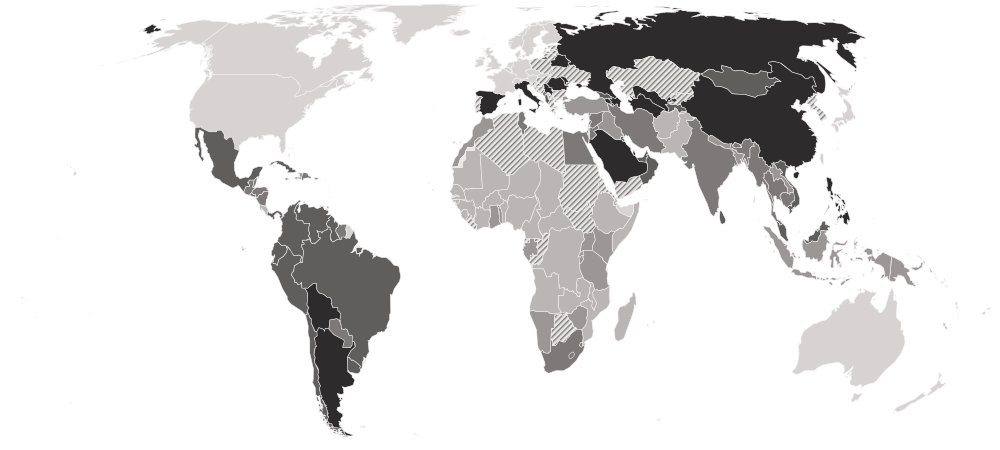
- Newest
- Youth Literacy Rate, 2024 compilation
- Held
- 1 edition · 174 rows
- Licence
- CC BY-SA 4.0
01One edition
Every edition
Newest first. Each opens the full table for that edition, and each downloads as a CSV.
| Edition | Countries | Change | Read | Download |
|---|---|---|---|---|
| Youth Literacy Rate, 2024 compilation | 174 | — | September 10, 2026 | CSV |
Every edition in one file, one row per country per edition: youth-literacy-all-editions-nations-inquiry.csv
026 columns
What’s in the file
Every column, what it holds, how it is stored and what its values look like — what a reader needs before opening the file.
| Column | What it holds | Stored as | Range, 2024 | Distinct | Empty | Spread |
|---|---|---|---|---|---|---|
CountrycountryName | The country’s name, as this file spells it. | Text | — | 174 | 0 | |
ISO Codecountry_codeIdentifier | The ISO 3166-1 alpha-3 code, added by this site. Every table here joins on it. | Text · 3 letters | — | 174 | 0 | |
15–24 year-olds who can read and write (%)youth_literacy_rateHeadline | The headline figure: 15–24 year-olds who can read and write (%). | Number · up to 14 decimals | 36.7000 South Sudan100.00006 share itmiddle 98.2250 | 151 | 0 | |
FemalefemaleWomen | The same measure, for women. | Number · up to 14 decimals | 29.580South Sudan100.00011 share itmiddle 98.545 | 146 | 0 | |
MalemaleMen | The same measure, for men. | Number · up to 14 decimals | 44.080South Sudan100.00011 share itmiddle 98.315 | 146 | 2 | |
Reference yearreference_yearReading year | The year this country’s reading describes. Readings from different years sit side by side. | Year | — | 31 | 0 |
Profiled from the newest file. Range: the lowest and highest value, with the country holding it when only one does. Spread: countries in ten equal steps from lowest to highest. A higher value is the better result.
03174 countries across every edition
Who is covered
How many countries each edition holds, continent by continent, who joined and who left, and which places this site covers that the dataset never has.
| 2024 | |
|---|---|
| Africa | 54 |
| Americas | 34 |
| Asia | 48 |
| Europe | 24 |
| Oceania | 14 |
| All | 174 |
One edition, covering 174 countries.
Not in this dataset · 51 places this site covers
UIS gives no figure for these in any edition held here. It is the publisher’s choice of scope, and each place’s profile shows what is measured.
 Andorra
 Antigua and Barbuda
 Australia
 Austria
 Bahamas
 Belgium
 Bermuda
 British Virgin Islands
 CanadaChannel Islands
 Cook Islands
 Curaçao
 Czechia
 Denmark
 Dominica
 Faroe Islands
 Fiji
 Finland
 France
 French Polynesia
 Germany
 Gibraltar
 Greenland
 Hong Kong
 Iceland
 Ireland
 Isle of Man
 Japan
 Kosovo
 Liechtenstein
 Luxembourg
 Micronesia
 Monaco
 Montserrat
 Netherlands
 New ZealandNorthern Cyprus
 Northern Mariana Islands
 Norway
 Saint Kitts and Nevis
 Saint Martin
 Sint Maarten
 SlovakiaSomaliland
 Sweden
 Switzerland
 Taiwan
 United Kingdom
 United States
 United States Virgin Islands
 Vatican City
04Provenance
Where it comes from
The path from the publisher to this page, and what was checked and changed on the way.
1 · Publisher
UNESCO Institute for Statistics (UIS)
2 · Their file
Youth Literacy Rate — UIS (readings to 2024)
3 · Read by this site
September 10, 2026
Imported by a script that parses each figure and writes it down unrounded.4 · Stored as
1 file, one per edition
It downloads as a CSV: youth-literacy-all-editions-nations-inquiry.csv5 · Used on
Its statistic page, and every profile it measures
Precision
The headline is stored to 14 decimals, as published.
Rounded by this site
Never. Tables on screen may show fewer decimals; the files never do.
Changed by this site
Reshaped into one row per country: regional and income-group totals are left out, only the columns listed are kept, each row gets its ISO 3166 code, and some country names are brought to one spelling. No value is recalculated, rescaled or rounded.
From the UNESCO Institute for Statistics data API, latest available reading per country. Female and male rates are stored beside the headline.
05Reuse
Licence and credit
What the publisher’s licence lets you do, what it asks of you, and a credit line and citation ready to copy.
Licence · checked September 5, 2026
- Share and redistribute it
- Adapt it and build on it
- Use it commercially
- Credit the publisher
- Say what you changed
- Publish anything adapted from it under the same licence
Share, adapt and use commercially with credit — and anything you publish that adapts it must carry the same licence.
A credit line
Source: UNESCO Institute for Statistics (UIS), Youth Literacy Rate, via Nations Inquiry.
Cite this dataset
UNESCO Institute for Statistics (UIS). Youth Literacy Rate, Youth Literacy Rate, 2024 compilation [data set]. As held by Nations Inquiry, https://nationsinquiry.com/datasets/youth-literacy
The publisher’s own citation: UNESCO Institute for Statistics. UIS Data Browser. Montreal: UNESCO Institute for Statistics.
Plain-language summary, not legal advice. The licence text is what binds.
06Questions
Youth Literacy Rate: questions and answers
What is the Youth Literacy Rate?
The youth literacy rate is the share of 15-to-24-year-olds who can read and write. Because it reflects the schools of the last decade, it moves ahead of the adult rate — the gap between the two shows how fast a country is changing.
Which editions of the Youth Literacy Rate can I download?
One: Youth Literacy Rate, 2024 compilation, as a CSV file.
Does UIS rank countries on it?
No, and this site does not order it either. The files hold values only.
Can I use it commercially?
Yes, under CC BY-SA 4.0, with credit to UIS. The licence text is linked on this page.