
Photo: Maher A. A. Abdussalam · CC0 · via Wikimedia Commons, shown in greyscale
Topic 08 of 18 · Country Index 2026
Libya: Gender & Equality
How wide is the gap between women's and men's lives?
Libya is placed 174th of 183 countries on gender & equality in the Country Index 2026, from 2 of its 4 key statistics. Readings behind it: Women, Business and the Law 50 (2025); Women's Political Empowerment Index 0.412 (2025).
Share
Gender & Equality
174th
of 183 countries placed
Placed from 2 of 4 key statistics
- 50Women, Business and the Law, 2025WBL Index (0–100, where 100 is full legal parity)
- 0.412Women's Political Empowerment Index, 2025Women's political empowerment index (0–1)
- —Firms with a Female Top Manager, 2025No reading for this country
- —Social Institutions and Gender Index, 2023No reading for this country
01The evidence
The 4 key statistics that decide it
Only these place Libya on gender & equality — one vote each. Every value is the publisher’s own, read at the edition the Country Index 2026 used — or, for a survey-based key, each country’s latest reading; the grey ticks are every other country it was compared with, lowest on the left.
50
WBL Index (0–100, where 100 is full legal parity)
Higher is better
Libya: 50. Across the 190 countries in this edition, values run from 3.125 (Afghanistan) to 100 (Sweden); the world median is 81.25.
- World median
- 81.25
- Best in Northern Africa
- 75.63 Morocco
- Land neighbours
- Algeria 60.63 · Egypt 61.88 · Niger 53.75 · Sudan 32.5 · Chad 66.25 · Tunisia 64.38
Key 2 of 4
Women's Political Empowerment Index
V-Dem Institute, University of Gothenburg
2025 edition · data for 2025 · CC BY-SA 4.0
0.412
Women's political empowerment index (0–1)
Higher is better
Libya: 0.412. Across the 176 countries in this edition, values run from 0.028 (Afghanistan) to 0.954 (Denmark); the world median is 0.772.
- World median
- 0.772
- Best in Northern Africa
- 0.765 Tunisia
- Land neighbours
- Algeria 0.625 · Egypt 0.547 · Niger 0.709 · Sudan 0.219 · Chad 0.625 · Tunisia 0.765
Key 3 of 4
Firms with a Female Top Manager
World Bank Group
Latest reading per country, 2016–2025 · CC BY 4.0
No reading
Firms with a female top manager (%)
Higher is better
World Bank Group publishes no reading from 2016–2025 for Libya, so the standing rests on the other keys.
Across the 179 countries at their latest reading, values run from 1.429 (Qatar) to 62.9 (Kiribati); the world median is 19.16.
- World median
- 19.16
- Best in Northern Africa
- 8.992 Tunisia
- Land neighbours
- Egypt 6.325 · Niger 14.64 · Sudan 3.417 · Chad 8.513 · Tunisia 8.992
Key 4 of 4
Social Institutions and Gender Index
OECD
2023 edition · data for 2023 · OECD Terms and Conditions — data clause
No reading
SIGI score (0 = no discrimination, 100 = absolute)
Lower is better
OECD publishes no 2023 figure for Libya, so the standing rests on the other keys.
Across the 140 countries in this edition, values run from 6.7 (Norway) to 67.4 (Mauritania); the world median is 25.2.
- World median
- 25.2
- Best in Northern Africa
- 46.5 Tunisia
- Land neighbours
- Egypt 54.6 · Niger 60.1 · Sudan 64.6 · Chad 45 · Tunisia 46.5
02Over time
Which way Libya is moving
Each key’s published value, edition by edition, beside the world median. The Country Index 2026 is the first edition of the standing, so the standing itself has no history to chart yet.
Women, Business and the Law
WBL Index (0–100, where 100 is full legal parity) · higher is better
LibyaWorld median
Libya rose from 38.75 in 2000 to 50 in 2025; the world median went from 63.13 to 81.25.
Every year’s figures
Year Libya World median 2025 50 81.3 2023 50 81.3 2022 50 80.3 2021 50 80.0 2020 50 79.7 2019 50 78.8 2018 50 77.5 2017 50 77.5 2016 50 76.9 2015 50 75.9 2014 50 75.6 2013 50 75.0 2012 50 73.8 2011 50 73.1 2010 50 73.1 2009 39 72.5 2008 39 71.3 2007 39 69.7 2006 39 68.8 2005 39 67.2 2004 39 66.9 2003 39 64.7 2002 39 63.8 2001 39 63.8 2000 39 63.1 Women's Political Empowerment Index
Women's political empowerment index (0–1) · higher is better
LibyaWorld median
Libya rose from 0.163 in 2000 to 0.412 in 2025; the world median went from 0.681 to 0.772.
Every year’s figures
Year Libya World median 2025 0.412 0.7715 2024 0.434 0.7745 2023 0.426 0.7755 2022 0.389 0.7825 2021 0.384 0.7785 2020 0.359 0.7755 2019 0.358 0.7665 2018 0.348 0.7715 2017 0.347 0.7710 2016 0.391 0.7780 2015 0.391 0.7755 2014 0.378 0.7795 2013 0.425 0.7730 2012 0.437 0.7740 2011 0.241 0.7650 2010 0.198 0.7610 2009 0.196 0.7515 2008 0.198 0.7505 2007 0.198 0.7380 2006 0.198 0.7290 2005 0.184 0.7350 2004 0.163 0.7205 2003 0.163 0.7160 2002 0.163 0.7150 2001 0.163 0.6950 2000 0.163 0.6810
03In context
Libya beside its neighbours
A position reads best beside the countries around it. Every position below is a place among all 183 countries on gender & equality, never a place within the region.
Libya and the countries it borders
Standing among all 183; the key columns are the publishers’ own values.
| Country | Standing | Women, Business and the LawWBL Index (0–100, where 100 is full legal parity) | Women's Political Empowerment IndexWomen's political empowerment index (0–1) | Firms with a Female Top ManagerFirms with a female top manager (%) | Social Institutions and Gender IndexSIGI score (0 = no discrimination, 100 = absolute) |
|---|---|---|---|---|---|
 Tunisia | 146th | 64.38 | 0.765 | 8.992 | 46.5 |
 Niger | =155th | 53.75 | 0.709 | 14.64 | 60.1 |
 Chad | 157th | 66.25 | 0.625 | 8.513 | 45 |
 Algeria | 158th | 60.63 | 0.625 | — | — |
 Egypt | 162nd | 61.88 | 0.547 | 6.325 | 54.6 |
| Libya | 174th | 50 | 0.412 | — | — |
 Sudan | 182nd | 32.5 | 0.219 | 3.417 | 64.6 |
“—”: no published reading in that edition. What a standing is
Across Northern Africa
Every country in the sub-region, by its place among all 183.
Placed either side on gender & equality
The countries immediately above and below Libya in the topic’s list.
04Context, no vote
Where Libya is ahead of the world, and behind
17 more statistics filed under gender & equality, published in full and deliberately given no vote in the standing. Select a row for the publisher, the rank and the links.
Ahead of the world median4
Statistics on which Libya does better than the middle country measured.
Child MarriageUNICEF · 2025 · world median 17.14.117.1No earlier reading
Libya: 4.1 · world median 17.1 · Women 20–24 married before 18 (%). UNICEF, 2025 edition, data for 2025.
Published values in that edition run from 0 to 76.3; lower is better.
Position 121st of 143 · derived, 1st = worst.
Adolescent Birth Rate (Ages 15–19)UN DESA Population Division · 2023 · world median 27.465.92327.46▼ Worsened since 2013
Libya: 5.923 · world median 27.46 · Live births per 1,000 women aged 15–19. UN DESA Population Division, 2023 edition, data for 2023.
Published values in that edition run from 0.465 to 163.09; lower is better.
Position 185th of 222 · derived, 1st = worst.
Institutional DeliveriesUNICEF · 2025 · world median 96.999.396.9No earlier reading
Libya: 99.3 · world median 96.9 · Live births delivered in a health facility (%). UNICEF, 2025 edition, data for 2025.
Published values in that edition run from 11.5 to 100; higher is better.
Gender Inequality IndexUNDP Human Development Report Office · 2023 · world median 0.3510.2530.351▼ Worsened since 2013
Libya: 0.253 · world median 0.351 · GII (0 = full equality, 1 = maximum inequality). UNDP Human Development Report Office, 2023 edition, data for 2023.
Published values in that edition run from 0.003 to 0.838; lower is better.
Ranked 65th of 172 by UNDP Human Development Report Office.
Behind the world median8
Statistics on which Libya does worse than the middle country measured.
Antenatal Care Coverage, At Least Four VisitsUNICEF · 2025 · world median 8179.981No earlier reading
Libya: 79.9 · world median 81 · Women with a live birth who had 4+ antenatal visits (%). UNICEF, 2025 edition, data for 2025.
Published values in that edition run from 22.6 to 100; higher is better.
Position 81st of 153 · derived.
Maternal Mortality RatioMMEIG · 2023 · world median 46.6559.546.65No real change since 2013
Libya: 59.5 · world median 46.65 · Maternal deaths per 100,000 live births. UN Maternal Mortality Estimation Inter-Agency Group (MMEIG), 2023 edition, data for 2023.
Published values in that edition run from 0.11 to 992.83; lower is better.
Position 88th of 195 · derived, 1st = worst.
Gender Development IndexUNDP Human Development Report Office · 2023 · world median 0.9710.9550.971▼ Worsened since 2013
Libya: 0.955 · world median 0.971 · Gender Development Index (1.000 = parity). UNDP Human Development Report Office, 2023 edition, data for 2023.
Published values in that edition run from 0.407 to 1.038; higher is better.
Position 113th of 184 · derived.
Length of Paid Paternity LeaveWorld Bank Group · 2025 · world median 303▼ Worsened since 2015
Libya: 0 · world median 3 · Paid paternity leave set in law (calendar days). World Bank Group, 2026 edition, data for 2025.
Published values in that edition run from 0 to 196; higher is better.
Female Labour Force Participation RateILO · 2025 · world median 53.3632.9953.36▼ Worsened since 2015
Libya: 32.99 · world median 53.36 · Women aged 15+ in the labour force (%). International Labour Organization (ILO), 2025 edition, data for 2025.
Published values in that edition run from 4.663 to 82.91; higher is better.
Position 161st of 182 · derived.
Demand for Family Planning Satisfied by Modern MethodsUN DESA Population Division · 2023 · world median 71.2540.471.25No real change since 2013
Libya: 40.4 · world median 71.25 · Share of women aged 15–49 wanting to avoid pregnancy who use a modern method (%). UN DESA Population Division, 2023 edition, data for 2023.
Published values in that edition run from 8.4 to 92.4; higher is better.
Position 177th of 196 · derived.
Account Ownership Among WomenWorld Bank Group · 2024 · world median 71.2424.771.24▼ Worsened since 2017
Libya: 24.7 · world median 71.24 · Women with an account (% of women aged 15+). World Bank Group, 2024 edition, data for 2024.
Published values in that edition run from 11.91 to 99.85; higher is better.
Position 130th of 139 · derived.
Gender Social Norms IndexUNDP Human Development Report Office · 2023 · world median 91.8199.7291.81No earlier reading
Libya: 99.72 · world median 91.81 · People with at least one bias against gender equality (%). UNDP Human Development Report Office, 2023 edition, data for 2023.
Published values in that edition run from 27.39 to 99.92; lower is better.
Position 4th of 91 · derived, 1st = worst.
Level with the median, or no median to compare1
Length of Paid Maternity LeaveWorld Bank Group · 2025 · world median 989898▼ Worsened since 2015
Libya: 98 · world median 98 · Paid maternity leave set in law (calendar days). World Bank Group, 2026 edition, data for 2025.
Published values in that edition run from 0 to 410; higher is better.
No better end4
These describe the shape of a country — more is not better or worse, only different — so they are never ahead or behind.
Caesarean Section RateUNICEF · 2025 · world median 20.6542.120.65No earlier reading
Libya: 42.1 · world median 20.65 · Live births delivered by caesarean section (%). UNICEF, 2025 edition, data for 2025.
Published values in that edition run from 0.6 to 72.2.
Mean Age at First Marriage, WomenUN DESA Population Division · 2019 · world median 24.6529.224.65No earlier reading
Libya: 29.2 · world median 24.65 · Singulate mean age at marriage, women (years). UN DESA Population Division, 2019 edition, data for 2019.
Published values in that edition run from 17 to 34.
Sex Ratio at BirthUN DESA Population Division · 2023 · world median 105.1105.7105.1Moved since 2013
Libya: 105.7 · world median 105.1 · Male births per 100 female births. UN DESA Population Division, 2023 edition, data for 2023.
Published values in that edition run from 101.1 to 116.3.
Female Share of ResearchersUIS · 2024 · world median 38.1724.7538.17No earlier reading
Libya: 24.75 · world median 38.17 · Researchers who are women (% of headcount; 50 = parity). UNESCO Institute for Statistics (UIS), 2024 edition, data for 2024.
Published values in that edition run from 0 to 76.54.
No current reading for Libya
Births Attended by Skilled Health Staff (last 2013), Female Genital Mutilation Prevalence, Female Share of Senior and Middle Management, Female Share of STEM Graduates, Female-Headed Households, Firms with a Female Top Manager, Firms with Female Participation in Ownership, Gender Parity Index, Tertiary Enrolment (last 2003), Global Gender Parity Index, Legal Guarantees of Women's Equal Rights to Land, Social Institutions and Gender Index, Women Who Think a Husband Is Justified in Hitting or Beating His Wife, Women's Empowerment Index and Women's Share of Agricultural Landowners. Listed rather than hidden, so the page can be checked against it.
“Position · derived” is this site’s ordering of the published values, 1st = best unless the row says otherwise; the publisher ranks no country on it. Rank, position and standing
05Country Index 2026
Gender & Equality among Libya’s 14 topics
Gender & Equality is Libya’s 11th best-placed topic of 14. Strongest first, each marker at its share of that topic’s field.
- Mobility & Trade88th of 1773/4 keys
- Development & Human Capital101st of 1963/3 keys
- Health & Wellbeingjoint 110th of 2004/4 keys
- Risk & Resiliencejoint 129th of 1934/4 keys
- Economy & Innovationjoint 151st of 1763/4 keys
- Work & Labourjoint 158th of 1824/4 keys
- Democracy & Civil Liberties174th of 1983/4 keys
- Digital & Technologyjoint 174th of 1983/4 keys
- Food & Agriculture166th of 1843/4 keys
- Governance & Institutions183rd of 1944/4 keys
- Gender & Equality174th of 1832/4 keys
- Environment & Sustainability182nd of 1862/4 keys
- Energy164th of 1652/3 keys
- Peace & Security176th of 1773/4 keys
No standing on Education & Knowledge, Poverty & Inequality: too few of those topics’ key statistics are published for this country.
06The top of the list
Who leads on gender & equality
The three countries placed highest of 183, and the leaders Libya can most readily be measured against.
 1
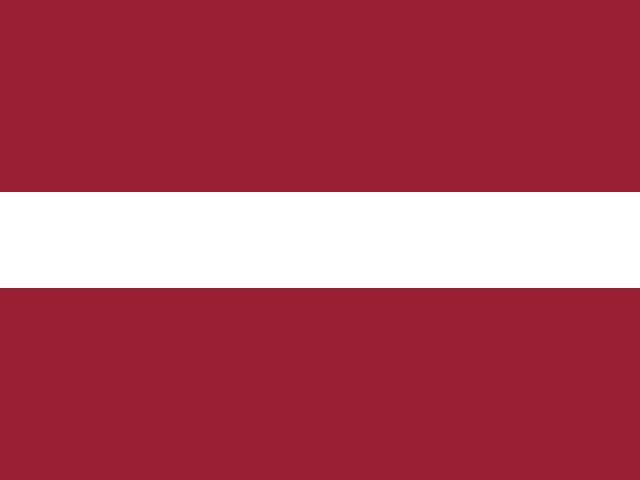 Latvia
Northern Europe
1st of 183 · 4 of 4 keys
Photo: Marcin Szala · CC BY-SA 3.0, greyscale
 2
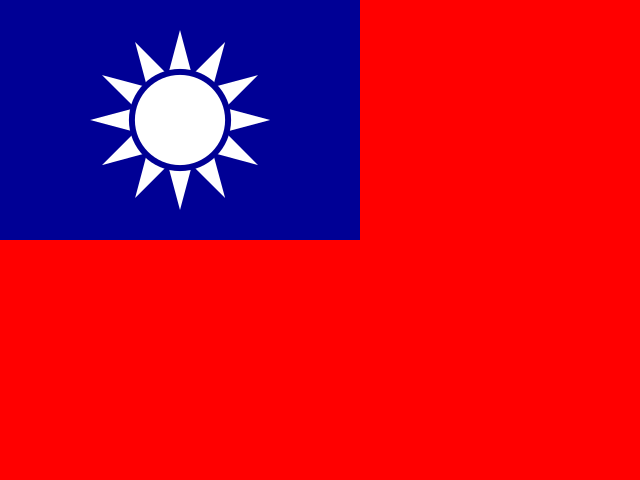 Taiwan
Eastern Asia
2nd of 183 · 3 of 4 keys
Photo: xiangyang17 · CC BY-SA 2.0, greyscale
 3
 Italy
Southern Europe
3rd of 183 · 4 of 4 keys
Photo: Francisco Antunes · CC BY 2.0, greyscale
Placed highest nearby
Highest in Africa
 Cabo Verde=34th3/4 keys
Highest in Northern Africa
Tunisia146th4/4 keysThis page
Libya174th2/4 keys
Positions out of 183 placed on the topic. A country needs readings on enough keys to be placed, and the top of the list is often held on fewer of them.
07Questions
Libya on gender & equality: questions answered
Every answer is built from the numbers on this page, so none can say something the page does not.
How does Libya rank on gender & equality?
Libya is placed 174th of 183 countries on Gender & Equality in the Country Index 2026, from 2 of its 4 key statistics (Women, Business and the Law and Women's Political Empowerment Index). The position is this site’s ordering of published statistics, not a rank any publisher printed.
What is the latest Women, Business and the Law figure for Libya?
50 in 2025 (wBL Index (0–100, where 100 is full legal parity)), according to World Bank Group. The world median in the same edition was 81.25.
What is the latest Women's Political Empowerment Index figure for Libya?
0.412 in 2025 (women's political empowerment index (0–1)), according to V-Dem Institute, University of Gothenburg. The world median in the same edition was 0.772.
How does Libya compare with Egypt on gender & equality?
Egypt is placed 162nd of 183, and Libya 174th. Women, Business and the Law: Egypt 61.88, Libya 50; Women's Political Empowerment Index: Egypt 0.547, Libya 0.412.
How have Libya’s gender & equality figures changed?
Women, Business and the Law rose from 38.75 in 2000 to 50 in 2025; Women's Political Empowerment Index rose from 0.163 in 2000 to 0.412 in 2025.
Which gender & equality statistics are missing for Libya?
No current reading is published for Libya on Births Attended by Skilled Health Staff, Female Genital Mutilation Prevalence, Female Share of Senior and Middle Management, Female Share of STEM Graduates, Female-Headed Households, Firms with a Female Top Manager, Firms with Female Participation in Ownership, Gender Parity Index, Tertiary Enrolment, Global Gender Parity Index, Legal Guarantees of Women's Equal Rights to Land, Social Institutions and Gender Index, Women Who Think a Husband Is Justified in Hitting or Beating His Wife, Women's Empowerment Index and Women's Share of Agricultural Landowners. They are listed rather than hidden, so the evidence on the page can be checked against it.
08Method
Method, sources and how to cite
What this topic does not measure
Violence against women is not a key here, because comparable data covers too few countries. The Gender Inequality Index is published here as context rather than as a key: its reading is driven largely by maternal and adolescent health, which moves with a country’s overall development and is already measured under Development and Health. Women’s labour force participation, women in management and child marriage are published here as context too.
How the Gender & Equality standing is decided
A standing is this site’s ordering, named with its edition — never a publisher’s rank. 4 key statistics vote, one vote each; every country’s published value becomes a place within that key’s own field, the places are averaged, and the average is never published. A country needs 2 of the 4 keys to be placed.
The gender & equality method, step by stepHow every standing on this site is built
The key statistics and their licences
- Women, Business and the Law — World Bank Group, CC BY 4.0
- Women's Political Empowerment Index — V-Dem Institute, University of Gothenburg, CC BY-SA 4.0
- Firms with a Female Top Manager — World Bank Group, CC BY 4.0
- Social Institutions and Gender Index — OECD, OECD Terms and Conditions — data clause
The other 17 statistics on this page come from 7 publishers, each named beside its numbers, with every edition and licence on the datasets pages.
The standing itself is part of the Country Index 2026, published under CC BY-SA 4.0.
Photographs
Libya’s banner and the countries placed highest, from their profiles: Wikimedia Commons, shown in greyscale, each used under the licence named.
- Libya (banner) — Maher A. A. Abdussalam, CC0
- Latvia — Marcin Szala, CC BY-SA 3.0
- Taiwan — xiangyang17, CC BY-SA 2.0
- Italy — Francisco Antunes, CC BY 2.0
Cite this page
Nations Inquiry (2026). Libya: Gender & Equality — standing and statistics, Country Index 2026. https://nationsinquiry.com/countries/libya/gender