Dataset · UNCTAD
Terms of Trade Index
21 years, 2005–2025 · 209 countries · 3 measures
The terms of trade compare the prices a country gets for its exports with the prices it pays for its imports. UNCTAD's index divides the price index of a country's exports by that of its imports and sets the country's own 2015 at 100, so a reading of 120 means a given quantity of its exports now pays for a fifth more imports than it did in 2015.
This site holds every year from 2005 to 2025, read from UNCTAD’s own data and stored exactly as published.
Terms of Trade Index · the file
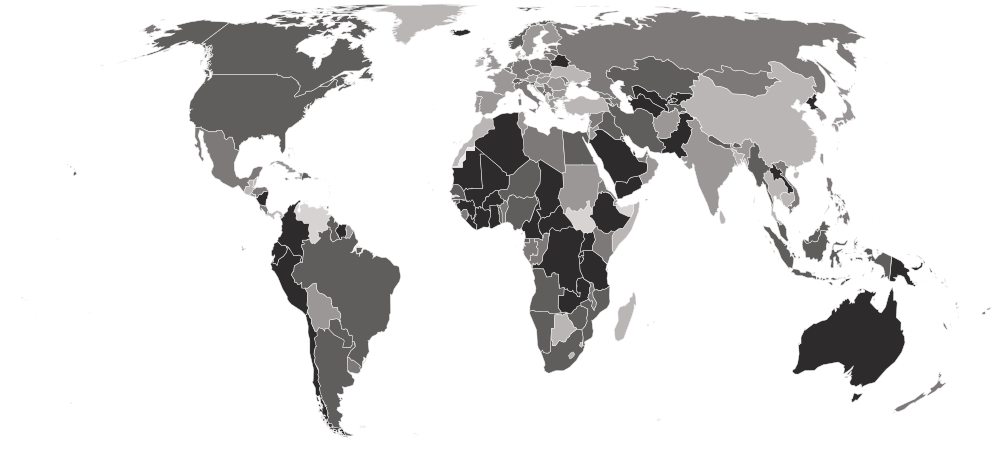
- Newest
- Terms of Trade Index, 2025
- Held
- 21 years · 4,384 rows
- Licence
- CC BY 3.0 IGO
0121 years
Every year
Every year comes from UNCTAD’s 2026 release, recalculated on one method. Each opens the full table for that year; each downloads as a CSV.
| Year | Countries | Change | Read | Download |
|---|---|---|---|---|
| Terms of Trade Index, 2025Newest | 209 | ±0 | October 3, 2026 | CSV |
| Terms of Trade Index, 2024 | 209 | ±0 | October 3, 2026 | CSV |
| Terms of Trade Index, 2023 | 209 | ±0 | October 3, 2026 | CSV |
| Terms of Trade Index, 2022 | 209 | ±0 | October 3, 2026 | CSV |
| Terms of Trade Index, 2021 | 209 | ±0 | October 3, 2026 | CSV |
| Terms of Trade Index, 2020 | 209 | ±0 | October 3, 2026 | CSV |
| Terms of Trade Index, 2019 | 209 | −1 | October 3, 2026 | CSV |
| Terms of Trade Index, 2018 | 210 | ±0 | October 3, 2026 | CSV |
| Terms of Trade Index, 2017 | 210 | ±0 | October 3, 2026 | CSV |
| Terms of Trade Index, 2016 | 210 | ±0 | October 3, 2026 | CSV |
| Terms of Trade Index, 2015 | 210 | ±0 | October 3, 2026 | CSV |
| Terms of Trade Index, 2014 | 210 | ±0 | October 3, 2026 | CSV |
Show all 21 years
| Year | Countries | Change | Read | Download |
|---|---|---|---|---|
| Terms of Trade Index, 2013 | 210 | ±0 | October 3, 2026 | CSV |
| Terms of Trade Index, 2012 | 210 | +1 | October 3, 2026 | CSV |
| Terms of Trade Index, 2011 | 209 | +1 | October 3, 2026 | CSV |
| Terms of Trade Index, 2010 | 208 | ±0 | October 3, 2026 | CSV |
| Terms of Trade Index, 2009 | 208 | ±0 | October 3, 2026 | CSV |
| Terms of Trade Index, 2008 | 208 | +2 | October 3, 2026 | CSV |
| Terms of Trade Index, 2007 | 206 | ±0 | October 3, 2026 | CSV |
| Terms of Trade Index, 2006 | 206 | ±0 | October 3, 2026 | CSV |
| Terms of Trade Index, 2005 | 206 | — | October 3, 2026 | CSV |
Every year in one file, one row per country per year: terms-of-trade-all-editions-nations-inquiry.csv
025 columns
What’s in the file
Every column, what it holds, how it is stored and what its values look like — what a reader needs before opening the file.
| Column | What it holds | Stored as | Range, 2025 | Distinct | Empty | Spread |
|---|---|---|---|---|---|---|
CountrycountryName | The country’s name, as this file spells it. | Text | — | 209 | 0 | |
ISO Codecountry_codeIdentifier | The ISO 3166-1 alpha-3 code, added by this site. Every table here joins on it. | Text · 3 letters | — | 209 | 0 | |
Terms of trade index (2015 = 100)terms_of_tradeHeadline | The headline figure: Terms of trade index (2015 = 100). | Number · up to 4 decimals | 38.197 Niue1,448.226 Niue1,448.226 North Koreamiddle 103.227 North Koreamiddle 103.227 | 209 | 0 | |
Export unit value index (2015 = 100)export_unit_valueMeasure | UNCTAD's index of the average price of the country's merchandise exports in US dollars, with the country's own 2015 set at 100; the terms of trade is this index divided by the import one. | Number · up to 4 decimals | 43.3550Niue831.5155North Koreamiddle 137.6279 | 209 | 0 | |
Import unit value index (2015 = 100)import_unit_valueMeasure | UNCTAD's index of the average price of the country's merchandise imports in US dollars, with the country's own 2015 set at 100. | Number · up to 4 decimals | 57.416North Korea242.217 Ukrainemiddle 127.327 Ukrainemiddle 127.327 | 209 | 0 |
Profiled from the newest file. Range: the lowest and highest value, with the country holding it when only one does. Spread: countries in ten equal steps from lowest to highest. Neither end is better. The values describe a shape, not a score.
03210 countries across every year
Who is covered
How many countries each year holds, continent by continent, who joined and who left, and which places this site covers that the dataset never has.
| 2014 | 2015 | 2016 | 2017 | 2018 | 2019 | 2020 | 2021 | 2022 | 2023 | 2024 | 2025 | |
|---|---|---|---|---|---|---|---|---|---|---|---|---|
| Africa | 53 | 53 | 53 | 53 | 53 | 53 | 53 | 53 | 53 | 53 | 53 | 53 |
| Americas | 44 | 44 | 44 | 44 | 44 | 43 | 43 | 43 | 43 | 43 | 43 | 43 |
| Asia | 51 | 51 | 51 | 51 | 51 | 51 | 51 | 51 | 51 | 51 | 51 | 51 |
| Europe | 42 | 42 | 42 | 42 | 42 | 42 | 42 | 42 | 42 | 42 | 42 | 42 |
| Oceania | 20 | 20 | 20 | 20 | 20 | 20 | 20 | 20 | 20 | 20 | 20 | 20 |
| All | 210 | 210 | 210 | 210 | 210 | 209 | 209 | 209 | 209 | 209 | 209 | 209 |
The newest 12 of 21 years.
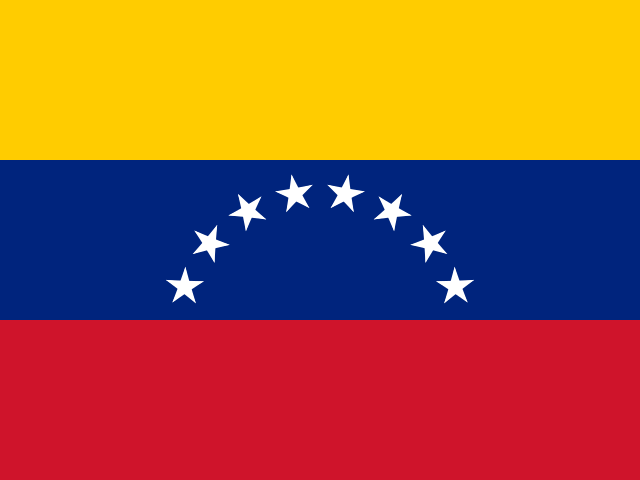 − Venezuela
 + Sudan
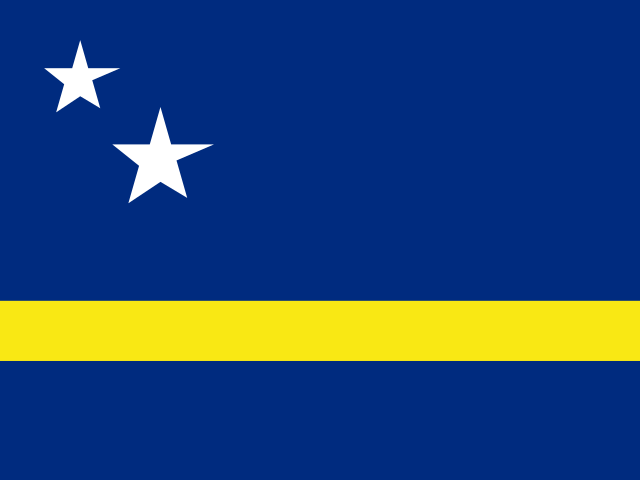 + Curaçao
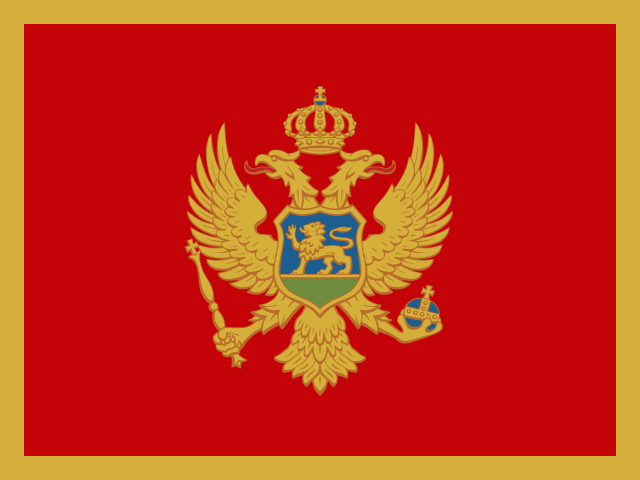 + Montenegro
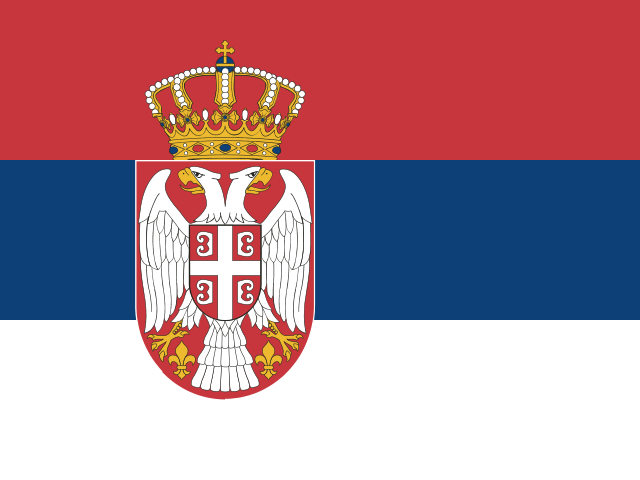 + Serbia
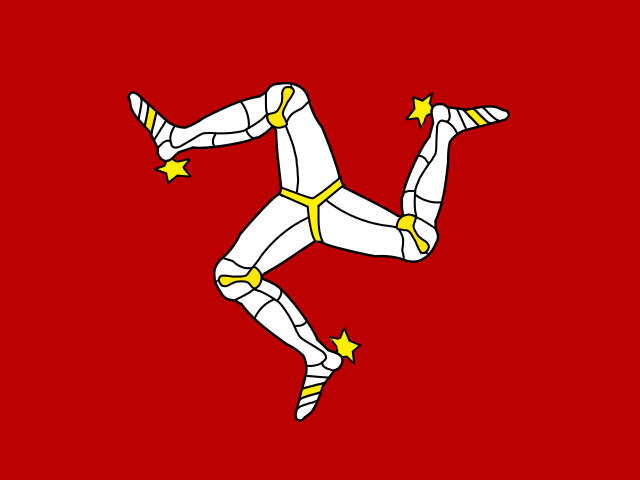
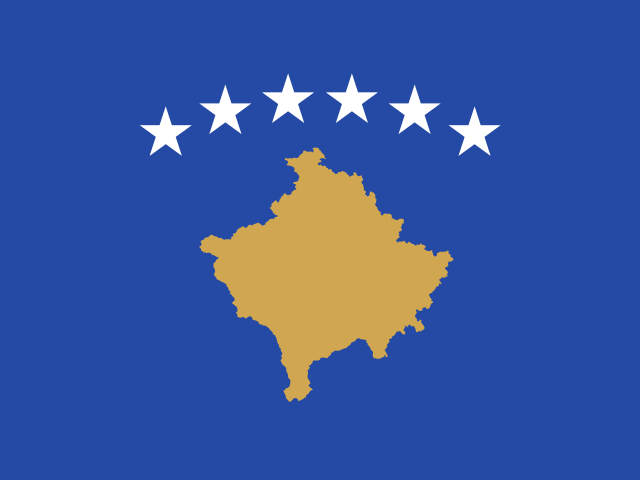
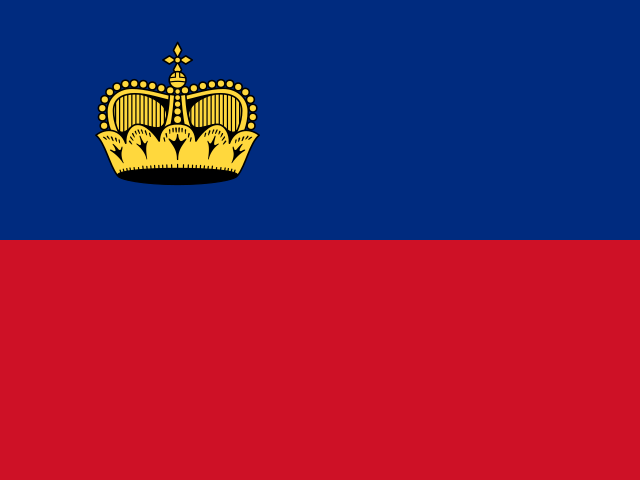
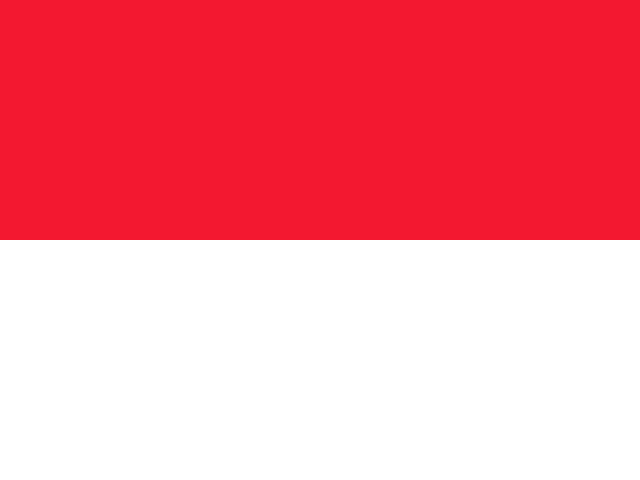
Not in this dataset · 15 places this site covers
UNCTAD gives no figure for these in any year held here. It is the publisher’s choice of scope, and each place’s profile shows what is measured.

04Provenance
Where it comes from
The path from the publisher to this page, and what was checked and changed on the way.
1 · Publisher
UN Trade and Development (UNCTAD)
2 · Their file
Terms of Trade Index 2025
3 · Read by this site
October 3, 2026
Imported by a script that parses each figure and writes it down unrounded.4 · Stored as
21 files, one per year
Each downloads as a CSV, or every year together as terms-of-trade-all-editions-nations-inquiry.csv5 · Used on
Its statistic page, and every profile it measures
Precision
The headline is stored to 4 decimals, as published.
Rounded by this site
Never. Tables on screen may show fewer decimals; the files never do.
Changed by this site
Reshaped into one row per country: regional and income-group totals are left out, only the columns listed are kept, each row gets its ISO 3166 code, and some country names are brought to one spelling. No value is recalculated, rescaled or rounded.
Read from UNCTAD's own US.TermsOfTrade bulk file on UNCTADstat, at the four decimals of the file rather than the one decimal UNCTAD's data viewer displays. The export and import price indices the ratio is built from are stored beside it; UNCTAD's regional and economic groupings, and territories without a country profile, are left out.
05Reuse
Licence and credit
What the publisher’s licence lets you do, what it asks of you, and a credit line and citation ready to copy.
Licence · checked September 30, 2026
- Share and redistribute it
- Adapt it and build on it
- Use it commercially
- Credit the publisher
- Say what you changed
The version of CC BY written for intergovernmental organisations. Credit the publisher and say what you changed.
A credit line
Source: UN Trade and Development (UNCTAD), Terms of Trade Index, via Nations Inquiry.
Cite this dataset
UN Trade and Development (UNCTAD). Terms of Trade Index, 2005–2025 [data set]. As held by Nations Inquiry, https://nationsinquiry.com/datasets/terms-of-trade
The publisher’s own citation: UN Trade and Development (UNCTAD). Merchandise: Trade - Core indices - Annual (analytical) (US.TermsOfTrade). Geneva: UNCTAD Data Hub.
Plain-language summary, not legal advice. The licence text is what binds.
06Where it is used
Around the site
Where these numbers appear on this site, and the datasets nearest to it.
Charted
Terms of Trade Index by countryWho is highest, the map, the spread, who rose and fell, and the records.
Subjects
Near neighbours
- GDP per Capita (PPP)World Bank Group · 36 held · 1990–2025
- Economic Complexity IndexGrowth Lab at Harvard University · 30 held · 1995–2024
- Liner Shipping Connectivity IndexUNCTAD · 21 held · 2006–2026
07Questions
Terms of Trade Index: questions and answers
What is the Terms of Trade Index?
The terms of trade compare the prices a country gets for its exports with the prices it pays for its imports. UNCTAD's index divides the price index of a country's exports by that of its imports and sets the country's own 2015 at 100, so a reading of 120 means a given quantity of its exports now pays for a fifth more imports than it did in 2015.
Which years of the Terms of Trade Index can I download?
All 21, from 2005 to 2025, each as a CSV file, or every year together in one CSV.
Does UNCTAD rank countries on it?
No, and this site does not order it either. The files hold values only.
Can I use it commercially?
Yes, under CC BY 3.0 IGO, with credit to UNCTAD. The licence text is linked on this page.